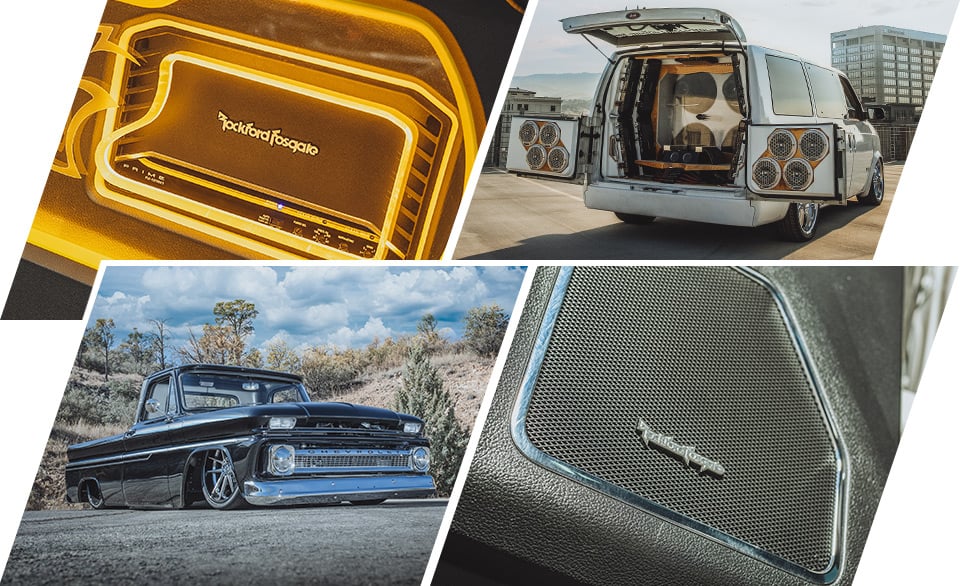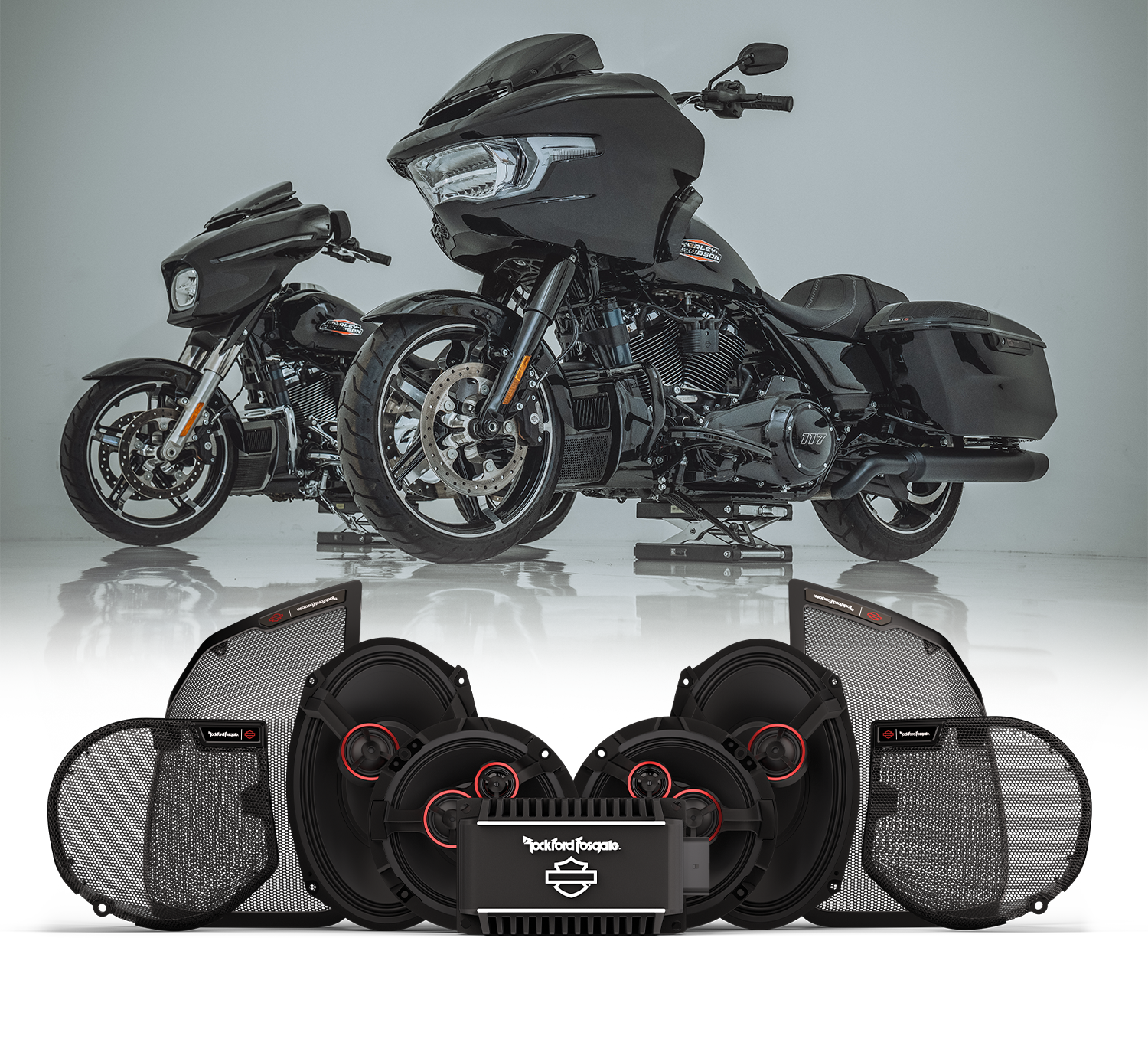
Introducing the New Harley-Davidson® Audio Powered by Rockford Fosgate® Stage III Audio Systems
Friday Jan. 24, 2025
Rockford Fosgate (www.rockfordfosgate.com), the industry leader in high-performance audio systems, is excited to introduce the 2025 lineup of Harley-Davidson powered by Rockford Fosgate Stage III speakers. Purpose-built for the 2023.5 and newer Street and Road Glide models.
Rockford Fosgate celebrates its 45th Anniversary and continues to set the standard of excellence in the audio industry
Wednesday Jan. 01, 2025
Tempe, AZ (Jan 1st, 2025) - Rockford Fosgate (www.rockfordfosgate.com), a global leader in high-performance audio systems, proudly celebrates its 45th anniversary, marking nearly five decades of groundbreaking innovation, customer dedication, and industry leadership. Since its founding in 1980, the company has been at the forefront of audio advancements across mobile, marine, motorcycle, and motorsports platforms. “We’re excited to celebrate 45 years of serving our customers and shaping the audio industry,” said Zach Luke, President. “This milestone reflects the passion and ...
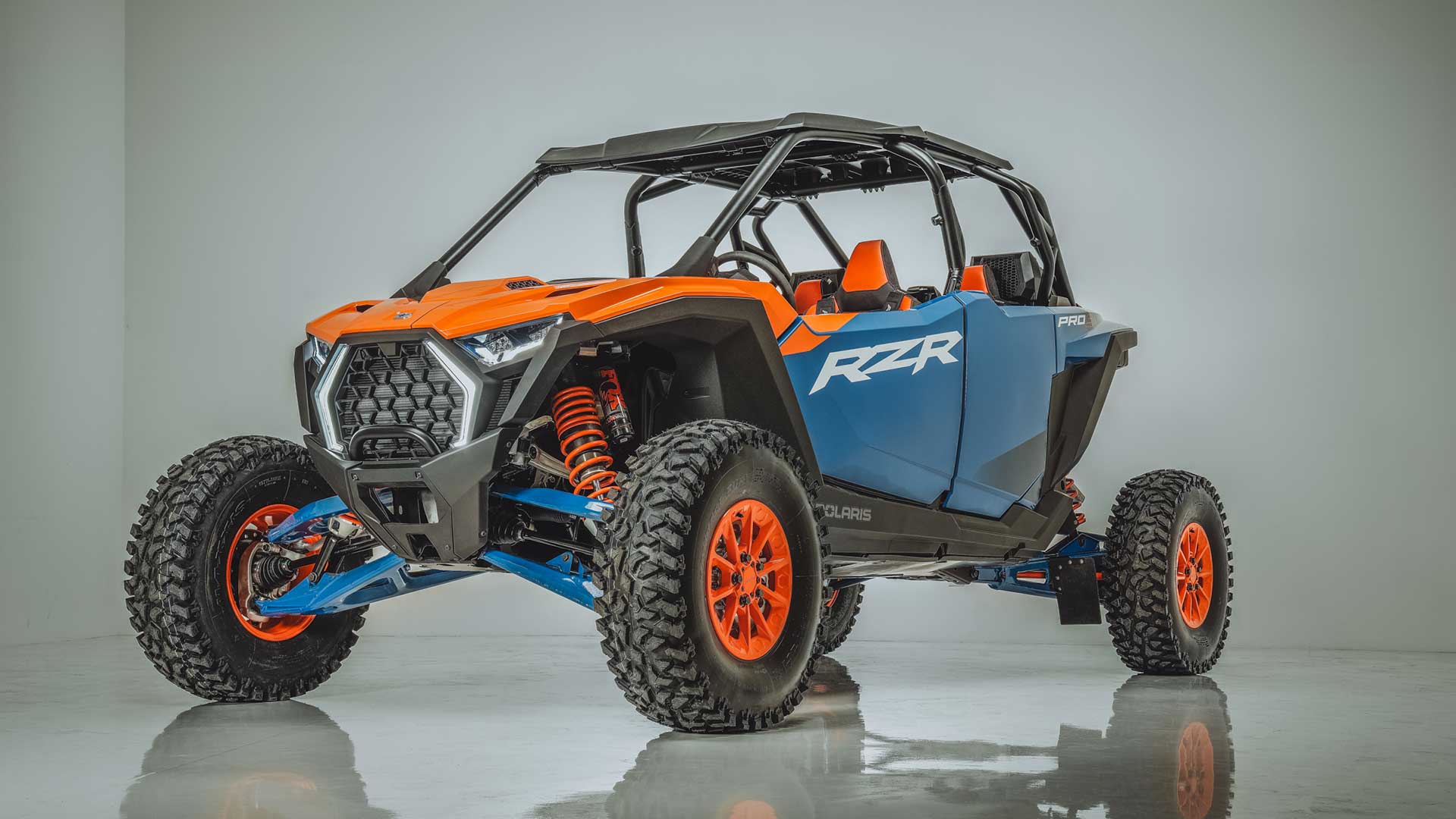
2025 Polaris RZR Pro R / Pro S / Pro XP Ultimate Now Equipped with Stage-4 High Output 800-Watt Audio System
Friday Aug. 02, 2024
Rockford Fosgate (www.rockfordfosgate.com), the industry leader in high-performance audio systems, is thrilled to partner with Polaris® to deliver Apex Audio Performance in select 2025 RZR models, including the new RZR Pro R, Pro S, and Pro XP Ultimate vehicles.
Rockford Fosgate® Is Official Motorcycle Audio Partner of Harley-Davidson® Museum
Friday May 03, 2024
Rockford Fosgate, the industry leader in high-performance audio systems, is thrilled to announce its sponsorship of the Harley-Davidson Museum as the official Motorcycle Audio partner. This partnership promises visitors an immersive on-site audio journey with H-D Museum™ Demos, alongside hosting the H-D Museum Bike Night Concert Series and activation during the annual H-D® Homecoming™ Festival. Zach Luke, as Managing Director of Rockford Fosgate, expressed, “This presents a remarkable opportunity for us to connect with our customers on various levels. It’s ...
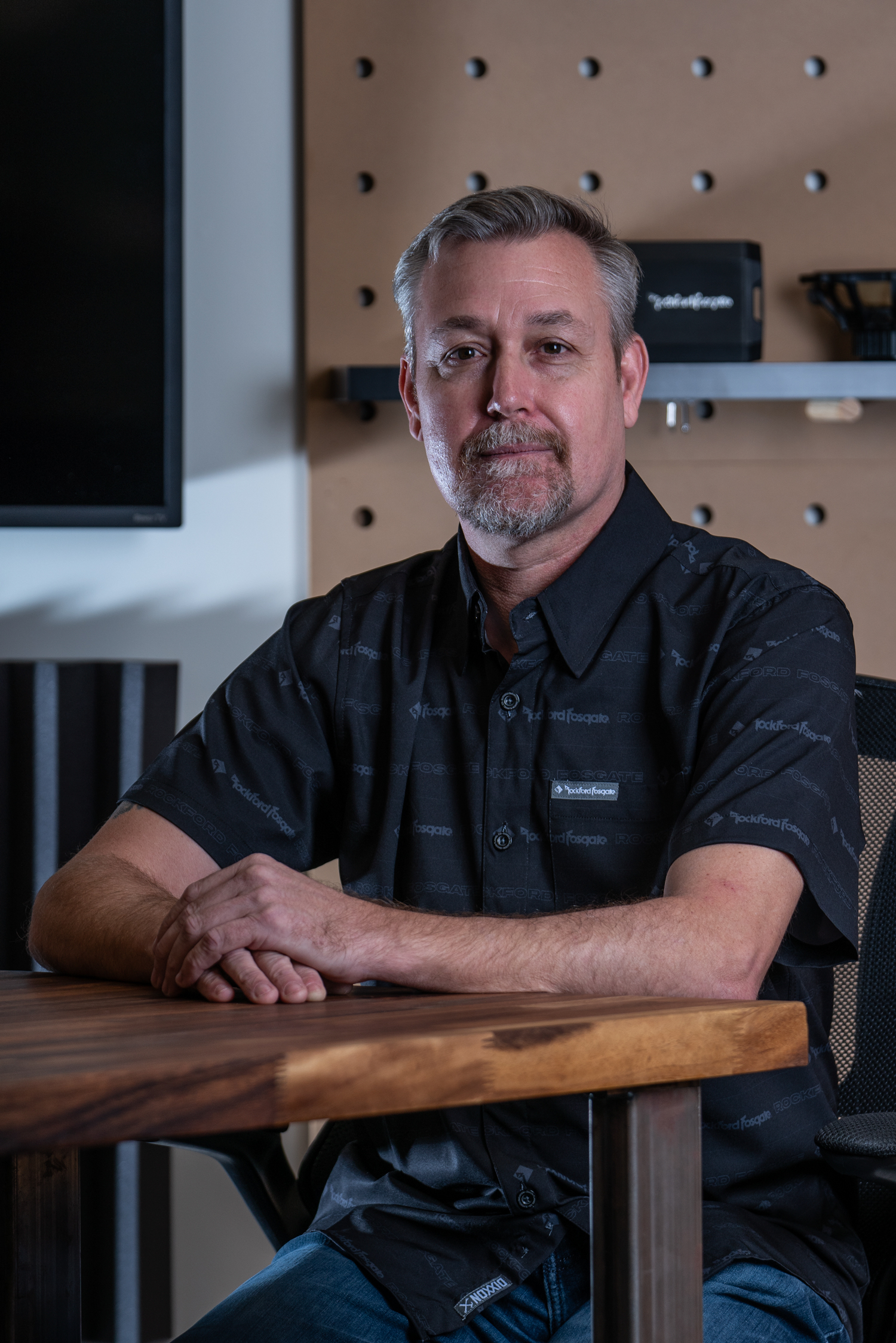
Rockford Fosgate® Appoints Derek Schmiedl as Director of Integration
Tuesday March 05, 2024
Rockford Fosgate, the industry leader in high-performance audio systems, is excited to announce the addition of Derek Schmiedl as Director of Integration.
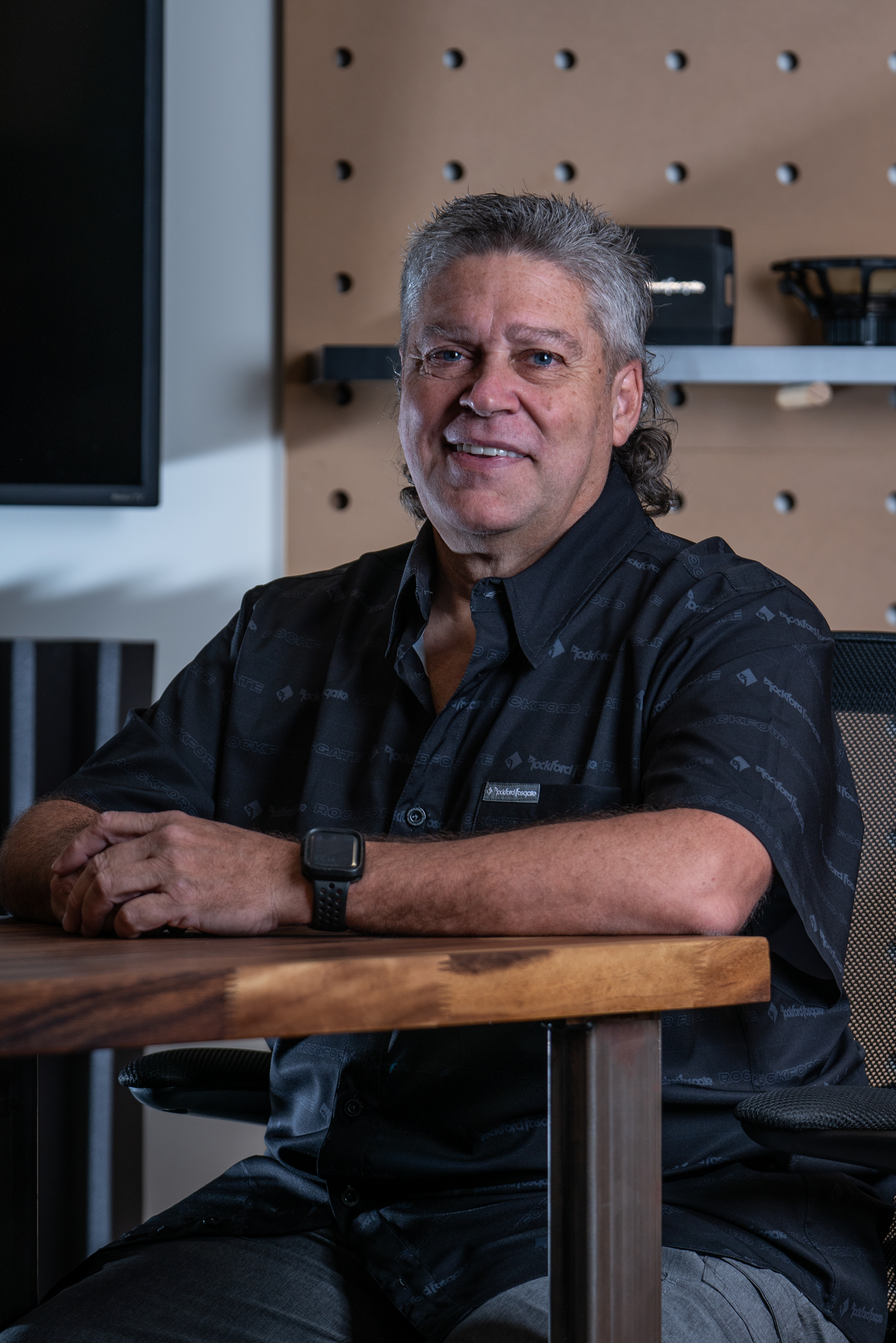
Rockford Fosgate® Appoints Doug Dobson as Digital Application Manager
Tuesday March 05, 2024
Rockford Fosgate, the industry leader in high-performance audio systems, is excited to announce the addition of Doug Dobson as Digital Application Manager.
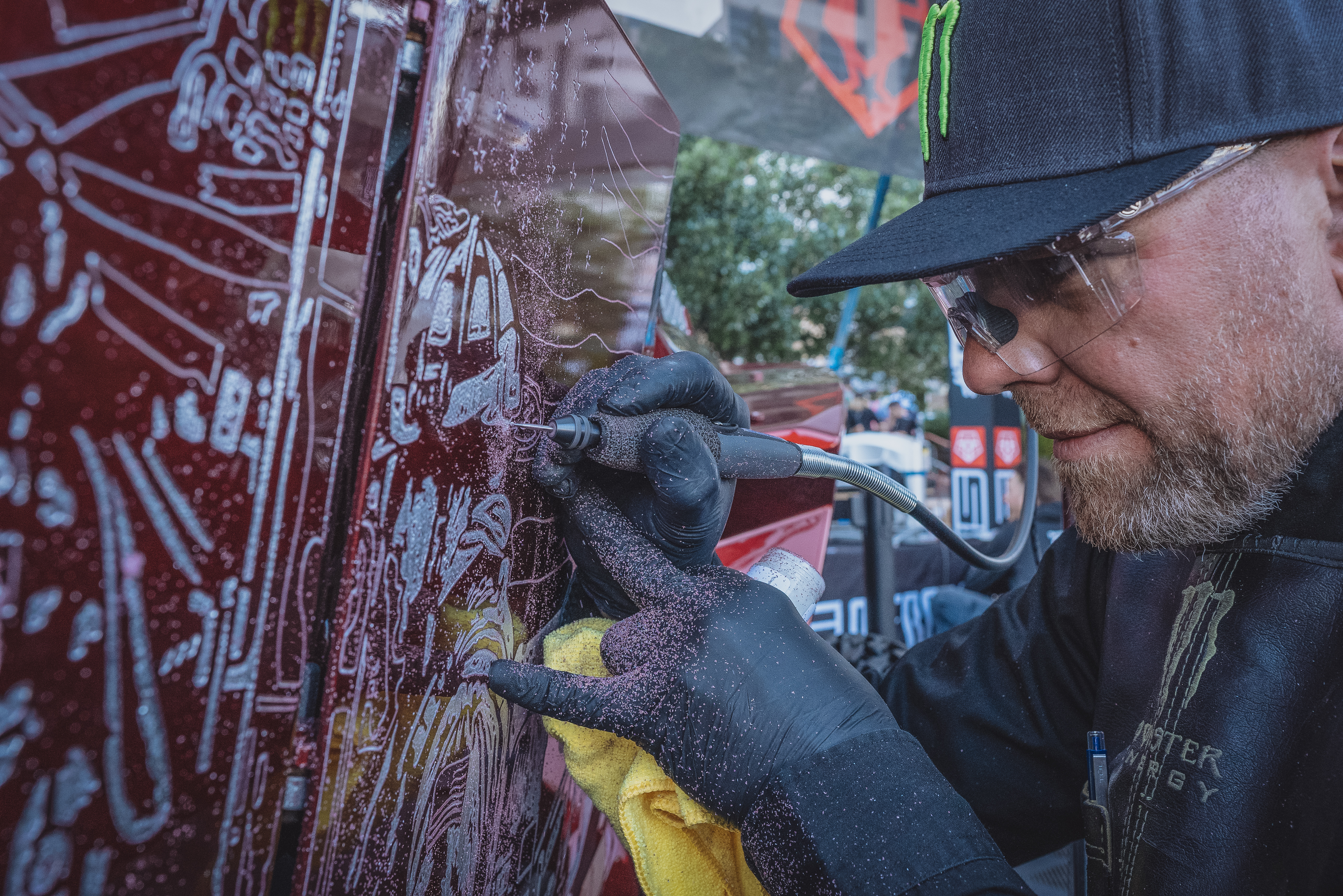
Rockford Fosgate® Elevates Dealer Commitment at 2024 MasterTech EXPO
Sunday Feb. 11, 2024
Rockford Fosgate will be the exclusive sponsor of the “Build Off”, host world-renown artist Hank Robinson, and perform a real-time Jeep installation.
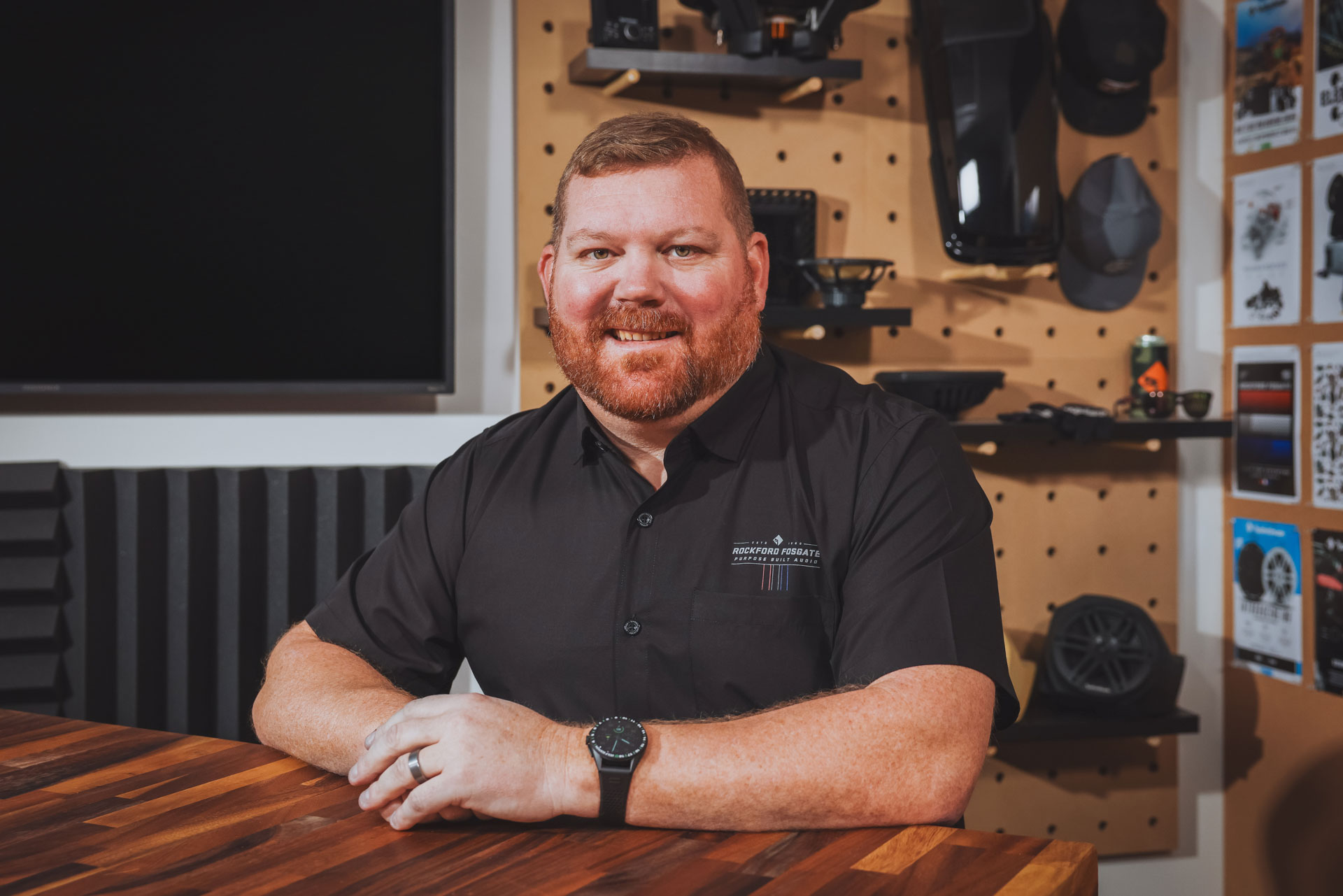
Rockford Fosgate® Appoints Ora Freeman as Senior Director of Marine OEM
Tuesday Dec. 19, 2023
Rockford Fosgate, the industry leader in high-performance audio systems, is excited to announce the addition of Ora Freeman as Senior Director of OEM Marine.
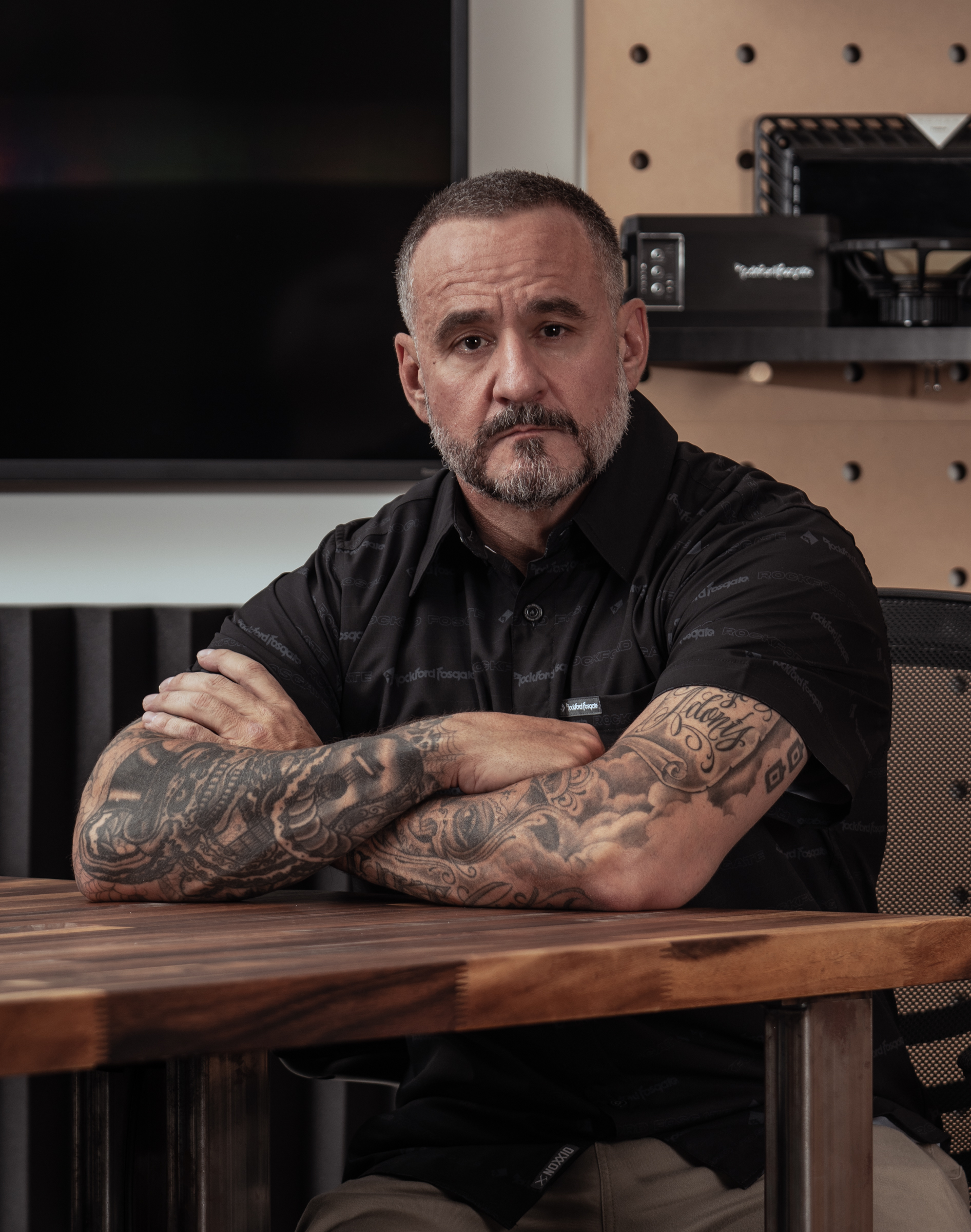
Rockford Fosgate® Makes Transformative Leadership Announcement Promoting Zach Luke To Managing Director
Wednesday Nov. 08, 2023
Rockford Fosgate, the industry leader in high-performance audio systems, is excited to announce the appointment of Zach Luke as the new Managing Director of Rockford Fosgate. With an extensive background in leadership and a proven track record of success, Zach delivers experience and vision to the company.
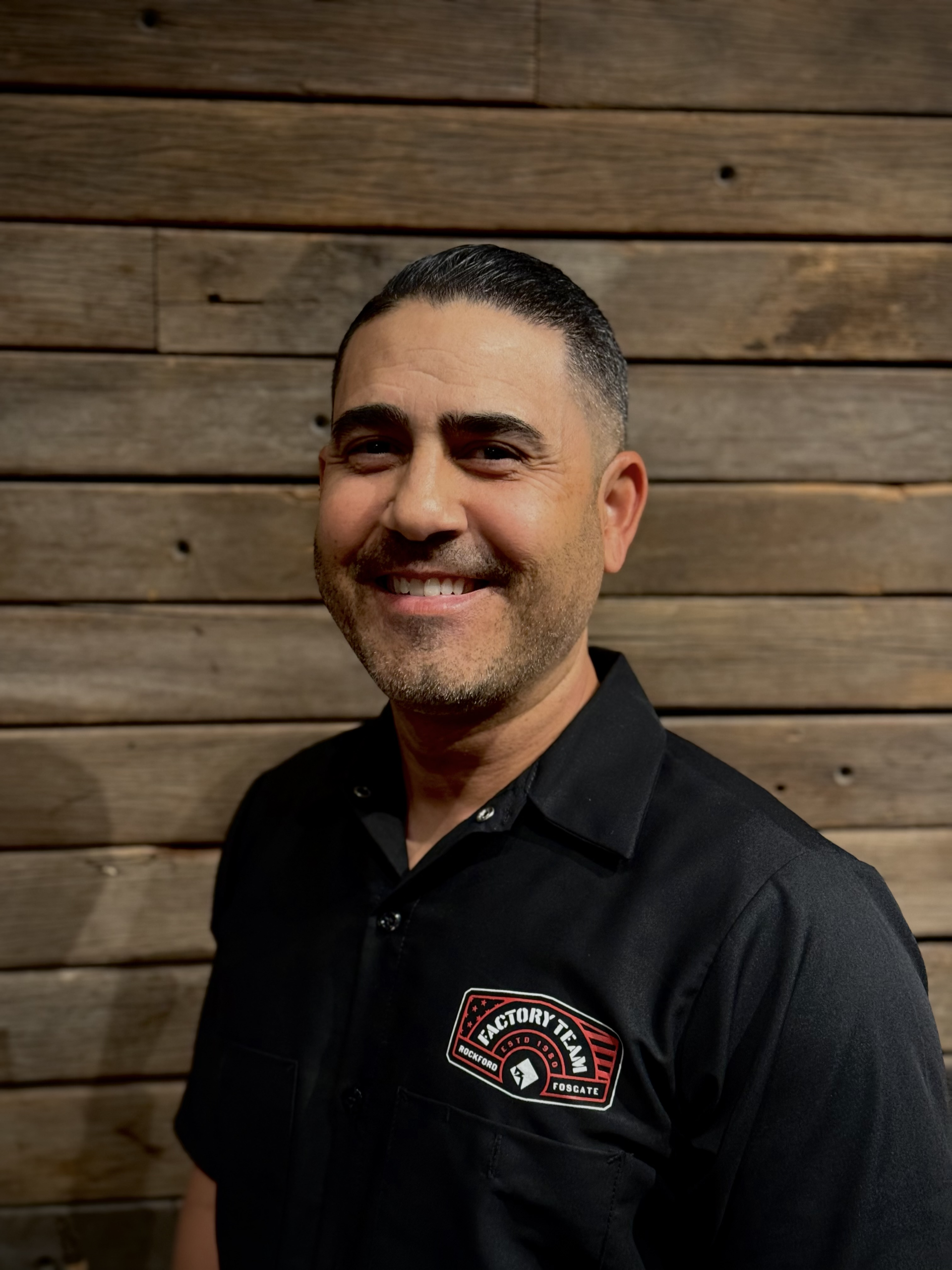
Rockford Fosgate® Promotes Joe Gonzalez to National Sales Manager
Tuesday Oct. 31, 2023
Rockford Fosgate, the industry leader in high-performance audio systems, is pleased to announce the promotion of Joe Gonzalez to National Sales Manager.

Rockford Fosgate® Expands Retailer Service Network
Tuesday Jan. 10, 2023
Rockford Fosgate, the industry leader in high-performance audio systems, is pleased to announce that they have partnered with the Progressive Group to expand sales and support for their retail partners in the mid-Atlantic, Metro New York, and Southeastern markets. As of February 1, 2023, Rockford has appointed Progressive Representatives to represent Rockford Fosgate in these markets. With the integration of long time Rockford Fosgate representatives who bring experience and lineage coupled with the addition of talented new individuals, Progressive Representatives ...
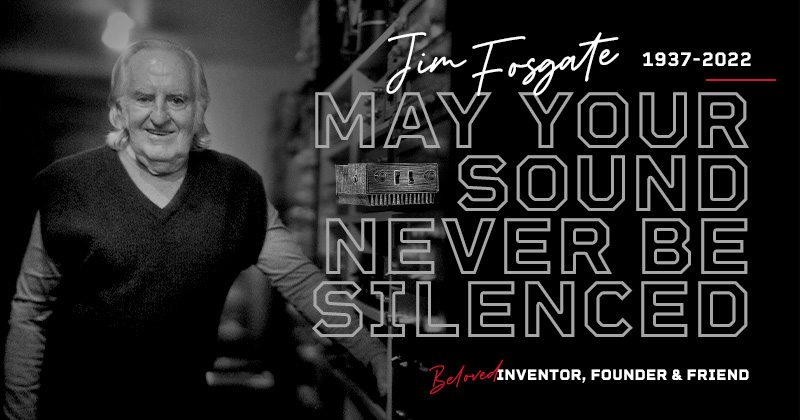
Rockford Fosgate® Mourns Loss of Founder Jim Fosgate
Tuesday Dec. 13, 2022
5:00PM MST December 13, 2022 Rockford Fosgate, the industry leader in high-performance audio systems, mourns the death of founder Jim Fosgate and asks our global community to join in a celebration of his life. Jim Fosgate, a beloved husband, father, grandfather, inventor, founder, and friend to many, passed away Wednesday December 7th just two days after his 85th birthday. Bill Jackson, Rockford president and CEO stated “Jim was always passionate about music and sound. As an engineer and audiophile in ...
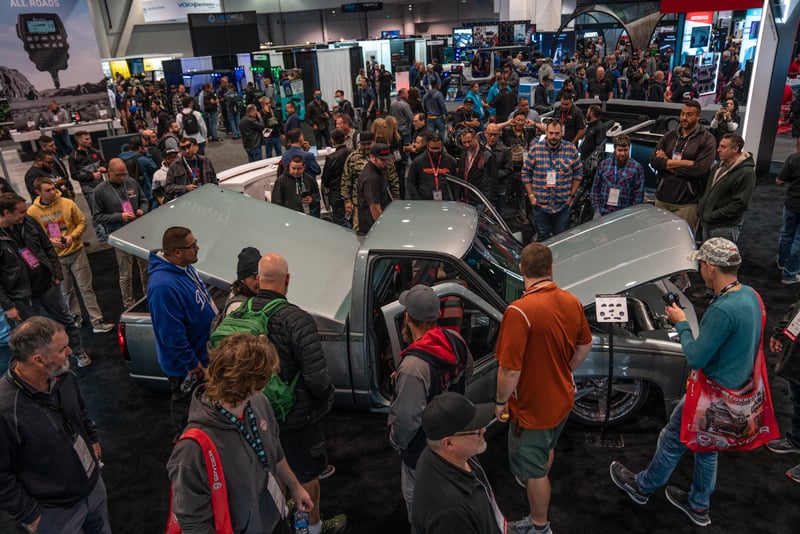
Rockford Fosgate® Connects with Global Dealer and Distribution Network in Las Vegas
Tuesday Nov. 15, 2022
Inaugural event focuses on equipping partners for success. Rockford Fosgate, the industry leader in high-performance audio systems, took Las Vegas by storm with events surrounding this year’s SEMA® show October 31 – November 4, 2022. On Monday October 31, Rockford Fosgate hosted 280 guests comprised of US retail store owners and managers, international distributors, and sales representatives. This inaugural event, dubbed the “Sit-Down” was an all-day learning and networking opportunity focused on equipping our dealers for success. The day kicked ...
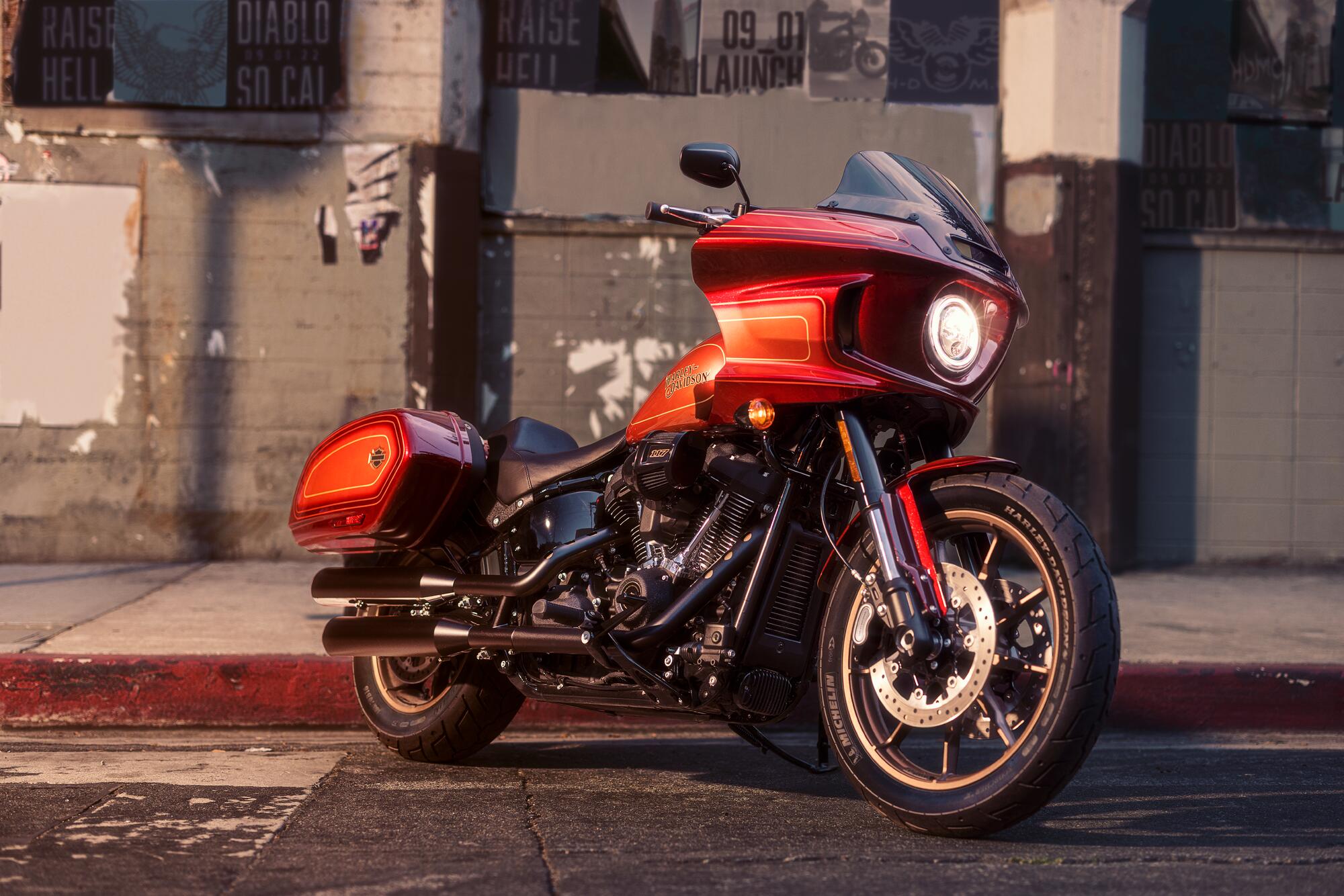
Harley-Davidson® Debuts Icons Collection Low Rider® ST Equipped with Rockford Fosgate® All-In-One Audio Solution
Thursday Sept. 01, 2022
Icons Collection Motorcycle Showcased During Hometown Rally™ Rockford Fosgate, the industry leader in high-performance audio systems, is excited to announce that the latest edition to the Harley-Davidson® Icons Collection motorcycle line-up features an all-in-one audio solution designed specifically for the Low Rider® ST. Powering the audio is a 250-watt Bluetooth™ connected amplifier designed to easily pair with iOS or Android devices. Once connected the Harley-Davidson® Audio App allows for quick set-up, tuning adjustments via an integrated 7-band equalizer, and future ...
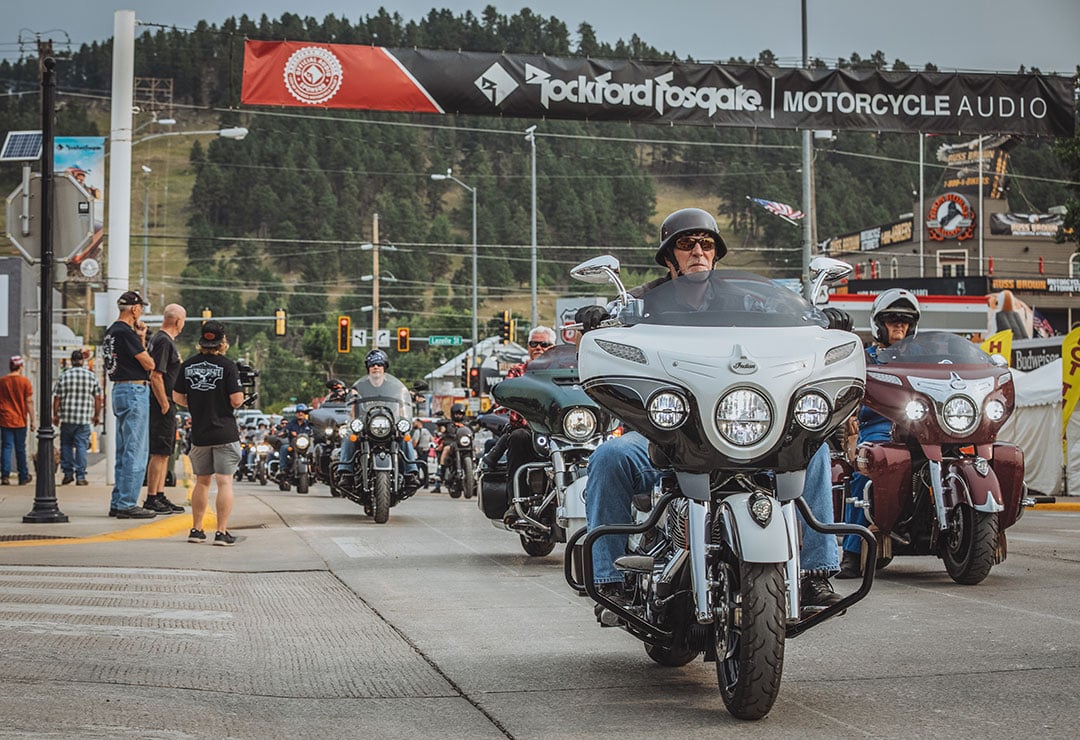
Rockford Fosgate® To Be On-site as the “Official Motorcycle Audio Sponsor” of the 82nd annual Sturgis® Motorcycle Rally™
Tuesday Aug. 02, 2022
Rockford Fosgate (www.rockfordfosgate.com), the industry leader in high-performance audio, has partnered with the City of Sturgis for the ninth consecutive year as the “Official Motorcycle Audio Sponsor” of the Sturgis® Motorcycle Rally™ being held August 5th – 13th and will also be an official sponsor of the “20th Anniversary Mayor’s Ride,” held during the Motorcycle Rally™. Rockford’s booth on Lazelle Street will be the central hub of Rockford Fosgate activities during the Rally From 9:00am – 6:00pm daily, Rockford experts ...
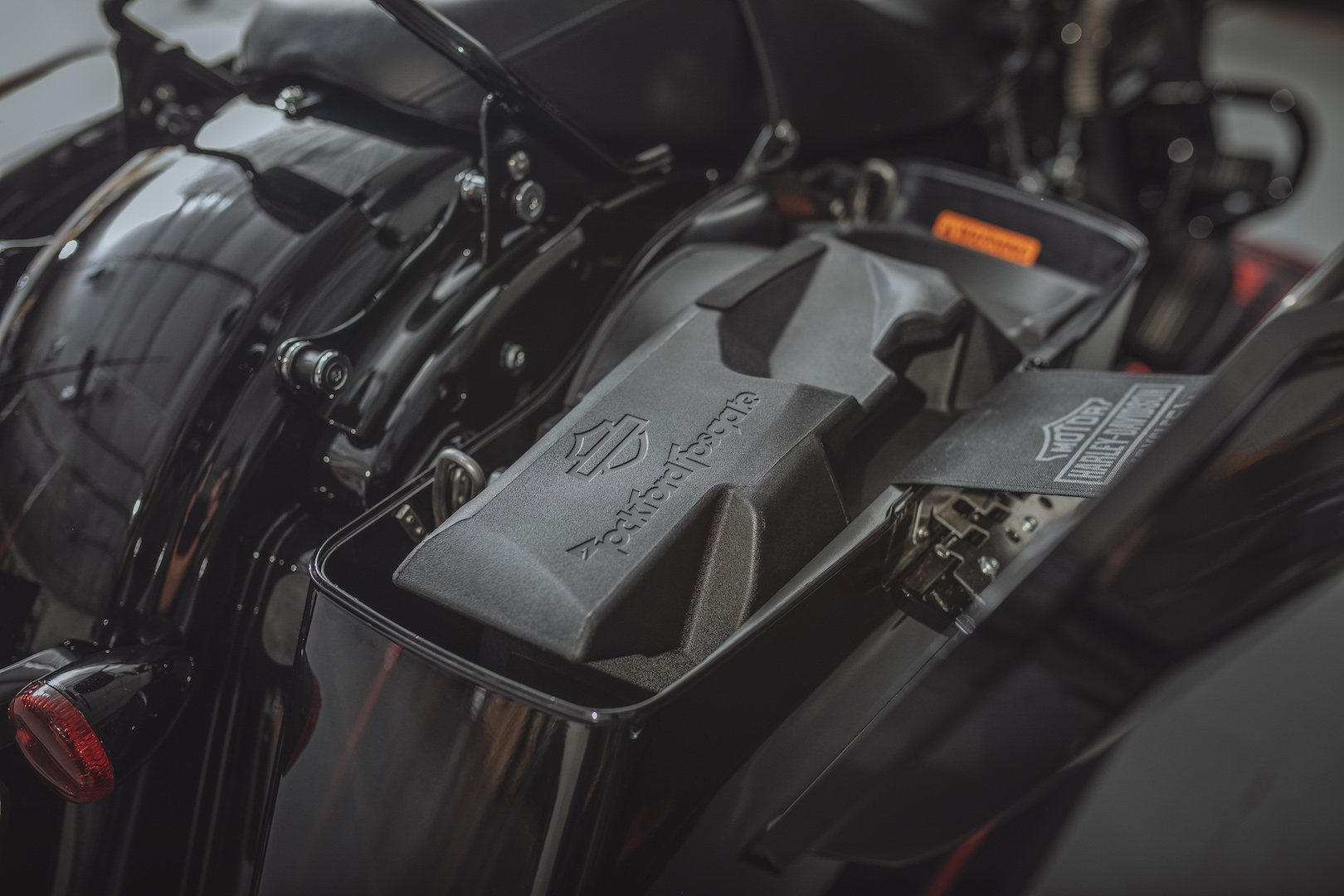
Introducing the New Harley-Davidson® Audio Powered by Rockford Fosgate® Subwoofer System
Wednesday Jan. 26, 2022
True Bass Performance for 2014 and Later Touring Motorcycles Rockford Fosgate (www.rockfordfosgate.com), the industry leader in high-performance audio systems, is excited to introduce a 300-watt subwoofer system purpose-built to deliver true on-road bass performance. Building on the popularity of Harley-Davidson® Audio Powered by Rockford Fosgate sound systems, owners of 2014 and later Harley-Davidson® touring bikes can now add subwoofers built to the exact specifications of their saddlebags. Engineered for all out-bass performance and superior flexibly, the subwoofer systems are designed ...
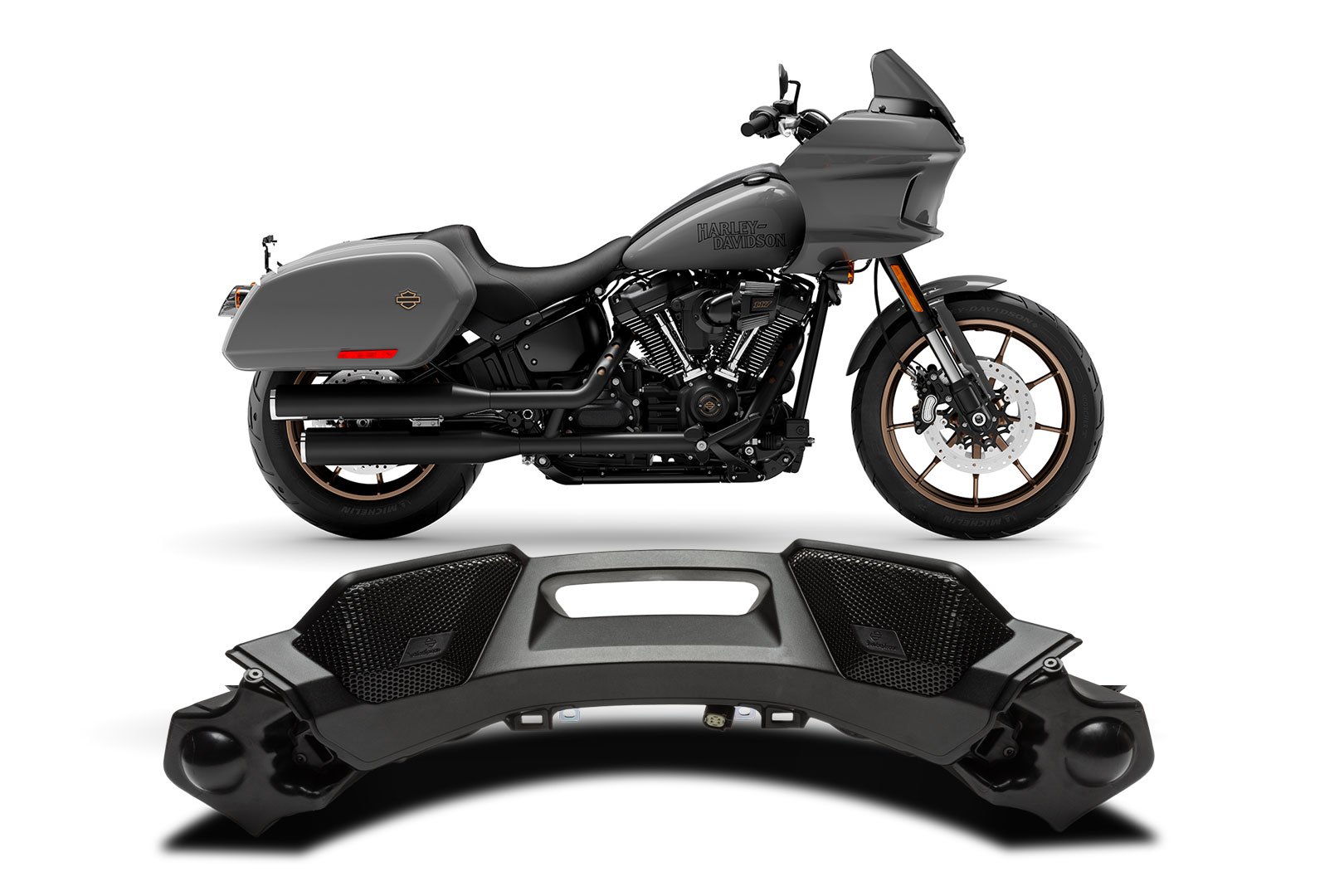
Rockford Fosgate® Announces All-In-One Audio Solution For the 2022 Harley-Davidson® Low Rider® ST
Wednesday Jan. 26, 2022
Expands on Harley-Davidson® Audio Powered by Rockford Fosgate Line-up Rockford Fosgate (www.rockfordfosgate.com), the industry leader in high-performance audio systems, is excited to debut an all-in-one audio solution designed specifically for the new 2022 Harley-Davidson® Low Rider® ST motorcycle. Powering the audio is a 250-watt Bluetooth™ connected amplifier designed to easily pair with your iOS or Android smartphone. Once connected the Harley-Davidson® Audio App allows for quick set-up, tuning adjustments via an integrated 7-band equalizer, and future firmware updates. The app ...
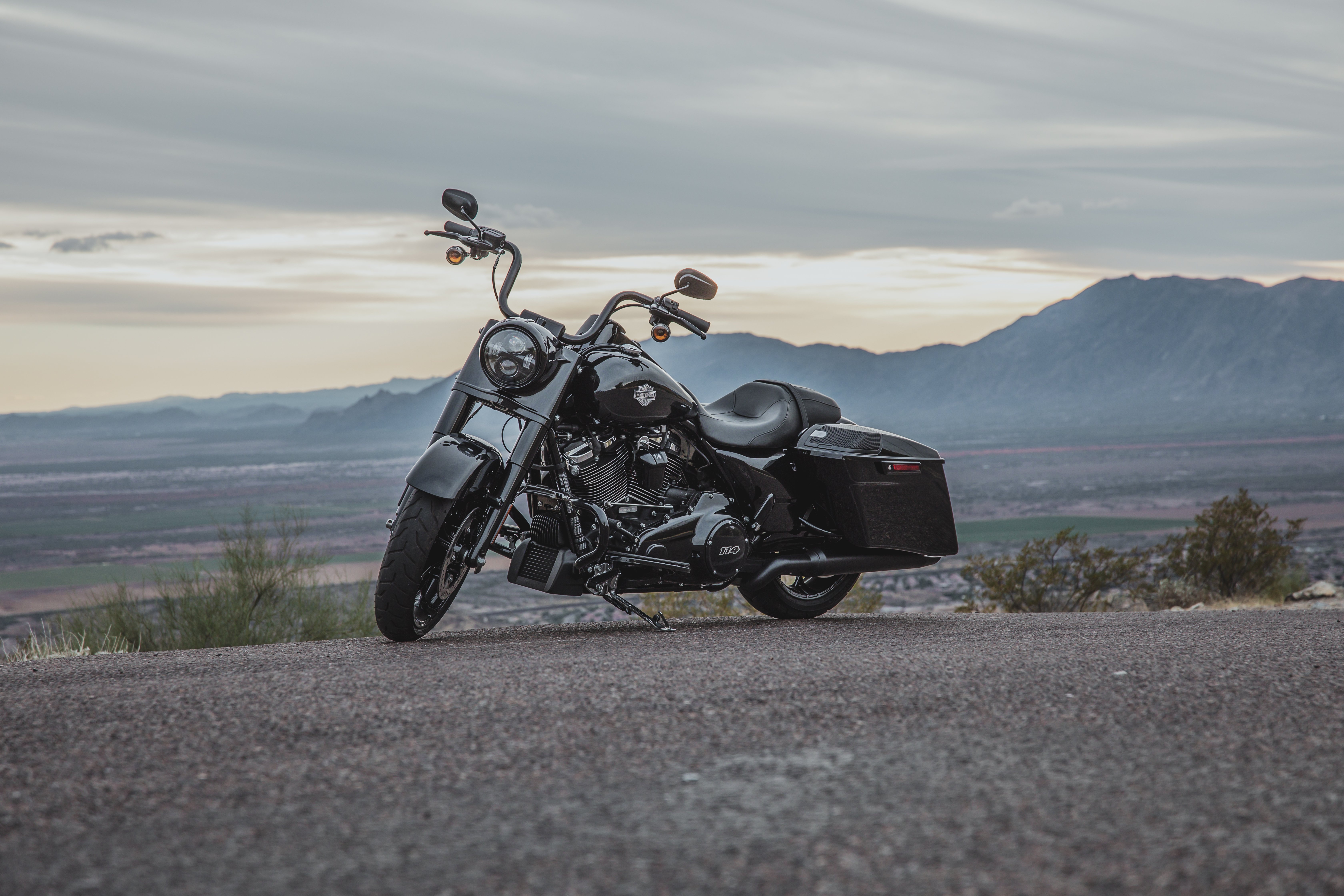
Rockford Fosgate® Announces Harley-Davidson® Audio Powered by Rockford Fosgate® Road King™ Audio System
Wednesday Jan. 26, 2022
Systems Available for 2014 and Later Road King™ Motorcycles Rockford Fosgate (www.rockfordfosgate.com), the industry leader in high-performance audio systems, delivers next level sound quality for 2014 and later Road King™ motorcycles. New amplifier and speaker systems will be available through Harley-Davidson® dealerships and on-line at harley-davidson.com. Powering the audio is a 250-watt Bluetooth™ connected amplifier designed to easily pair with your iOS or Android smartphone. Once connected the Harley-Davidson® Audio App allows for tuning adjustments via an integrated 7-band equalizer. ...
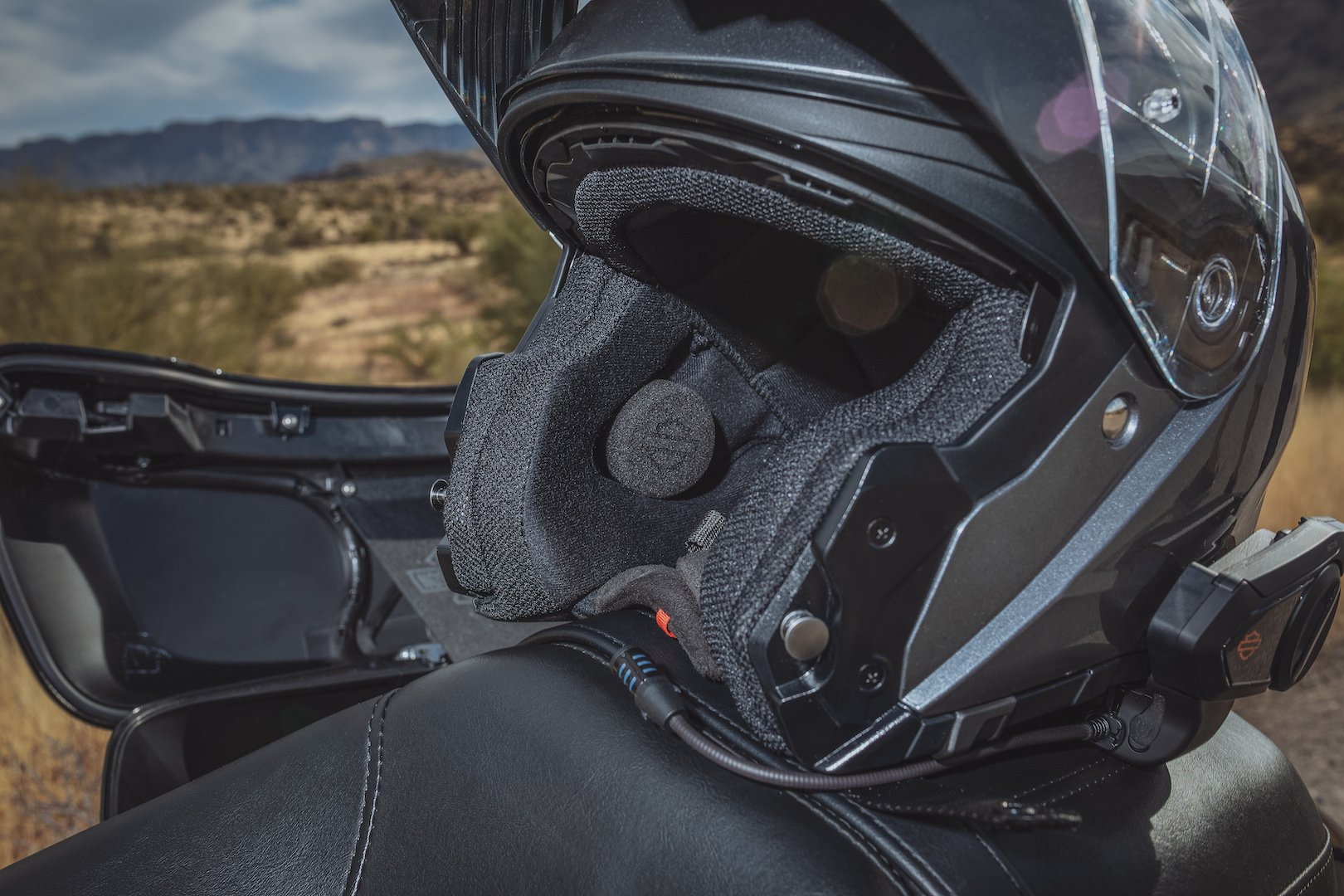
Rockford Fosgate® Creates In-helmet Audio Solution For Harley-Davidson®
Wednesday Jan. 26, 2022
Expected to be Available at Harley-Davidson® Dealerships in February Rockford Fosgate (www.rockfordfosgate.com), the industry leader in high-performance audio systems, is excited to announce that Harley-Davidson® Audio Powered by Rockford Fosgate will now include a new wireless headset solution.
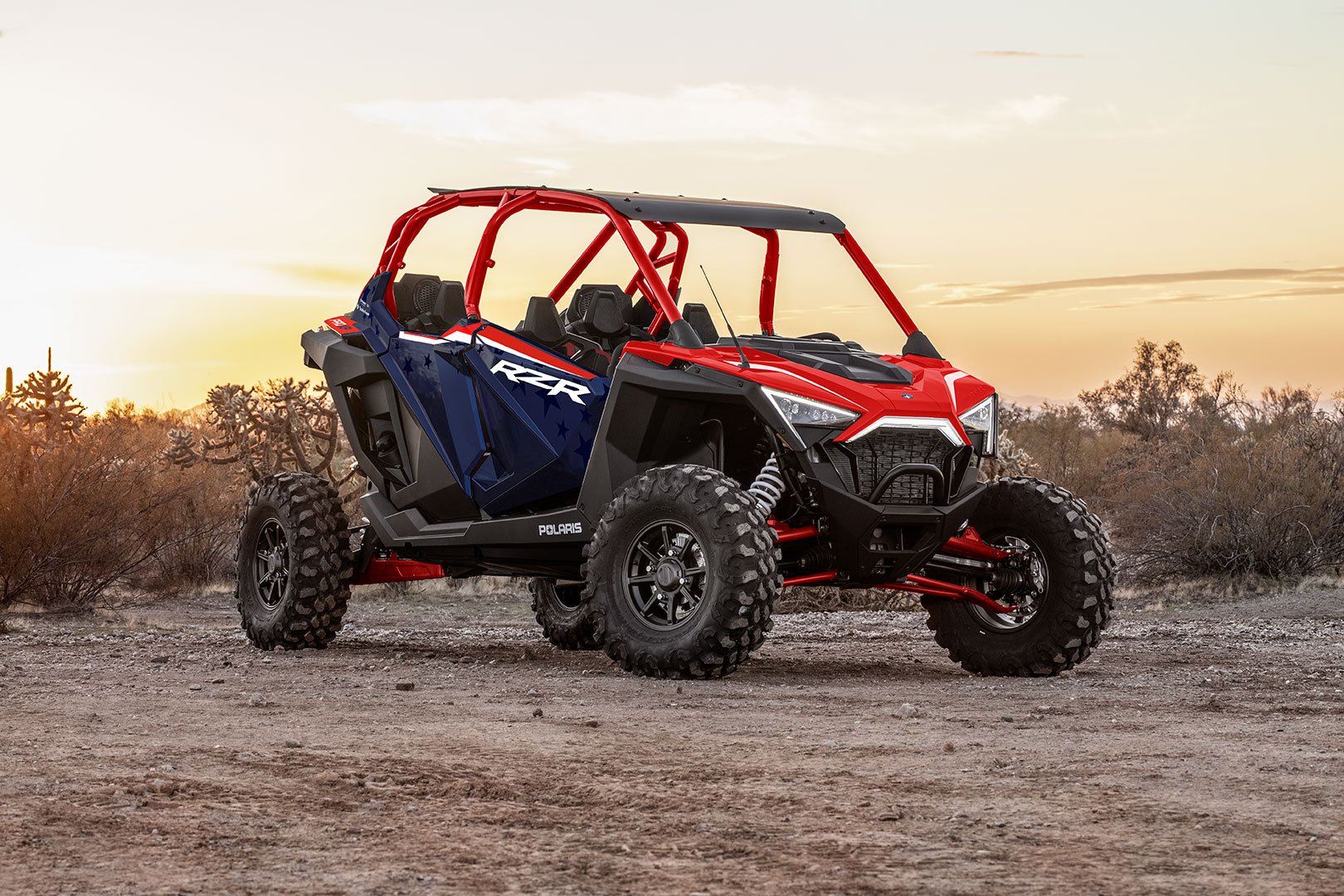
2022 Polaris RZR Pro XP® Ultimate Rockford Fosgate® Limited Edition Factory Equipped with Stage 4 High-output 800-watt Audio System
Tuesday Jan. 18, 2022
New 2022 Limited Edition Vehicles Coming Soon to Polaris® Dealerships Rockford Fosgate (www.rockfordfosgate.com), the industry leader in high-performance audio systems, is excited to partner with Polaris® to deliver epic sound in one of the best-selling high-performance RZR models, the new 2022 RZR Pro XP® Ultimate Rockford Fosgate® Limited Edition. The all-inclusive 800-watt Stage 4 high output audio system in these Rockford Fosgate edition vehicles is twice as loud as previous systems and was created for the rider who has always ...
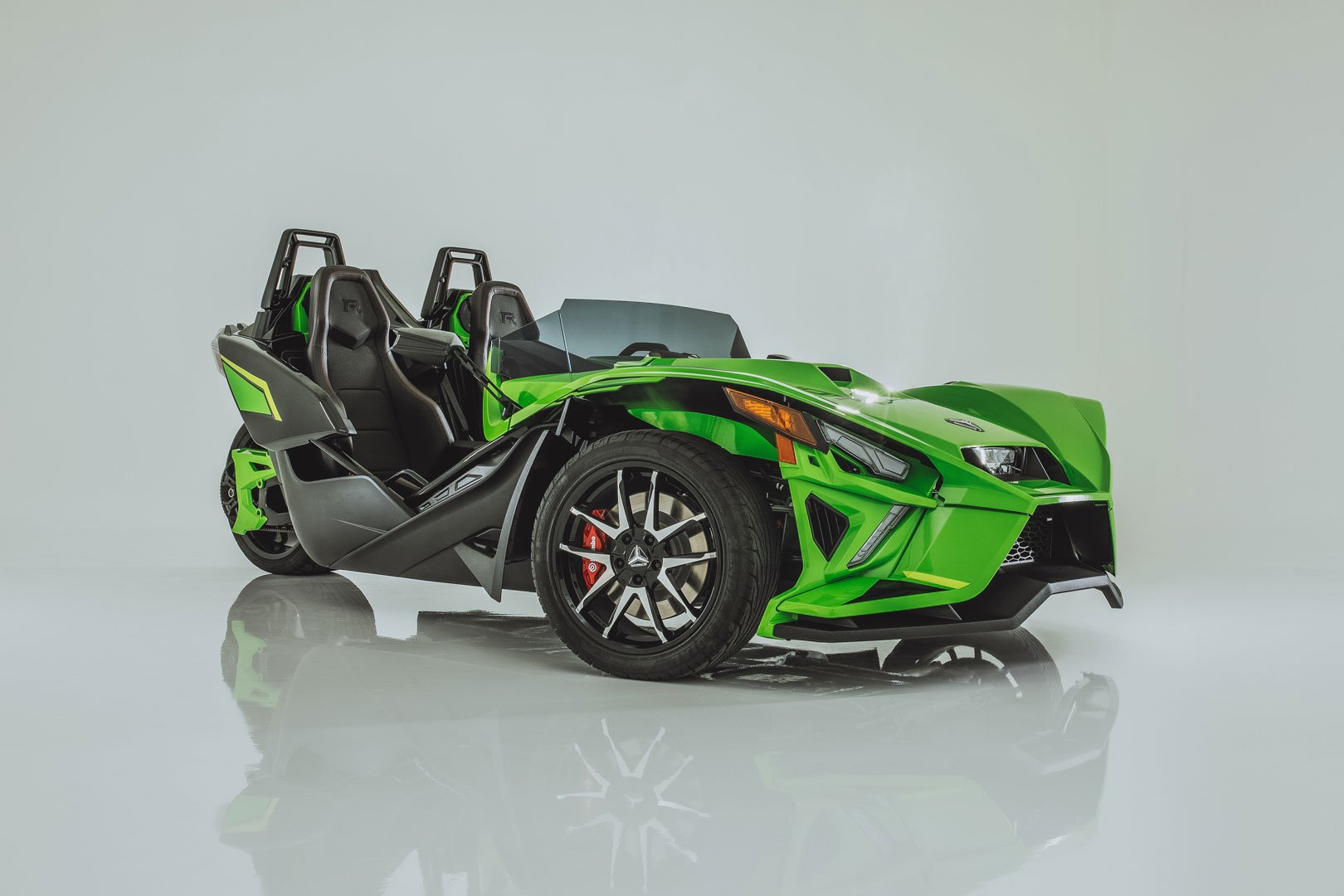
Polaris Slingshot® Features Audio by Rockford Fosgate® Geared for Open Air Performance
Tuesday Dec. 07, 2021
Select 2022 Models Factory Equipped with Stage 2 Audio Systems Rockford Fosgate, the industry leader in high-performance audio systems, announces the debut of new 2022 Polaris Slingshot® audio systems. Engineered for all day output and specifically designed to perform in open air applications, these audio systems are purpose built for a class leading sound experience. Factory equipped with Stage 2 audio, the SL, SLR, and R models integrate Rockford Fosgate sound with Ride Command™. The system is powered by a ...

Polaris RZR Pro R® and RZR Turbo R® Factory Tuned For Performance with Rockford Fosgate® Audio
Tuesday Nov. 09, 2021
Both 2022 Models Available with Stage 2 Audio Systems Rockford Fosgate, the industry leader in high-performance audio systems, delights riders with high performance audio systems factory installed in 2022 Polaris RZR Pro R® and RZR Turbo R®. Designed and engineered with the Polaris team to ensure the best audio integration, these systems are factory tuned for a class-leading experience. The two-passenger RZR Pro R® and RZR Turbo R® are available with a Stage 2 audio system designed to perform in ...
Rockford Fosgate® Premiers New Corporate Video
Wednesday Nov. 03, 2021
Purpose Built Audio Showcases the Rockford Sound Experience through the Words of Brand Ambassadors, Enthusiasts, and Partners Rockford Fosgate, the industry leader in high-performance audio systems, is excited to share its newest corporate video, titled "Purpose Built Audio." The video premiered simultaneously across the company’s social media channels, YouTube channel, their website rockfordfosgate.com, and was shared live at Rockford Fosgate’s National Sales meeting in Las Vegas, Nevada. The team at Rockford traveled across the country collecting footage and experiences from Rockford ...
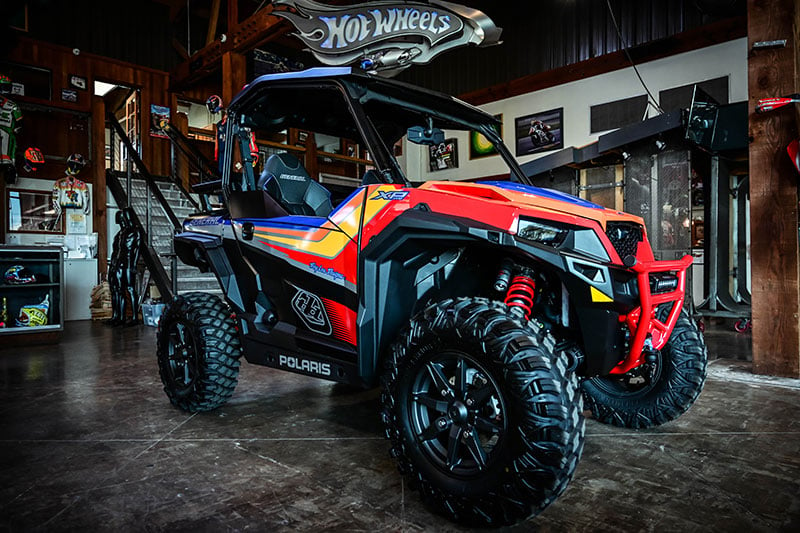
Polaris GENERAL Troy Lee Designs® Limited Edition is Factory Equipped with Rockford Fosgate® Audio System
Friday Sept. 17, 2021
Rockford Fosgate, the industry leader in high-performance audio systems, announces the debut of the Polaris GENERAL Troy Lee Designs® Limited Edition. Equipped with Rockford Fosgate Stage 3 audio for Ride Command, the system includes a 4-channel 400-watt speaker amplifier, as well as front and rear speakers, available straight from the factory. Stage 3 audio with Ride Command consists of two 6.5-inch front speakers featuring durable injection molded woofers and are designed to perform in the outdoors, rear 6.5-inch coaxial speakers ...
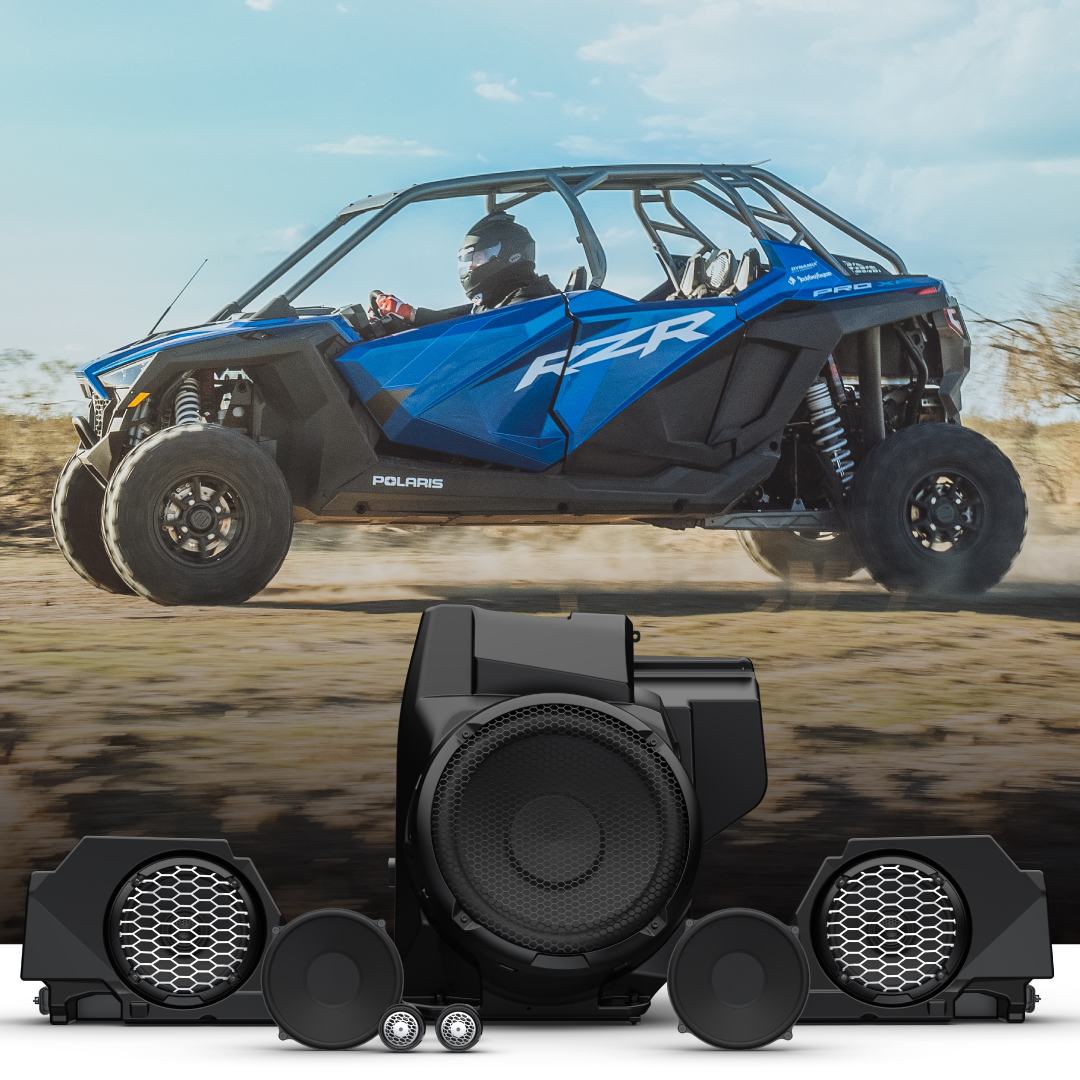
Polaris® Unveils Rockford Fosgate® Stage 5 Audio Upgrade Designed for Polaris RZR Pro XP®
Thursday July 29, 2021
The Stage 5 system is available through Polaris® Dealerships and Polaris.com Rockford Fosgate, the industry leader in high-performance audio systems, is excited to announce the availability of a new Stage 5 audio upgrade designed for RZR Pro XP® models that are seamlessly integrated and perfectly tuned to deliver class-leading high-output sound. This 800-watt high-output audio upgrade is twice as loud as previous systems and was created for the rider who has always wanted more – more output, more volume, more ...
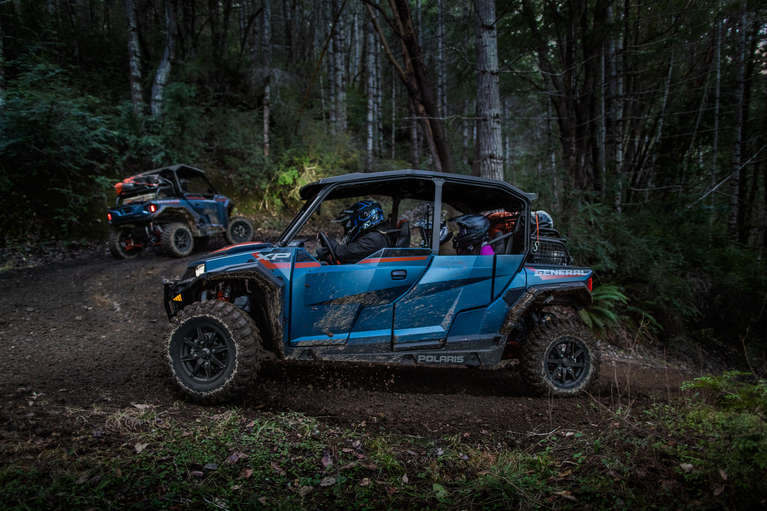
Polaris General® XP 1000 Trailhead Edition Features Customizable Rockford Fosgate® Audio System
Thursday July 29, 2021
Rockford Fosgate, the industry leader in high-performance audio systems, announces the all-new Polaris General® XP1000 Trailhead Edition featuring customizable audio that allows the rider to dial in their own audio experience. Factory equipped with the Stage 3 audio system; the Trailhead edition comes standard with the best audio available plus the option to add a Stage 4 subwoofer upgrade. Overbuilt for the outdoors, every part of this audio system is O.R.R.™ (Off-Road Ready) and designed to withstand the elements. The ...
Rockford Fosgate Announces the All-Out Bagger Show
Saturday July 24, 2021
Event To Be Held in Deadwood as Part of The Sturgis Motorcycle Rally™ Celebration Rockford Fosgate, the industry leader in high-performance audio systems, will present the All-Out Bagger Show on August 8, 2021, from 11:00am – 4:00pm in the Harley-Davidson’s® Outlaw Square, Deadwood, South Dakota. This event is one of the many activities that will be happening throughout the week in Deadwood. For a full line up of events taking place at the Harley-Davidson® Outlaw Square go to https://www.deadwoodlive.com/h-d-rally Jeff ...
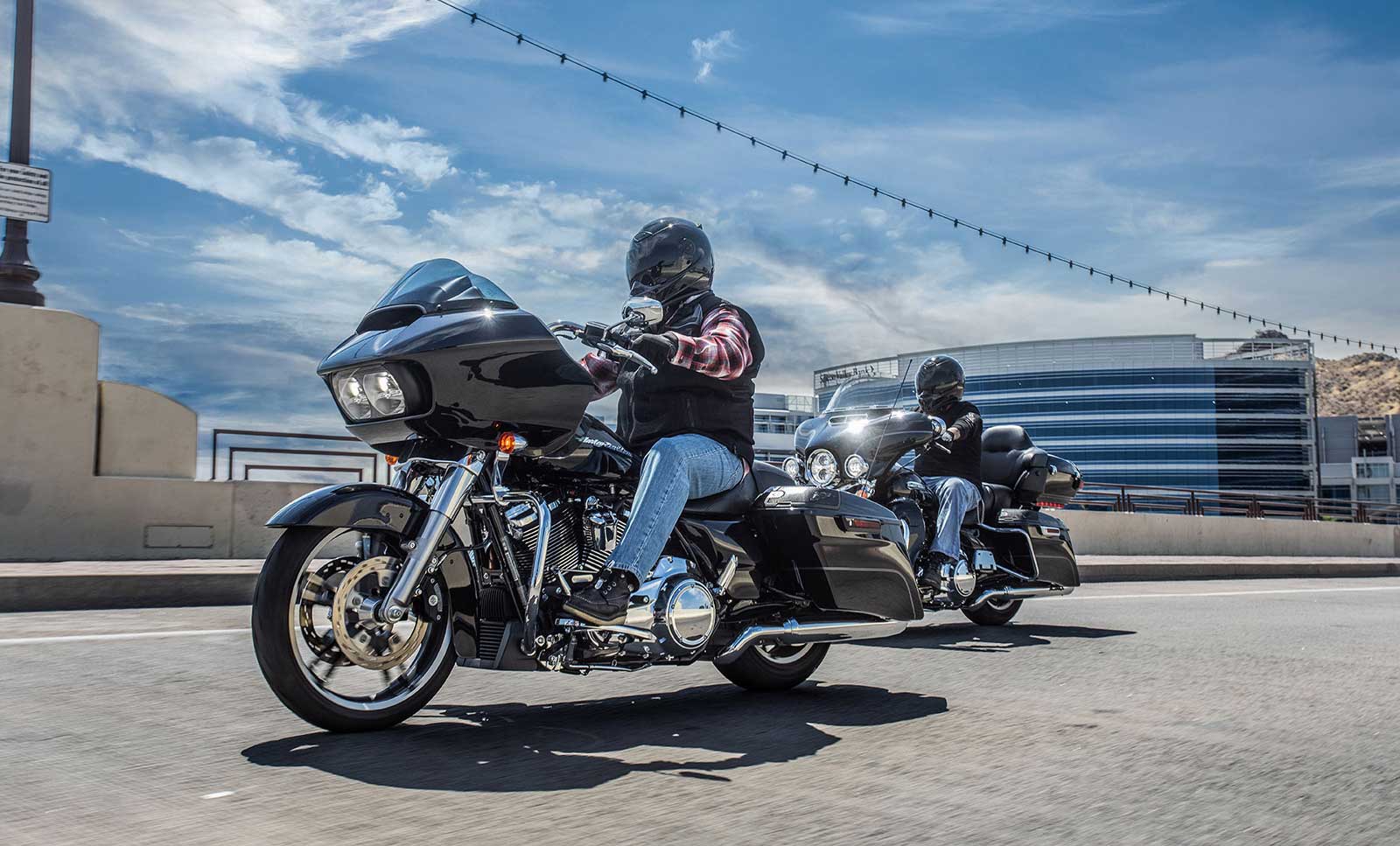
Rockford Fosgate® and Harley-Davidson® Debut Harley-Davidson® Audio Powered by Rockford Fosgate®
Tuesday Jan. 19, 2021
Two Iconic Brands Join Forces to Create Legendary Sound 10:00am MST January 19, 2021, – Rockford Fosgate (www.rockfordfosgate.com), the industry leader in high-performance audio systems, is excited to announce that Harley-Davidson® Audio Powered by Rockford Fosgate will be offered as original factory equipment on MY21 CVO™ Street Glide® and CVO™ Road Glide® Motorcycles. Bill Jackson, CEO and president of Rockford states, “We are excited to be partnered with Harley-Davidson® on this project. Our two brands represent a long heritage of ...

Rockford Fosgate® Audio Showcased in New Polaris RZR® Trail and RZR® Trail S Vehicles
Thursday Jan. 14, 2021
All New Trail Ultimate Vehicles to come Equipped with Rockford Fosgate Audio System Rockford Fosgate (www.rockfordfosgate.com), the industry leader in high-performance audio systems, is excited to announce that the new RZR Trail Ultimate and RZR Trail S Ultimate includes a factory installed Rockford Fosgate Stage 2 audio system integrated with the vehicle’s Ride Command. This Stage 2 audio system features 400-watts of power encased in an ultra-compact, highly efficient amplifier resulting in less impact on the vehicles electrical system. Couple ...

Rockford Fosgate® Audio Featured in 2021 Polaris Slingshot®
Tuesday Dec. 08, 2020
All-New Rockford Fosgate Audio System Brings the Heart-Pounding Concert Experience into the cockpit at Any Speed.
Rockford Fosgate® Celebrates 40th Anniversary
Sunday Feb. 09, 2020
The Brand Remembers Heritage and Thanks Fanatic Fan Base for Continuing the Legacy Rockford Fosgate (www.rockfordfosgate.com), the industry leader in high-performance audio solutions, is excited to announce its 40th anniversary. Celebrations will be revealed throughout the year. Jim Fosgate, the founder of Rockford Fosgate, is often referred to as the inventor of the car audio amplifier. He and his audio enthusiast friends experimented with audio reproduction and the acoustics inside of the automobile and eventually developed the first Fosgate Electronics® ...

Rockford Fosgate® Announces Partnership with Polaris® to Deliver Factory Installed Audio in 2020 Polaris General® 1000 Deluxe
Monday July 29, 2019
First factory-integrated premium sound system offered in the side-by-side (SxS) industry.
Rockford Fosgate® Partners with Polaris® to Build the Loudest, Highest Performing Audio System in the Industry
Monday July 29, 2019
All New RZR® Pro XP delivers class leading audio experience with factory equipped Rockford Fosgate system
Rockford Fosgate® Named a Supporting Sponsor For The Mint 400
Friday March 02, 2018
Rockford Fosgate (www.rockfordfosgate.com), the industry leader in high-performance audio systems, is proud to announce it has been named as a Supporting Sponsor for The Mint 400, The Great American Off-Road Race, held in Las Vegas, Nev. March 7-11. Rockford Fosgate's full line of powersports products will be on display March 8-9 at the Odyssey Battery Tech & Contingency on Fremont Street. "Music is such an important part of our culture and it's cool to see brands that have been around ...

America's Motocross Track, RedBud, welcomes Rockford Fosgate® as its title sponsor for the 2017 MX National
Tuesday June 20, 2017
BUCHANAN, Mich. (June 20, 2017) – RedBud MX, “America’s Motocross Track,” is pleased to welcome Rockford Fosgate® as the title sponsor for the upcoming (July 1st) round of the Lucas Oil Motocross Championship at RedBud. Well-known throughout the powersports, automotive and marine industries as an innovative leader in both design and function, Rockford Fosgate continues its relationship with RedBud motocross properties, this year elevating to the status of title sponsor for America’s premier motocross track on the world’s No. 1 ...

Yamaha Motor Corporation U.S.A. Rocks With Rockford Fosgate on YXZ1000R Audio Systems
Thursday June 08, 2017
The Yamaha YXZ1000R and Element Ready Rockford Fosgate audio solutions: a perfect match, no matter in the sand, on the trail, or in the mud. Rockford Fosgate (www.rockfordfosgate.com), the industry leader in high-performance audio systems, is proud to announce a distribution agreement with Yamaha Parts and Accessories, a division of Yamaha Motor Corporation, U.S.A., for a new line of motorsports audio solutions specific to Yamaha’s YXZ1000R Side-by-Side models. The four individual audio systems are now available.“With the ever growing popularity ...

Rockford Fosgate Returns to 2016 SEMA Show
Monday Oct. 31, 2016
Rockford Fosgate (www.rockfordfosgate.com), the industry leader in high-performance audio systems, is proud to announce that for the first time in more than 10 years, it will exhibit at the 2016 SEMA Show, which will be held in Las Vegas, Nev. from Nov. 1 – 4 at the Las Vegas Convention Center, booth N11839. “SEMA is the leading trade event for the aftermarket 12 volt industry,” said Tammy Lowe, Rockford director of marketing. “We chose to exhibit on the floor in ...

Rockford Fosgate to Exhibit at 2016 Sand Sports Super Show
Wednesday Sept. 07, 2016
Rockford Fosgate (www.rockfordfosgate.com), the industry leader in high-performance audio systems, is proud to announce that it will exhibit its new Element-Ready audio solutions during the 2016 Sand Sports Super Show, which is being held from Sept. 16-18 at The OC Fair & Event Center in Costa Mesa, Calif., booth # FF502B. “Whether on sand, dirt, or the open road, our marine-grade, high-efficient audio solutions have proven to be perfect for side-by-side UTVs and off-road vehicles,” said Jake Braaten, Rockford Fosgate ...

Rockford Fosgate Announces Partnership with Polaris®
Monday July 25, 2016
Rockford Fosgate (www.rockfordfosgate.com), the industry leader in high-performance audio systems, is proud to announce that it has partnered with Polaris® to be the exclusive OEM speaker provider for its 2017 Slingshot® SL and SLR moto-roadster lineup. Available in dealerships this August, the 2017 Slingshot is equipped with a Rockford Fosgate four-speaker sound system.
Rockford Fosgate Holds National Rep Meeting
Tuesday July 19, 2016
Rockford Fosgate (www.rockfordfosgate.com), the industry leader in high-performance audio systems, recently held its 2016 National Rep Meeting in Montreal, Canada. The two-day event (July 6-7) was attended by all rep firms from all 50 states.
Rockford Fosgate Returns to SEMA Show
Monday July 18, 2016
Rockford Fosgate (www.rockfordfosgate.com), the industry leader in high-performance audio systems, is proud to announce that for the first time in more than 10 years, it will exhibit at the 2016 SEMA Show, which will be held in Las Vegas, Nev. from Nov. 1 – 4 at the Las Vegas Convention Center, booth N11839.

Rockford Fosgate Taps M.A.G. Sales as Florida Rep
Sunday July 17, 2016
Rockford Fosgate (www.rockfordfosgate.com), the industry leader in high-performance audio systems, is proud to announce that Sunrise, Fla.-based M.A.G. Sales has been named to represent the brand’s mobile, motorsports, motorcycle, and marine products in the Florida market, effective immediately. “On behalf of the entire team at M.A.G. Sales, we are thrilled to be back on board with the Rockford Fosgate brand,” said Mike Sajecki, CEO and president of M.A.G. Sales. “Our company was founded on representing the best brands and providing ...

Rockford Fosgate Announces Oliver Marketing Expands Brand’s Representation into Southern California Market
Friday July 01, 2016
Rockford Fosgate (www.rockfordfosgate.com), the industry leader in high-performance audio systems, is proud to announce that Auburn, Wash.-based Oliver Marketing is expanding representation of the brand’s mobile, motorsports, and marine products into the Southern California market, effective immediately.
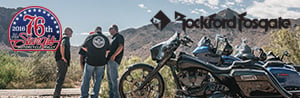
Rockford Fosgate is Official Motorcycle Audio Sponsor of the Sturgis® Motorcycle Rally™ 2016
Wednesday June 29, 2016
TEMPE, Ariz. – June 30, 2016 – Rockford Fosgate (www.rockfordfosgate.com), the industry leader in high-performance audio systems, is proud to announce for the third consecutive year that it will be the official motorcycle audio sponsor of the famed Sturgis® Motorcycle Rally™ 2016. Rockford Fosgate is proud to bring high performance motorcycle audio systems to the crowds of enthusiasts on Lazelle Street in downtown Sturgis, SD during the 76th annual week-long event from August 8-14.

RedBud Welcomes Rockford Fosgate and Soaring Eagle as Co-Presenting Sponsors for its July 2 MX National
Monday June 27, 2016
RedBud Welcomes Rockford Fosgate and Soaring Eagle as Co-Presenting Sponsors for its July 2 MX National
Audio Industry Giant & Michigan’s No. 1 Casino and Resort Partner with RedBud to Promote the Country’s Biggest Motocross Race

FLIR and Rockford Fosgate Announce Entertainment Control Partnership
Tuesday Feb. 09, 2016
Rockford Fosgate (www.rockfordfosgate.com), the industry leader in high-performance audio systems, and FLIR Systems, a world leader in marine electronics for the recreational boating industry through its Raymarine brand, are pleased to announce that they have partnered in the development of integrated audio solutions for the marine environment. The two companies will have products on display for demonstration at the Miami International Boat show to be held February 11 - 14. Visitors to the FLIR / Raymarine booth will have the ...

Rockford Fosgate Collaborates With Leading Integrators For Numerous Vehicles At 2015 SEMA Show
Monday Oct. 26, 2015
Rockford Fosgate (www.rockfordfosgate.com/mobile), the industry leader in high-performance audio systems, is proud to announce its list of vehicles on display at the 2015 SEMA Show, which is being held in Las Vegas, Nev. at the Las Vegas Convention Center from Nov. 3 - 6. The systems can be viewed at www.rockfordfosgate.com/SEMA. “Each year, we take pride in collaborating with leading auto integrators in order to feature our latest high-performance aftermarket audio systems to the SEMA Show audience,” explained Tammy Lowe, ...
Rockford Fosgate Announces Change In OEM Marine Business Model
Monday July 06, 2015
Rockford Fosgate (www.rockfordfosgate.com), the industry leader in high-performance audio systems, has announced that it has moved to a direct-to-builder model in order to allow its builder partners to be closer to Rockford Fosgate’s product development experts, technical support group, and global logistics team. “We believe that both Rockford and our builder partners will benefit from this direct communication and fast response times,” said Bill Jackson, Rockford Corp. president & CEO. “The real-time feedback from the field also allows Rockford to ...
Rockford Fosgate Is Official Motorcycle Audio Sponsor Of The Sturgis® Motorcycle Rally™ 2015
Sunday May 31, 2015
Rockford Fosgate (www.rockfordfosgate.com), the industry leader in high-performance audio systems, is proud to announce for the second consecutive year that it will be the official motorcycle audio sponsor of the famed Sturgis® Motorcycle Rally™ 2015. Rockford Fosgate is proud to bring high performance motorcycle audio systems to the crowds of enthusiasts on Lazelle Street in downtown Sturgis, SD during the 75th annual week-long event from August 3-9. “Last year’s event was incredible, and we are thrilled to once again be ...

Rockford Fosgate Partners With Yellowfin Yachts & Dream Catcher Charters For 2015 Miami International Boat Show Install
Tuesday Feb. 10, 2015
Rockford Fosgate (www.rockfordfosgate.com/marine), the industry leader in high-performance audio systems, is proud to announce that it has provided Bradenton, Fla.-based Yellowfin Yachts with a high performance marine audio system for its 24-foot Carbon Elite Bay Series boat, which will be featured during the 2015 Miami International Boat Show, held February 12 – 16 at the Miami Beach Convention Center, booth #3176 (Outside Bulk). The show boat has already been purchased by Capt. Steve Lamp of Dream Catcher Charters (Key West, ...
Rockford Fosgate Appoints Mid-State Distributing As Its Partner For Upper Midwest Territory
Wednesday Feb. 04, 2015
Rockford Fosgate (www.rockfordfosgate.com), the industry leader in high-performance audio systems, is proud to announce that it has appointed Mid-State Distributing as its aftermarket retail distribution partner for the upper Midwest territory, including Minnesota, North Dakota, South Dakota, and northern Wisconsin, effective immediately, for its full line of mobile and moto-marine audio systems. “The upper Midwest is a growing market and is an increasingly important territory for us,” explained Greg Cobbs, regional sales manager for Rockford Fosgate. “We needed a distribution ...
Rockford Fosgate Premium Audio System Showcased In All-New NISSAN TITAN® XD
Tuesday Jan. 27, 2015
Rockford Fosgate (www.rockfordfosgate.com), the industry leader in high-performance audio systems, today announced that it will supply audio system components to Nissan for the next-generation TITAN XD pickup, which was unveiled at the 2015 North American International Auto Show (NAIAS). The 2016 TITAN XD will feature premium Rockford Fosgate speakers and increased system-wide audio electronics and software upgrades in selected models. Nissan has offered vehicles equipped with Rockford Fosgate premium sound systems since 1999. “The next generation TITAN XD’s Rockford Fosgate ...

Rockford Fosgate Working With Winnebago Industries, Inc.
Sunday Dec. 07, 2014
Rockford Fosgate (www.rockfordfosgate.com/oem), the industry leader in high-performance audio systems, is proud to announce that it is working with Winnebago Towables as an OEM supplier of premium audio systems for the company’s new Spyder toy hauler line for 2015. “We are proud to work with such a well-respected company as Winnebago, a brand name everyone has known for nearly a half century,” said Vince Hormovitis, Rockford’s managing director of business development for Powersports. “The new Spyder is the perfect platform ...

Rockford Fosgate Appoints DOW Electronics AS Aftermarket Retail Distribution Partner For Florida
Sunday Nov. 02, 2014
Rockford Fosgate (www.rockfordfosgate.com), the industry leader in high-performance audio systems, is proud to announce that it has appointed Tampa, Fla.-based DOW Electronics as its aftermarket retail distribution partner for Florida. “As Rockford Fosgate continues to grow and expand our product lines, we have to make sure we partner with a company that not only knows the extremely important Florida marketplace, but our customers, as well,” explained Theresa Anthony, Rockford V.P of sales & marketing. “For more than 50 years, DOW ...

Rockford Fosgate Appoints CPS Distributors, Inc. For Marine OEM High-Performance Audio System Market
Tuesday Sept. 23, 2014
Rockford Fosgate (www.rockfordfosgate.com/marine), the industry leader in high-performance audio systems, is proud to announce that it has appointed Kansas City, MO-based CPS Distributors, Inc. for distribution of its marine OEM market product lines. As a further commitment to its marine line, Rockford will also unveil 37 new marine-specific products at IBEX 2014, held in Tampa, Fla. from Sept. 29 – Oct. 2 at the Tampa Convention Center, booth # 714. “We are excited about partnering with CPS Distributors, Inc. as ...
Rockford Fosgate Power Series Amps Reach New Zealand Shores via Distribution Partner Cube Electronics, Ltd.
Sunday Aug. 24, 2014
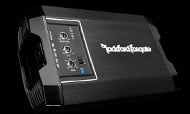
Rockford Fosgate (www.rockfordfosgate.com/mobile), the industry leader in high-performance audio systems, is pleased to announce that its new 2014 Power Series amplifier lineup, including the T400X4AD, T400X2AD, and T500X1BR, is now available in New Zealand. “We are proud to be the authorized representative and distributor of Rockford Fosgate audio products, accessories, and wearables in New Zealand,” said Kuben Chetty, president of Auckland, New Zealand-based Cube Electronics, which has been an authorized Rockford Fosgate distributor since 2011. “Rockford Fosgate brings a level ...

Rockford Fosgate Partners With Directed Electronics Australia For Exclusive Distribution Down Under
Wednesday Aug. 13, 2014
Rockford Fosgate (www.rockfordfosgate.com/mobile), the industry leader in high-performance car audio systems, is pleased to announce it has reached an agreement with Directed Electronics Australiato distribute its mobile audio product line in Australia, effective immediately. “Directed Australia has been a leader in automotive and consumer electronics brands for more than two decades, and a partner with this kind of experience is exactly what we need in such a vital market as Australia,” said Joe Gonzalez, Rockford Corp. international sales manager. “We ...

Rockford Fosgate Named Official Audio Sponsor Of The Rockstar Energy Uproar Festival 2014
Tuesday July 29, 2014
Rockford Fosgate (www.rockfordfosgate.com/mobile), the industry leader in high-performance audio systems, is proud to announce it is once again the official audio sponsor of the Rockstar Energy UPROAR Festival 2014. Rockford Fosgate will participate in a number of concert promotions throughout select tour dates for chances to win tickets, prizes, and more. The Rockstar Energy UPROAR Festival begins Aug. 15 and runs through Sept. 21. It includes a stellar lineup of multi-platinum superstars and breaking talent, featuring Godsmack and Seether. “Great ...

Rockford Fosgate Partners With Tucker Rocky Distribution For Motorcycle Powersports Line
Sunday July 27, 2014
Rockford Fosgate (https://rockfordfosgate.com/motorsports), the industry leader in high-performance audio systems, is proud to announce that it has partnered with Tucker Rocky Distribution to carry Rockford’s Powersports product line through its nationally distributed Biker’s Choice catalog. The partnership kicked off on July 26 during Tucker Rocky’s mid-year dealer show. “We are excited to have our motorcycle-specific products, such as our new Harley-Davidson® Direct Fit motorcycle audio systems and our new RFBTAUX Universal Bluetooth Streaming Adapter, available through such an exclusive and ...

Rockford Fosgate Partners With Riverpark, Inc. Distribution For Recreational Vehicle And Motorcycle Powersports Line
Sunday July 20, 2014
Rockford Fosgate (www.rockfordfosgate.com/oem), the industry leader in high-performance audio systems, is proud to announce that it has partnered with Elkhart, Ind.-based RiverPark, Inc. as an OEM distributor for Recreational Vehicle and Motorsports channels, effective August 1. "We are proud to partner with such a well-respected national distributor as RiverPark," said Vince Hormovitis, Rockford’s managing director of business development for Powersports. "The RiverPark team is focused on building strong, long term relationships, and they are experts in providing world class service ...
Rockford Fosgate Rocks Pikes Peak
Wednesday July 16, 2014
Rockford Fosgate (www.rockfordfosgate.com/motorsports), the industry leader in high-performance audio systems, is proud to announce that it recently joined forces with Mitsubishi Motors North America for the 92nd Annual Broadmoor Pikes Peak International Hill Climb in Colorado Springs, CO on June 29. Mitsubishi Motors entered two electric vehicles in the race, and Rockford Fosgate's famous mini SoundLab rocked the event's Fan Fest pre-race celebration on June 27.
Rockford Fosgate Named Official Motorcycle Audio Sponsor of the Sturgis® Motorcycle Rally™ 2014
Monday May 19, 2014
Rockford Fosgate, the industry leader in high-performance car audio systems, is proud to announce it has been named the official motorcycle audio sponsor of the famed Sturgis® Motorcycle Rally 2014. Also named sponsor of the “12th Annual Mayor’s Ride,” Rockford Fosgate will demonstrate its line of acclaimed motorcycle gear in its booth location on Lazelle Street in downtown Sturgis, SD during the 74th annual week-long event from August 4-10.

Rockford Fosgate Awarded U.S. Patent For ‘CLEAN’ Circuit Technology in Punch and new Power Amplifiers
Tuesday April 29, 2014
Rockford Fosgate, the industry leader in high-performance car audio systems, announced that its C.L.E.A.N. level setting technology, currently featured in its PUNCH and new POWER amplifiers, has been awarded a U.S. Patent (#8712066). This technology helps match the vehicle's source unit to the amplifier, therefore optimizing the amplifier’s gain settings to produce optimum power output. This is all done by on-board clipping detectors. “Adjusting your amplifier gain to match the maximum usable output voltage of the audio source is an ...
Rockford Fosgate Honors Reps At 2014 Annual National Meeting
Wednesday Jan. 22, 2014
Rockford Fosgate, the industry leader in high-performance car audio systems, is proud to announce that it has recognized Hector Mena of Momentum Sales & Marketing with its “Pitbull Award”, LK & Associates as its “Rep of the Year”, and Eric Smith of Northeastern Sales & Marketing with its “Lifetime Achievement Award” during the company’s recent Annual National Meeting in Las Vegas, NV. “We are proud of these rep firms and individuals because they all exemplify what it means to be ...

Rockford Fosgate Sponsors EMMA "EUROFINALS"
Wednesday Jan. 01, 2014
Rockford Fosgate (www.rockfordfosgate.com), the industry leader in high-performance car audio systems, is proud to announce it will be a main sponsor for The European Mobile Media Association (EMMA) "Eurofinals", the organization's biggest international event, which will be held in Salzburg from March 21–24, 2014.

Rockford Fosgate Partners With Leading Integrators For Sponsored Vehicles at 2013 SEMA Show
Monday Oct. 21, 2013
Rockford Fosgate, the industry leader in high-performance car audio systems, is proud to announce its list of sponsored vehicles on display at the 2013 SEMA Show, which is being held in Las Vegas, Nev. at the Las Vegas Convention Center from Nov. 5 - 8. The systems can be viewed at www.rockfordfosgate.com/SEMA. “Once again, Rockford Fosgate has partnered with some of the leading auto integrators who have built dynamic audio systems for vehicles, which will be featured at numerous locations ...

South Africa's MAX MY RIDE Magazine Features Volkswagen Golf VI R with Rockford Fosgate system
Tuesday Oct. 15, 2013
Excerpt Taken From Magazine
Ryan Reddy is the name on the registration slip of this 2012 Golf VI R and is fortunate enough to enjoy the best that life has to offer. The 19 year old student took possession of the car last year, and being an audio fanatic, you can imagine that the only thoughts on his mind were what sort of system could be installed in the car. Rael from Altra Audio, Ballito, South Africa took delivery of ...
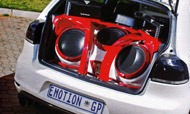
Speed & Sound Features VW Mk6 Golf GTI
Thursday Oct. 10, 2013
Next on the list of things to do for Silvan - the owner - was sort out the crappy stock audio system and yank it - I mean - take out everything and replace it with better quality components. For this, the car was delivered to Exclusive Customs who have built a number of really good looking systems. With that said, take note that this isn't the first car from their shop to grace this publication and it certainly won't ...
Speed & Sound Features Mazda RX7 V8
Tuesday Oct. 08, 2013
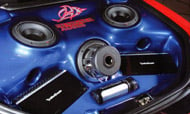
What better substitute is there for a rocking sound system than the sound of a fully modified V8? Well, a full Rockford Fosgate setup consists of the following: a Punch P1000-1bd monoblock amp powers three P2 10-inch subwoofers in the boot (hatch area), a P400-4 amp that powers the splits inside the car, a 1 Farad digital capacitor, and a Kenwood in-dash DVD player. This makes the RX7 not only unique from a performance point of view, but also an ...
Rockford Fosgate Nissan 350Z Races in Japan Auto Drift Championship In Round 3
Tuesday Oct. 01, 2013
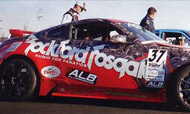
With 27 entries it was going to be a drift off for sure. Pairing up between competitors was the order of the day as Jim McFarlane in his S&S Chevy Lumina paired up with team mate Mikey Skelton in his Rockford Fosgate Nissan 350Z. Whilst team mates hashed it out for top spot, so did the Cooper family with father Fred SNR in his Nissan R33 Skyline up against son Fred JNR. Download PDF to read entire article

2010 Volkswagen Golf 6 GTI with Rockford Fosgate system featured in MAX My Ride magazine
Sunday Sept. 29, 2013
Samad Khan's dream wasn't good enough up until he said it and now we have the exclusive on it. The car was dropped off at Vicious Cars where Murad and Feroz began their magic. The factory source unit was wired up to a Rockford Fosgate Power Series T1000-4ad amplifier which is the backbone of this system. Up front, a sweet set of Rockford Fosgate Power series splits were installed with perfection in mind and in the boot (hatch area) rests ...
Speed & Sound South Africa Features Chevy Lumina Built By Mobile Dynamics
Wednesday Aug. 28, 2013
[Download PDF below to read entire article] Vehicle: Chevy Lumina UTE
Speed & Sound South Africa Features Opel Corsa Built By P&P Car Sound
Tuesday Aug. 27, 2013
[Download PDF below to read entire article] Vehicle: Opel Corsa Bakkie
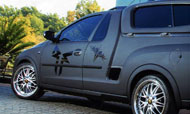
Speed & Sound South Africa Features Opel Corsa Bakkie Built By Potent Car Audio
Monday Aug. 26, 2013
[Download PDF below to read entire article.]Vehicle: Opel Corsa Bakkie Installer: Potent Car Audio, Brakpan South Africa Processor: 1ea Rockford Fosgate 3Sixty.3 Amplifiers: 1ea Rockford Fosgate Power T400-41ea Rockford Fosgate Power T2500-1bdCP Speakers: 2pr Rockford Fosgate Power T16-S Subwoofers: 2ea Rockford Fosgate Power T2D215 Rockford Fosgate Cables: 1ea Rockford Fosgate RFW1R-51 1/0 AWG Frosted Red Wire 1ea Rockford Fosgate RFW1B 1/0 AWG Frosted Black Wire 6pr Rockford Fosgate RFI-16 16 Feet Twisted Pair Signal Cable 1ea Rockford Fosgate RFWP16-30 16 ...

Rockford Fosgate and Proline Car Stereo Rock New York During Rockstar Energy Uproar Festival 2013
Monday Aug. 19, 2013
Brooklyn's Proline Car Stereo and Northeastern Marketing participated during the Rockstar Energy UPROAR Festival 2013 stop in Wantagh (Long Island), N.Y. During the event, representatives showed off Proline’s "Monsta truck" and gave concertgoers a heart stopping audio experience in Northeastern Marketing’s Rockford Fosgate-equipped mini SoundLab. Rockford Fosgate is the official audio sponsor of the summer festival which continues in Illinois, Indiana, and Michigan this week. Proline's "Monsta truck" wows spectators with the unbelievable amount of Rockford Fosgate audio equipment installed ...
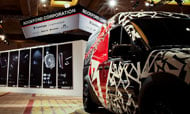
Rockford Fosgate & Lightning Audio Participate at 2013 MERA KnowledgeFest
Sunday Aug. 04, 2013
Rockford Corp, the industry leader in high-performance car audio systems, is proud to announce that brands’ Rockford Fosgate and Lightning Audio will be represented and participate during MERA KnowledgeFest, held from August 17 – 20 at the Gaylord Texan Hotel & Convention Center in Grapevine, Texas, booth 335. “We continue to attend KnowledgeFest because it gives us the opportunity to spend time with many of our retail partners,” said Theresa Hephner, Rockford Senior Director, Products and Marketing. “Rockford Corporation offers ...

Rockford Fosgate Named Official Audio Sponsor of the Rockstar Energy UPROAR Festival 2013
Tuesday July 30, 2013
Rockford Fosgate, the industry leader in high-performance car audio systems, is proud to announce it is the official audio sponsor of the Rockstar Energy UPROAR Festival 2013. Rockford Fosgate will participate in a number of concert promotions throughout select tour dates for chances to win tickets, prizes, and more. The Rockstar Energy UPROAR Festival begins August 9 in Scranton, Penn., and ends Sept. 15 in Chula Vista, Calif. It includes a stellar lineup of multiplatinum superstars and breaking talent, featuring ...

Review Of All New 2014 Mitsubishi Outlander
Sunday July 28, 2013
The Rockford Fosgate 710 watt sound system, rocked my socks. Nine speakers, a subwoofer, with Punch® control, DTS Neural Surround™,PremiDIA-‐WIDE® surround, Dolby® Volume turned the interior into a concert hall.
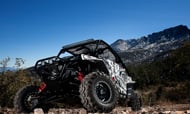
UTV Off-Road Mag Features Rockford Fosgate RZR
Sunday June 30, 2013
Rockford Fosgate approached TMW Off-Road last October about building something a little different for their consumer electronics show booth for 2013. Download the attached PDF to read the entire article.

“Check-In” and Then “Check Out” Rockford Fosgate SoundLab During 2013 Vans Warped Tour®; Foursquare® promo announced
Sunday June 09, 2013
Rockford Fosgate, the industry leader in high-performance car audio systems, has announced a new, exclusive promotion during the 2013 Vans Warped Tour®. Concertgoers who check-in with Rockford Fosgate SoundLab on Foursquare, followed by “surviving” the infamous PRESSURE CHAMBER will walk away with a Rockford Fosgate prize (limit one per participant, while supplies last). The 2013 Vans Warped Tour® kicks off June 15 in Seattle and wraps up August 4 in Houston. “The Rockford Fosgate SoundLab is a mobile high-performance car ...

Getting More Volume On A Road Glide
Tuesday May 28, 2013
Are you a Road Glide rider who would like more volume out of your stereo? Paul Yaffe and the guys at Rockford Fosgate audio have developed a speaker kit that bolts into the inner wall of your handlebar fairing. When combined with your factory speakers, the sound will blow you away with higher volume and better clarity. Download PDF to read entire article.

Rockford Fosgate SoundLab Rocks 2013 Vans Warped Tour®; Prize and Ticket Promotion Now Open
Tuesday April 30, 2013
Rockford Fosgate, the industry leader in high-performance car audio systems, is proud to announce it has once again partnered with Vans Warped Tour® for the 2013 summer concert and event series. Rockford Fosgate is also proud to announce that due to the extreme popularity of last year’s tour promotion, that the famed RF SoundLab will be present at each of the Vans Warped Tour® venues, which kicks of June 15 in Seattle and wraps up August 4 in Houston, and ...
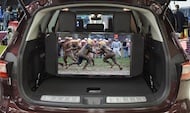
Rockford Corp., in Conjunction with Partner Blaupunkt®, will Present a Concept Vehicle
Wednesday Jan. 09, 2013
Rockford Corp, the industry leader in high-performance car audio systems, is proud to announce the exhibition of an advanced technology demonstration vehicle during its product showcase at The Palms Casino Resort in Las Vegas, Nev. from Jan. 8-10, 2013, in The Palms Ballroom. “The demo vehicle includes state-of-the-art technology systems in the areas of connected rear-seat entertainment, ultra-premium audio, and tailgate A/V entertainment,” stated Dan Vandenbergh, Rockford Corp. managing director of OEM. “Working with corporate partner Blaupunkt, Rockford Corporation’s OEM ...

Rockford Fosgate Launches Ticket Giveaway Consumer Promotion For AMA Supercross Events
Monday Dec. 03, 2012
Rockford Fosgate, the industry leader in high-performance car audio systems, is proud to announce that it has teamed with RCH Racing with the launch of a promotion whereas consumers can win tickets and merchandise for 16 upcoming AMA Monster Energy Supercross events. Between now and March 17, 2013, consumers can visit www.rockfordfosgate.com/promotions/2012_RCH.aspx in order to enter to win a free pair of event tickets and RCH Racing merchandise. “RCH Racing has been a great partner of ours, and we are ...

Rockford Fosgate; First "Klippel Verified" Under New Certification
Sunday Dec. 02, 2012
Rockford Fosgate, the industry leader in high-performance car audio systems, is proud to announce its compliance with Germany-based Klippel GmbH. Rockford Fosgate, an early adopter of Klippel products, is the first “Klippel verified” manufacturer under the new certification standard. “Inconsistent test equipment and procedures do not provide a standardized means for advanced product development,” explained Jake Braaten, Rockford’s director of product development. “Rockford Fosgate stands behind its products’ performance. By utilizing Klippel equipment, we insure that we meet or exceed ...

Rockford Fosgate Powers Sponsored Vehicles at 2012 SEMA Show
Monday Oct. 29, 2012
Rockford Fosgate, the industry leader in high-performance car audio systems, is proud to announce its list of sponsored vehicles on display at the 2012 SEMA Show, which is being held in Las Vegas, Nev. at the Las Vegas Convention Center from Oct. 30 – Nov. 2. “Rockford Fosgate’s sponsored vehicles will include stand out audio systems, and will be featured at numerous locations in and around the Las Vegas Convention Center,” explained Theresa Hephner, Rockford senior director, products and marketing. ...

DUB Magazine Features Alex Fregoso's 2003 F-250
Wednesday Oct. 03, 2012
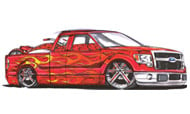
One Chandler, Arizona resident Alex Fregoso heard a demo vehicle packed with Rockford Fosgate equipment thump and boom at a local show, he immediately knew no other audio brand would do for his custom 2003 Ford F-250. the lifted truck already sported some minor modifications since it would become a fierce show car, but Fregoso wanted to "knock" with bass that rattled your bones. After finding out that David Clark and his team at the Sound Expression in Mesa, AZ ...
Rockford Fosgate Launches SEMA 2012 Web Guide
Sunday Sept. 16, 2012
Rockford Fosgate, the industry leader in high-performance car audio systems, is proud to announce its SEMA 2012 Web Guide. Live as of Oct. 15, rockfordfosgate.com/sema is a complete virtual guide to Rockford Fosgate’s custom show vehicles on display at SEMA 2012, which is being held in Las Vegas, Nev. at the Las Vegas Convention Center from Oct. 30 – Nov. 2. “We will be providing live coverage from the SEMA show floor October 30 through November 2, including videos and ...

Cash and Prizes Up For Grabs In Rockford Fosgate's 2012 Vans Warped Tour® Promotion
Sunday May 20, 2012
Rockford Fosgate, the industry leader in high-performance car audio systems, is proud to announce the launch of a consumer promotion that coincides with the 2012 Vans Warped Tour®, of which Rockford Fosgate is the exclusive car audio sponsor. The promotion, that launched April 30th, will continue throughout the Vans Warped Tour and concludes on August 5th. The promotion features a $25,000 grand prize, as well as hundreds of other prizes, including entry tickets to Vans Warped Tour® dates, gift packs, ...

Rockford Fosgate UK Demo Vehicle: A MINI Car, MINI System, BIG Sound
Monday April 16, 2012
The Mini with its limited interior and boot space was the perfect shop window for Rockford Fosgate's incredibly small but powerful amplifiers and the ultra-shallow Punch bass box. Superbly installed by Car Audio & Security with their usual eye for detail, the new demo car made its debut at EXPO 2012.

ROCKFORD FOSGATE ANNOUNCES STRATEGIC ALLIANCE WITH SANCTIOND™ PREMIUM CAR CARE BRAND
Wednesday March 28, 2012
Rockford Fosgate, the industry leader in high-performance car audio systems, is proud to announce its distribution partnership with Sanctiond™, a signature brand of premium car care products designed by Mister Cartoon to satisfy the unmet needs of those who share his lifestyle and passion for music, sports, fashion, and cars. Sanctiond™ will be distributed through authorized aftermarket Rockford Fosgate dealers. As an artist, Mister Cartoon has created iconic album covers, murals, logos, shoes, and tattoos. Stars such as Eminem, Amare ...

ROCKFORD FOSGATE ANNOUNCES SPONSORSHIP OF LOORRS SERIES OFF-ROAD DRIVER CASEY CURRIE
Monday March 19, 2012
Rockford Fosgate, the industry leader in high-performance car
audio systems, is proud to announce that it has sponsored Lucas Oil Off Road Racing Series
(LOORRS) driver Casey Currie. In 2012, Currie will race for the LOORRS championship in his No.
2 Monster Energy/General Tire/Nissan Pro Lite truck, while mixing it up with UTV races and public
appearances in between.
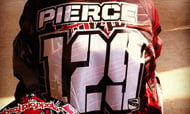
ROCKFORD FOSGATE ANNOUNCES SPONSORSHIP OF AMATEUR MOTOCROSS CHAMPION ANDREW PIERCE
Monday March 12, 2012
Rockford Fosgate, the industry leader in high-performance car
audio systems, is proud to announce that it has sponsored 16-year-old Huffman, Texas-native
Andrew Pierce, the amateur motocross champion and member of the Metal Mulisha team. Pierce is
currently racing in the top 2012 Motocross amateur events, recently winning three new
championships while at the Oak Hill National, including the Honda 150 Cup, Supermini 2, and 85
MOD 14-16 classes.
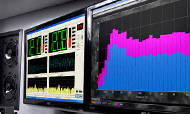
Rockford Fosgate Launches Rockford Amplified Tuned System (RATS) Online & Smartphone Installation Tool
Monday Feb. 06, 2012
Rockford Fosgate, the industry leader in high-performance car audio systems, is proud to announce that it has launched the Rockford Amplified Tuned System (RATS) online and smartphone installation and sales tool. Now live (http://rats.rockfordfosgate.com), RATS takes the hard work out of system design via Rockford Fosgate's installation and testing of pre-configured components in real vehicles, allowing an installer to easily determine which components best complement each other in a specific vehicle prior to installation. “RATS displays the frequency response of ...
ROCKFORD FOSGATE UPGRADES WEBSITE; LAUNCHES NEW MOBILE WEBSITE AND MOBILE APP
Saturday Jan. 07, 2012
Rockford Fosgate, the industry leader in high-performance car audio systems, is proud to announce that it has updated its website, as well as launched a new compatible enhanced mobile website and a new free mobile app. All are now live.

Rockford Fosgate Demonstrates Next Generation ecoPUNCH™ Factory Upgrade Concept In Nissan Juke®
Saturday Jan. 07, 2012
Rockford Fosgate, the industry leader in high-performance car audio systems, announced that it will feature its next generation ecoPUNCH™ factory upgrade plug and play concept audio system in the Nissan Juke® at The Palms Casino Resort in Las Vegas, Nev. from Jan. 10-12, 2012, in The Palms Ballroom. “The Nissan Juke® is an innovative crossover, and it’s a perfect fit with Rockford Fosgate’s youthful and energetic customer demographic lifestyle,” explained Dan Vandenbergh, Rockford managing director, OEM. “The 2011 Juke, which ...
ROCKFORD FOSGATE PARTNERS WITH HART AND HUNTINGTON RACING
Saturday Jan. 07, 2012
Rockford Fosgate, the industry leader in high-performance car audio systems, is proud to announce that it has partnered with the Hart and Huntington Racing to be the team’s audio sponsor for the 2012 Supercross season.

ROCKFORD FOSGATE TO BE EXCLUSIVE CAR AUDIO SPONSOR OF 2012 VANS WARPED TOUR®
Saturday Jan. 07, 2012
Rockford Fosgate, the industry leader in high-performance car audio systems, is proud to announce that it has partnered with the Vans Warped Tour® for its 18th year in 2012. Rockford will participate in the tour’s 41 dates in 41 cities across America and Canada, beginning in June.
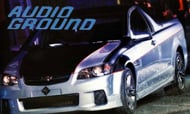
Rockford Fosgate Powers This South African Chevy Lumina
Thursday Nov. 03, 2011
Speakers: 2-pair 5.25" Rockford Fosgate Splits (component sytems) 1-pair 6.5" Rockford Fosgate Coax Subwoofers: (2) 10" Rockford Fosgate Power T0 Subwoofers Capacitor: Rockford Fosgate 2 Farad Installer: Riverside Car Radio, Nelspruit, South Africa

Tanom Motors Names Rockford Fosgate Original Equipment Manufacturer for New Invader TC-3 Trike
Monday Oct. 31, 2011
Rockford Fosgate announced that its high-performance mobile audio systems will come standard on the new Tanom Motors Invader TC-3 reverse trike audio package. An exciting fusion of super bike and super car, the high performance reverse trike was unveiled today at the 2011 SEMA Show in Las Vegas (booth #37053). “Rockford Fosgate equipment has been available from leading car manufacturers for many years,” said Bill Jackson president of Rockford Corporation. “But those who love to ride motorcycles and power sport ...
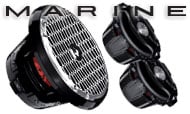
Rockford Fosgate TO Rock 2011 IBEX With New Marine Audio Systems
Wednesday Oct. 12, 2011
Rockford Fosgate will introduce several new products in its line of marine grade audio equipment at the 21st Annual International Boatbuilders' Exhibition and Conference (IBEX) show at the Kentucky Exposition Center in Louisville, Ky. From Oct. 17-19, 2011, Rockford Fosgate and its national distribution partner Quest Audio Video (booth #2750) will showcase gear ranging from amplifiers to head units and subwoofers. Representatives will be on-hand to talk with boat builders and marine retailers about how Rockford Fosgate audio systems can ...

Rockford Fosgate Announces Winner of "Ride Like A Pro"
Thursday Oct. 06, 2011
Rockford Fosgate, the industry leader in high-performance car audio systems, has selected Cameron Howell from Susanville, Calif. as the Rockford Fosgate “RIDE LIKE A PRO” winner. The online promotion was announced Sept. 1, 2011 and gives Cameron Howell a one-on-one day with Motocross Racing Pro Ryan Sipes, top of the line Scott MX racing gear, as well as $1,000 of Rockford Fosgate merchandise. The public is invited to join Sipes and Howell on Oct. 20, 2011, from 10 a.m. – ...

Rockford Corporation Announces New Patent for Constant Power Technology
Monday Sept. 05, 2011
Rockford Corporation recently received patent 7,994,857, issued by the United States Patent and Trademark Office on Aug. 9, 2011. Invented by Rockford Engineers Mark Albers, James Strickland and David Baker, the "Dynamic Constant Power Amplifier" patent allows Rockford to create amplifiers that deliver maximum power for a range of speaker impedances.
Chad Anderson's GMC Sierra with Rockford Fosgate
Thursday July 28, 2011
Download PDF for photos and article.

Rockford Fosgate VW Touran by Sound Studio 24, Germany
Monday July 25, 2011
An article from the German 12Volt Magazine "Car & HiFi" about a Volkswagen Touran fully equipped with Rockford Fosgate. The car has been built by "Sound Studio 24" from Gelnhausen, Germany. Shop owner Dennis Frick and Colleague Dominique Petrovic are real die hard Rockford Fosgate Fanatics. [aricle available in Deutsch only, but photos are universal]
Rockford Fosgate Makes Noise Throughout The U.S. With High-Performance Mobile SoundLab Demo Vehicles
Wednesday July 06, 2011
Rockford Fosgate, the industry leader in high-performance car audio systems, is making stops throughout the U.S. so audio enthusiasts can experience the ultimate sound system with one of the Rockford Fosgate SoundLab demo vehicles. The mobile SoundLab demonstrates the audio experience that consumers can add to their own vehicle using Rockford Fosgate’s line of premium car audio equipment. In the first six months of 2011, the demonstration vehicles have hit 23 states. The street teams will be heading to California, ...
Rockford Fosgate and Legendary Driver Paul Tracy Team Up for 2011-2012 Racing Season
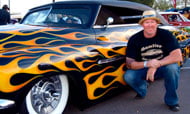
Thursday May 12, 2011
Rockford Fosgate, the industry leader in high-performance car audio systems, is joining forces with legendary racer Paul “PT” Tracy. Considered one of the most successful open wheel drivers in North America, Tracy will debut the Rockford Fosgate logo at the 100th anniversary of the famed Indy500 on Sunday, May 29, 2011 while piloting the #23 Dreyer & Reinbold Racing entry. "Paul embodies the Rockford Fosgate lifestyle," said Bill Jackson, CEO and president of Rockford Corporation. "He leads an active life, ...

Rockford Fosgate Announces U.S. Patent For OEM Integration Technology
Monday May 09, 2011
Rockford Fosgate, the industry leader in high-performance car audio systems, recently announced that the United States Patent and Trademark Office has issued patent 7,778,718, which covers frequency normalization of audio signals, to the company. The 3Sixty Signal Processor family was developed by the Rockford Fosgate audio engineering team to produce a flatter frequency response from an audio source that has a non-flat frequency response. The patent provides protection for 20 years from the filing date, which was in 2010.“This patent ...

Rockford Fosgate Journeys On The Ultimate Adventure Ride With "Rip To The Tip"
Wednesday April 27, 2011
Rockford Fosgate, the industry leader in high-performance car audio systems, is participating in the 2011 “Rip to the Tip,” an eight-day journey through the Baja Peninsula where experienced motocross riders will fight all types of terrain thrown at them during a 1,488-mile trek. Rockford Fosgate has partnered up with three-time Rip veteran Bob Walker who will be representing Rockford Fosgate during the journey, which launched today at 7:00 a.m. PST, in hopes of making the coveted “Full Pull” from Tecate ...

Rockford Fosgate Announces Winners of What's Your Volume 2.0 Contest
Monday Jan. 31, 2011
Rockford Fosgate Announces What's Your Volume 2.0 Video Contest
Thursday Sept. 30, 2010
Rockford Fosgate announced today the launch of What’s Your Volume 2.0 video contest and sales promotion. “We’ve brought What’s Your Volume back this year, it’s bigger and louder than ever before,” says Tammy Lowe, Marketing Services Manager. “What’s Your Volume contestants will create a video telling the world why they are the ‘Ultimate Car Audio Fanatic.’ The Grand Prize is a Suzuki GSX-R600 sport bike, $5000 in Rockford Fosgate audio gear, a ContourHD video prize pack and of course, a ...
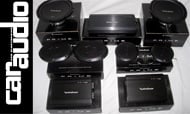
Rockford Fosgate Prime System Review
Monday Aug. 30, 2010
Rockford Fosgate Prime System Review
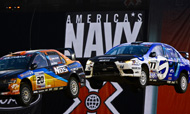
Team ACP Racing Takes Double Bronze at X Games, on Ethanol
Sunday Aug. 01, 2010
ACP Racing, the top preparer of Mitsubishi rally team cars in North America, took two Bronze Medals this past weekend at X Games 16 in Los Angeles. The medals were the only ones taken by non-factory-supported cars and drivers at the event. Andrew Comrie-Picard, five-time X Games competitor and principal of ACP Racing, took the Bronze in Rally Car Racing in his 2006 Evolution IX, and Samuel Hubinette, Comrie-Picard's teammate in professional drifting, took the Bronze in the new discipline ...
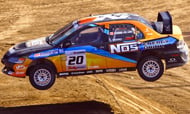
Andrew “ACP” Comrie-Picard Takes Bronze Medal at X Games
Saturday July 31, 2010
August 1, 2010 – North American Rally Champion Andrew "ACP" Comrie-Picard took third place overall and the Bronze Medal in Rally Car Racing at X Games 16 this weekend in a hard-fought battle that saw twelve of the best drivers and teams in the country and from around the world fighting in the Los Angeles Coliseum. For Comrie-Picard, the result was the culmination of successful year as a driver, TV host, and now team owner. "We've competed at every X ...
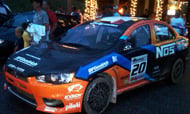
Andrew "ACP" Comrie-Picard to Compete at New England Forest Rally
Thursday July 15, 2010
North American Rally Champion Andrew "ACP" Comrie-Picard and his NOS Energy rally team will tackle the fast and rough New England Forest Rally in Maine and New Hampshire this weekend. The event marks ACP's tenth anniversary as a competitive rally driver in the USA - his first American rally was this event in 2000, when he competed with a 1995 Lada Samara manufactured in the former Soviet Union. That year, he finished mid-field with a 90-hp 2wd car, an excellent ...

Rockford Fosgate expands with ICE to focus on retailers
Tuesday July 06, 2010
Rockford Fosgate & ICE (In-Car Experts) expands their partnership to offer enhanced marketing and support tools to over 150 ICE mobile specialty retailers.

Andrew 'ACP' Comrie-Picard Takes on Legendary Pikes Peak International Hill Climb
Tuesday June 29, 2010
North American Rally Champion Andrew "ACP" Comrie-Picard is set to compete at the 88th annual Pikes Peak International Hill Climb (PPIHC) on Sunday. This is the first time that ACP will compete in this, the most famous hillclimb race event in the world.

Rockford Fosgate gives iPhone, iPod & iPad users PUNCH
Tuesday June 15, 2010
Rockford Fosgate announces new PUNCH PLUGS PP15MMi with integrated microphone and controller for iPhone, iPod and iPad users. "Our latest version of PUNCH PLUGS adds total integration for the "i" enthusiast, giving the user the ability to talk on the phone, change tracks, pause and adjust volume; all from a custom controller seamlessly integrated to the flat tangle free PUNCH PLUGS cord. The PP15mmi shares the same massive 15mm dynamic driver as our original PUNCH PLUGS, which have been extremely ...
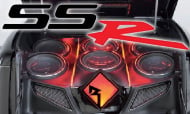
AutoHiFi Magazine Features Rockford Fosgate SSR
Sunday June 13, 2010
Article available in Deutsch only. However, pictures are universal!
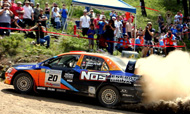
Andrew "ACP" Comrie-Picard and NOS Energy Score Decisive Win at Oregon Trail Rally
Monday May 17, 2010
North American Rally Champion Andrew “ACP” Comrie-Picard and the NOS Energy Rally Team won the long and difficult Oregon Trail Rally this weekend, scoring victory with a strong and steady drive in an event that saw both close competition and some major crashes. The team led almost the entire event on the way to the win. "It's a great result," said Comrie-Picard, "everything went according to our strategy and the win is an important one at this point in the ...

Rockford Fosgate Gets Extreme with Get In & Punch It Promo
Thursday May 13, 2010
Rockford Fosgate launches GET IN & PUNCH IT Promotion showcasing Rockford’s high performance products and audio lifestyle. "Rockford Fosgate produces audio gear with a no compromise attitude. You'll find Enthusiasts' around the globe using Rockford audio products in just about anything that moves. GET IN & PUNCH IT Promotion gives three lucky winners the opportunity to "GET IN & PUNCH IT" in one of Rockford's extreme experience prize packages, by land, by sea or by air" explains David Slepak, Director ...
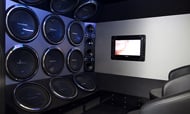
Rockford Fosgate Focuses on the Experience with SoundLab
Sunday April 25, 2010
Rockford Fosgate launches “Expect More” tour with the new RF SOUNDLAB demonstration vehicle. The RF SOUNDLAB is the ultimate high-performance audio demonstration vehicle. Based on a long–wheelbase Mercedes Benz sprinter chassis, RF SoundLab has both a 10,000 watt audio carnival ride, appropriately called THE PRESSURE CHAMBER as well as the SOUNDLAB, an interactive in-car demonstration that gives participants the opportunity to experience Rockford high-performance components in their vehicle. "The RF SOUNDLAB is all about the Rockford Fosgate experience and demonstrates ...

Country Clubbing in a Rockford Fosgate Land Rover
Wednesday March 24, 2010
Installation: - Pioneer AVIC HD1BT (running through OEM Range Rover source) - 1x Rockford Fosgate 360.2 - 1x Rockford Fosgate Power T600-4 amp - 2x Rockford Fosgate Punch P1000-1bd amp - 2x Rockford Fosgate Power T1 15" subwoofers - 8x Rockford Fosgate Punch P152-S components - Sony PS2 - Digital TV Tuner - 4x Alpine monitors Download the PDF to read the entire article.
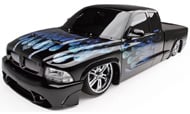
Rockford Fosgate in Slammed 2000 Dodge Dakota R/T
Monday March 22, 2010
This article is no longer available.

Rockford Fosgate official Audio Products Sponsor of United Healthcare Pro Cycling Team
Sunday Feb. 28, 2010
Rockford Corporation announced today that it will proudly sponsor the UnitedHealthcare Pro Cycling Team Presented by Maxxis for 2010, bringing its unique style of high-performance audio products, including its new PUNCH PLUGS headphones, to the world of cycling. "Were excited to be a part of UnitedHealthcare Pro Team Presented by Maxxis, said Rockford Fosgate Sr. Marketing Manager David Slepak. This organization is first class and the perfect ambassadors to help Rockford engage and embrace the members of the rapidly growing ...

Rockford Fosgate launches factory authorized sales event
Thursday Feb. 18, 2010
Rockford Fosgate launches it’s first factory authorized sales event with instant savings on select PUNCH full range loudspeakers and POWER T-500-1bd amplifier. The sales event also features the release of several new exciting products including PRIME component full range loudspeakers, PRIME R250-1 mono block amplifier, PUNCH P500-4 & P700-1bd amplifiers, PUNCH PLUGS and RFDJ1 2-Way Loudspeakers. “Rockford Fosgate customers expect more, so we’re delivering with exceptional new products across multiple lines and categories plus the opportunity to grab instant savings ...

ACP takes strong early season points at U.S. season-opener
Tuesday Feb. 02, 2010
Defending North American rally champion Andrew “ACP” Comrie-Picard earned some strong early-season points with a fourth-place finish at the icy U.S. season opener this weekend in northern Michigan. The NOS Energy-backed rally team of ACP and co-driver Jeremy Wimpey took a cautious approach to the start of the contest in some of the most challenging conditions ever seen in U.S. rally competition. "It was like a luge course out there," said Comrie-Picard. "The first few stages were the iciest I ...
MotorMusicMag Reviews Rockford Fosgate IBeam
Sunday Jan. 24, 2010
Wow, just wow. Now you already know how much I like the product at the very beginning of the review, but stick around and I’ll explain why. You will dig the way Rockford Fosgate’s new Ibeam (IB200) works. Read the Article Online: MotorMusicMag Website Download PDF of Article: (see PDF left)

WFL is first dealer to order Rockford In-Ear Monitors!
Tuesday Jan. 19, 2010
The new RF buds use unusually large 15mm diaphragms that really seem to make a difference.

ACP Racing Wins North American Rally
Sunday Jan. 10, 2010
Andrew "ACP" Comrie-Picard and the NOS Energy Mitsubishi Lancer Evolution won the North American Rally Championship this past weekend with a podium finish in the season-ending Rally of the Tall Pines. The win represents the first championship for the Mitsubishi Evolution X, and the first rally championship for NOS Energy Drink. "This is a terrific result, especially given that we were working on developing the new rally car throughout this first competition season for the Evolution X," said Comrie-Picard. "But ...

Karissa Hosek Wins "What's Your Volume" Contest
Thursday Jan. 07, 2010
Rockford Fosgate announced its winner to "Whats Your Volume" contest live from it's new product showcase at The Palms Hotel. Karissa Hosek with her 1994 Mazda RX-7 convinced the world that she deserved the $5,000 Rockford Fosgate sponsorship and a full spread in an upcoming issue of Rockford's Volume Magazine. "We're extremely excited about Karissa and the outcome of the contest," says Sr. Marketing Manager David Slepak. "She's the real deal, an extraordinary girl, serious about car audio and a ...

Black Opel Astra Inheritance From Belgium
Sunday Dec. 27, 2009
Car: Opel Astra G 1.7 DTI Radio: Kenwood DDX 7029 Signal Proccessor: Rockford Fosgate 3Sixty.2 Sub Amp: (3) Rockford Fosgate T15002 Center Amp: (1) Rockford Fosgate Power T8004 Coax Amp: (1) Rockford Fosgate Power T3002 Coax Speakers: (12) Rockford Fosgate T142C Center Speaker: (1) Rockford Fosgate T162C Subs: (4) Rockford Fosgate Power T1D415 Capacitor: Rockford Fosgate RFC10HB 10 Farad LCD Monitors: (21) 7" LCD Monitors: (1) 17" Entertainment: Playstation2 Batteries: (2) Kinitek 2400 Wheels: Carline CMG 9 & 10 x ...
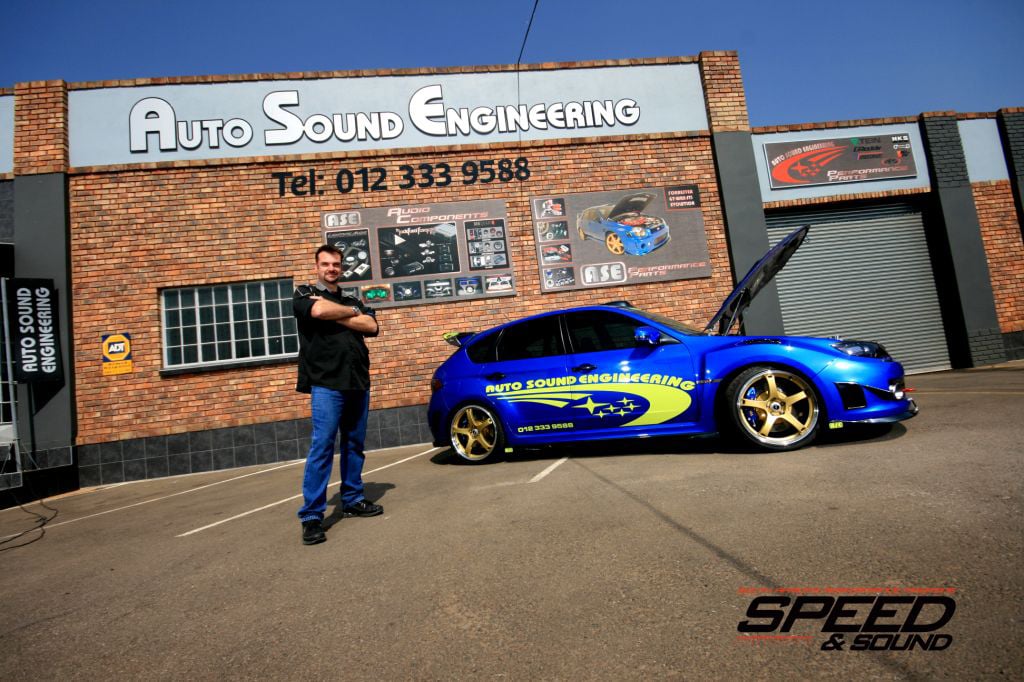
Auto Sound Engineering Obsessed Over Subaru WRX STI X
Sunday Dec. 13, 2009
What do you get when you cross a car audio fanatic with an absolute petrol head? Jan Steyn from Auto Sound Engineering in Pretoria, South Africa, that's what. Jan has been a certified Rockford Fosgate fanatic since 1993, when he opened his store with one goal in mind: to absolutely dominate the sound quality circuit. After he has won all there is to win in car audio, he branched his business out to modifying cars as well, and his love ...
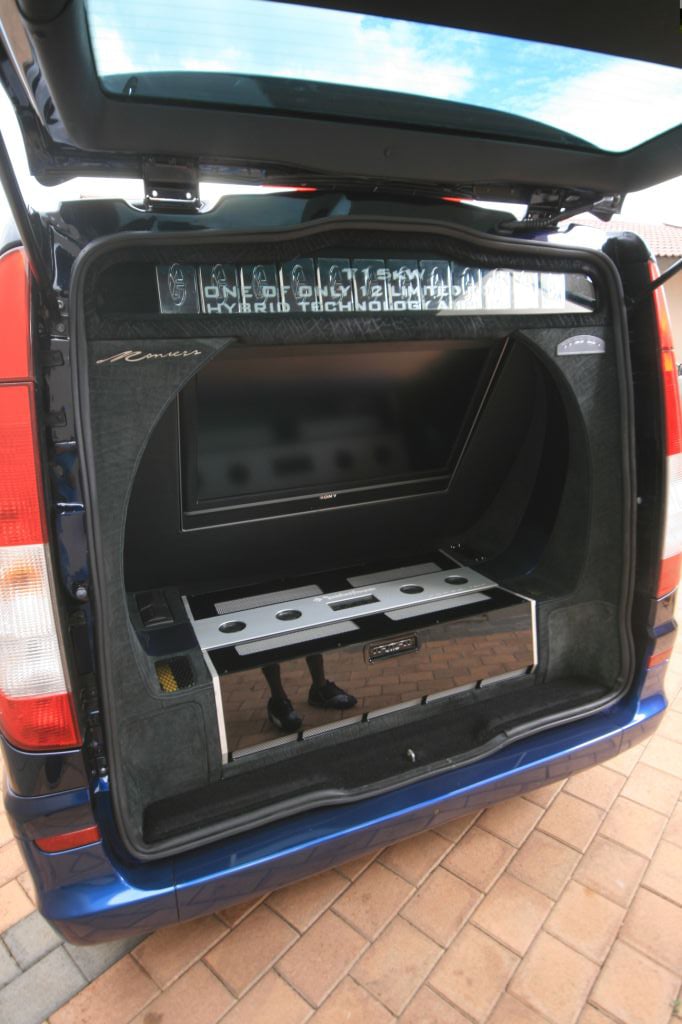
Monier's Customs Tricks A Mercedes Benz Vito
Sunday Nov. 29, 2009
In order to build one of the loudest cars in the world, your choice of amplifiers is very simple: Rockford Fosgate Power T15KW. Simply nothing else compares. So when a certain gentleman from Johannesburg, South Africa, decided to build a car to make a statement, he chose the Power T15KW as his starting point. His design brief was simple: build me a car that will be the most noticed and loudest. He tasked Monier's Customs with fulfilling his wishes. They ...
Andrew "ACP" Comrie-Picard Runs Rockford Fosgate
Sunday Nov. 15, 2009
Andrew "ACP" Comrie-Picard and the NOS Energy rally team scored a third place overall in the 2009 Rally America Championship, edging Monster Energy's Ken Block out of the top three despite suffering an engine failure while angling for the a podium at last weekend's season ender.
Rockford Fosgate Launches What's Your Volume Promotion
Saturday Oct. 31, 2009
Rockford Fosgate is looking for a true Rockford Fosgate fanatic to be featured in an upcoming issue of the acclaimed Volume Magazine. What's Your Volume Video Contest starts November 1st, 2009 and the Rockford crew will be accepting video submissions via www.rockfordfosgate.com/contest through November 30th, 2009. We're looking for a Rockford Fosgate car audio fanatic for our next issue of Volume Magazine set to come out in 2010. This is a nationwide search for one lucky winner and the best ...
DJ Deon Govender ICE'd With Rockford Fosgate
Sunday Oct. 25, 2009
Here's a great radio clip from DJ Deon Govender of East Coast Radio, the biggest Radio Station in the Province of Kwa-Zulu Natal, South Africa. This radio clip played on Friday August 28th at 21h 45m to 2.2 million listeners (about 5% of the South African population). DJ Deon Govender's ride was loaded with a Rockford Fosgate PRIME amplifier and speaker system! Radio ClipListen Now East Coast RadioView Website Deon Govender's FaceBookView FaceBook Page Rockford Fosgate System PhotosView Photo Gallery ...

American Dream Dodge Charger R/T From Poland
Monday Oct. 12, 2009
This is an impressive article about a Rockford Fosgate equipped Dodge Charger published in "GT 129", a Polish magazine. "American Dream" was first published in an 08/2009 issue, with an 09/2009 issue published as the "car of the month".The Dodge Charger R/T was totally rebuilt, with some innovations like pneumatic trunk opening and remote controlled door openings (no door handles). The trunk floor is made from marble tiles and of course a lot of mechanical works. Mechanically the car is ...

A1 Audio Design's Rockford Fosgate Mitsubishi FTO
Sunday Sept. 20, 2009
Rockford Fosgate Mitsubishi FTOSystem DesignSource: Alpine CD-9886R CD tuner Front Speakers: (6) Power T162S coaxial speakers in each door. (2) Power T152S components in centre console and a pair above sub port area. Rear Speakers: (2) Power T215D4 dual 4-ohm woofers running 2-ohm load in slot ported custom enclosure in place of rear seat area. Box tuned to around 33Hz. Amplifiers: (2) Power T2500-1bd amplifiers running subwoofers delivering 2500W RMS each. (1) Power T1000-4 delivering 6-ohms into each door and ...

Sea Magazine Highlights Rockford Fosgate Marine
Sunday Sept. 06, 2009
Loud and Proud Naturally, if you'd like the entire marina or anchorage to share your musical taste, then you'll need some type of amplification and speakers that can handle the output clearly. One option is to match speakers and amps with the brand of the deck....But some installations require a bit more. For those, consider turning to one of the leaders in mobile speaker technology, Rockford Fosgate. Not to be confused with Jim Rockford, Rockford Fosgate proclaims they are the ...

Power T2500-1bd Amplifier Test and Review
Sunday Aug. 23, 2009
The Rockford Fosgate T2500-1bd Amplifier Test and Measurements by Garry Springgay of Cogent Audio Labs For over 25 years Rockford Fosgate has been known for building famed, and in many cases, legendary high power amplifiers and it seems there is no end to this tradition. Now, from one of the original founders of serious car audio power comes a new, formidable subwoofer-driving powerhouse. The Rockford Fosgate T2500-1bd amplifier is part of the widely acclaimed Power Series. The new for ‘09 ...

Truckin' Magazine Features 1956 Chevy
Sunday Aug. 09, 2009
Excerpt from article: "The rockin' vibes were created by Tim Wepprecht and Jesse Moralez at Audiotistics in Apple Valley, California. The system is controlled by a Clarion Max 675VD head unit and the highs/mids are powered by a pair of Rockford Fosgate T400-4 power amps." "The mids and separates blast through a pair of 6.5-inch mids with 1.1-inch inverted aluminum dome tweeters. The thunderous bass is delivered through two Rockford Fosgate 8-inch subwoofers, which are located at each of the ...
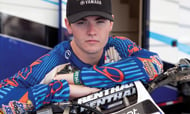
AMA Supercross Star Josh Grant Joins The Rockford Fosgate Family
Thursday Aug. 06, 2009
Pro Supercross rider Josh Grant “JG” got an unexpected surprise Friday when his sponsor Rockford Fosgate showed up with a $25k custom built sound system for his ride before the 2009 X Games.

Car Hi Fi Features Rockford Fosgate Matrix In Deutsch
Sunday July 26, 2009
Audio SystemVehicle: Daihatsu Materia (Scion Xb)Front: Rockford Fosgate Power Series T152SFront System: RF (3) x Power Series T162SCoax: Rockford Fosgate Power T162CSubwoofer: Rockford Fosgate Power T115D4Subwoofer Amp: (3) x RF Power T1500-1bdEuro Vierkanal: (3) x RF Power T600-4Article not translated - Printed in Deutsch (German)Photos are worth 1,000 words!Download attached PDF to read article.

Mitsubishi Lancer 'Best Car' for Campus Cruising
Thursday July 16, 2009
High School seniors across the country have long since moved their graduation tassels from right to left. Before they start buying mini-fridges and extra-long bedsheets for their dorm rooms, prospective undergraduates need an affordable, safe and mpg-friendly ride that will leave Mom and Dad stress-free during trips to and from school. AutoWeek editors pick their list of top cars in which to send a kid off to college. The list includes: • 2009 Hyundai Elantra Sedan • 2009 Honda Civic ...
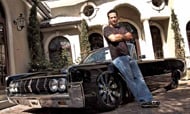
Performance Auto & Sound Features Mob Steel Lincoln
Sunday July 12, 2009
ENGINE & PERFORMANCE Ford 427ci CobraJet V8 WHEELS, TIRES, BRAKES Mobsteel NY Joe 22-inch alloys F: 22x9.5-inch R: 22x10-inch Pirelli P-Zero Nero Tires F: 265/30R22 R: 295/25R22 Mobsteel-spec disc brakes13 & 12-inch w/ 2-piston calipers. SUSPENSION Mobsteel triangulated 4-link suspension. Slam Specialties air bag system Mobsteel sway bars EXTERIOR Mobsteel custom bodywork Mobsteel chrome bumpers Mobsteel emblems and badging 4-coats of SEM Color Horizons Jet Black 6-coats of clear INTERIOR By: C&S Stitchworks in Brighton, MI 6-way power adjustable seats ...

Nissan Cube® Named a 2009 Top 10 Coolest New Car
Thursday June 18, 2009
The all-new 2009 Nissan cube, (which went on sale at Nissan dealers nationwide in May, has been named a "2009 Top 10 Coolest New Car Under $18,000" by Kelley Blue Book's www.kbb.com. "High fashion and a low price make the Nissan cube an excellent choice for buyers who want to look cool on a budget. The cube takes the compact box concept and elevates it with distinct details like asymmetrical rear styling and a supremely roomy and flexible interior." The ...
Rockford Fosgate Announces RFTECH:Woofer BoxAdvisor
Sunday June 14, 2009
Tempe, Ariz. - Rockford Fosgate is excited to announce the car audio industry’s first online woofer enclosure recommendation and modeling application called the RFTECH:Woofer BoxAdvisor. Two modes are available; Consumer Mode for basic information and Dealer Mode for advanced charting.
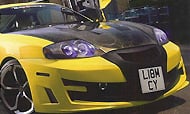
Max Metal Hyundai Coupe is an Award Winner In UK
Tuesday April 14, 2009
Rockford Fosgate Gear: Amplifiers:(?) Rockford Fosgate Power Series T???? Speakers:(?) Rockford Fosgate ???? Subwoofers:(?) Rockford Fosgate ????Download PDF to view entire article:
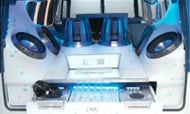
Liquid Force in 1967 VW Kleinbuss From Finland
Thursday March 19, 2009
Source UnitAlpine IVA-D105A AmplifiersPower T40001bd Power T8004 Power T600-2 SpeakersPower T162C Power T162S Power T210D2 Attached PDF contains entire article. Sorry, article available in Finish only, but hey, photos don't need to be translated.

Rockford Fosgate Teams Up With Patrick Industries, Inc.
Tuesday Feb. 03, 2009
Rockford Corporation today announced a new relationship with Patrick Industries, Inc., headquartered in Elkhart, Indiana, to distribute its premium Rockford Fosgate audio brand to the marine, recreational vehicle (RV) and recreational product markets. Rockford Fosgate offers an entire line of high performance Marine grade speakers designed to deliver dominant acoustical characteristics to harsh marine environments. A complete line of audio/video source units branded under the Rockford Fosgate name will further expand Patrick Industries’ product offerings to its marine and RV ...
Rockford Fosgate Announces New Products at CES
Wednesday Jan. 07, 2009
At the highly anticipated 2009 Consumer Electronics Show (CES), Rockford Fosgate announced 73 consumer products, 1 web-based application for consumers, and 2 web-based applications for authorized dealers. Dealer Dashboard - This application encompasses a new financial interface for Authorized Rockford Fosgate Dealers to lookup account information and an Online Dealer Store for Authorized Rockford Fosgate Dealers to place merchandise orders.RFTECH:Woofer BoxAdvisor - The consumer version provides an intuitive interface for finding recommended enclosure designs for Rockford Fosgate woofers. The dealer ...
Rockford Fosgate in a Magic Duster In Poland
Tuesday Sept. 30, 2008
Magazine PDF available in Polish Only.Below translation & editing courteousy of Agnieszka Chojnacka
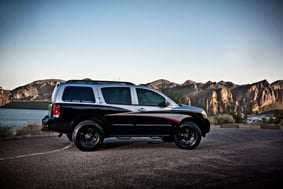
Rockford Fosgate Unveils its NEW Nissan Armada At The First Annual Ultimate Boarder Contest
Tuesday April 22, 2008
After weeks of fabrication, and installation, Rockford Fosgate chose April 19, 2008 for the “Rock-MADA”, a collaboration demo vehicle with Nissan, to make its maiden voyage. The new demo vehicle featuring (6) T1 15” subwoofers, (3) POWER T1500-1bd amplifiers, (2) T600-4 amplifiers and (4) sets of T162S component speakers, delivers enough bass to measure on the Richter scale! The road worthy, rep friendly, crowd pleaser acted as a carnival ride at this, it’s first event, The Ultimate boarder…blowing away the ...

Rockford Fosgate Makes A Boom In Latin America
Monday April 07, 2008
Rockford Fosgate recently went on a training mission South of the border and marched into the heart of Mexico City, Monterrey, and Guadalajara. The mission was to introduce the latest product offerings from Rockford Fosgate and to show our customer base in Mexico that the 2008 Rockford Fosgate product lineup continues to deliver the "Punch" once again! King Cargo, Rockford’s authorized distributor for Latin America and the Caribbean organized the training tour that finally came to an end at the ...
Speed & Sound Features Disco Tech Toyota Prado
Sunday Dec. 23, 2007
ICE SpecificationsSource Unit: Kenwood Double Din DVD Player and 7-inch screenGaming Unit: Sony PS2DVD Players: 5 Audiovox DVDScreens: 1 x Kenwood in dash, 4 x 7-inch wide screen in doors, 2 x sunvisor screens, 2 x dual 8-inch Audiovox roof mount screens, 1 x 27-inch LCD on rear door.Speakers: Rockford Fosgate 8-inch woofer,Rockford Fosgate Power 5.25-inch midrange,Rockford Fosgate 1-inch tweeter on each front door,Rockford Fosgate Power 6-inch splits on rear doors,Rockford Fosgate Power 5.25-inch splits right at the back.Amplifiers: Rockford ...
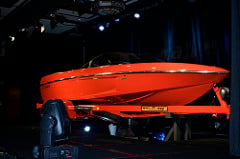
Malibu Introduces 2008 Corvette Limited Edition Sport-V
Thursday Dec. 13, 2007
Corvette has remained an icon after 54 years. Uniquely American, it’s a symbol of independence, exuberance and driving pleasure. The Corvette Limited Edition Sport-V symbolizes all of these things and bares more than a resemblance to its legendary landlocked brother. It displays strikingly precise styling cues. From the signature Corvette “Cove” tooled into the hull to the authentic Corvette emblems to the power wing windshield to the rear taillight design used for through-hull ventilation down to the authentic Corvette rims ...
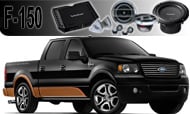
F-150 Easy Upgrade with Rockford Fosgate and Q-Logic
Sunday Dec. 09, 2007
Here are the System Design highlights for the 1997 F-150 Extended Cab:(1) Q-Logic C1FFX108 enclosure(1) RF P2D28 8" Punch P2 2-Ohm DVC Subwoofer (1) RF Power T400-2 400 Watt 2-Channel Amplifier (1) RF Power T600-2 600 Watt 2-Channel Amplifier (1 pair) Q-Logic QL-K2010 kick panels(1 pair) RF P152S 5.75" Twin Drive Full-Range Speaker (1 pair) RF P1572C 5"x7" 2-Way Full-Range Speaker Download PDF to read entire article.
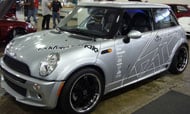
Hawaii's Not Just Beaches As This Mini Demonstrates
Sunday Dec. 02, 2007
Karl Kawachi @ ProLine, Authorized Rockford Fosgate rep for Hawaii, tapped in-demand Chad Paredes of Extreme Audio Systems and veteran installer Earl Shimabukuro of Island Sound Customs to develop a unique demo vehicle. Rockford Fosgate System Highlights • Rockford Fosgate Dead Skin damping material• Rockford Fosgate 12-gauge speaker cable.• Rockford Fosgate interconnects.• CPCC1 50-Farad capacitor.• Rockford Fosgate power distribution & AGU fuse block.(1) Power1000 25 to LIFE. 5-channel amplifier(1) 3Sixty.2 Advanced Interactive Signal Processor & OEM Interface (Patent Pending)(2) T115D4 ...

Mercedes S600 Gets Hi-Velocity Treatment
Sunday Nov. 25, 2007
This Mercedes family car utilized the following scope that resulted in a custom install: 1. Don't take up any cabin or trunk space. 2. Don't cut anything. 3. Retain access and use of spare tire. (1) T215D2 15" POWER T2 2-Ohm DVC Subwoofer (1) 3Sixty.2 Advanced Interactive Signal Processor & OEM Interface (Patent Pending) (1) T1500-1bd 1,500 Watt Mono amplifier (1) T600-4 600 Watt 4-channel amplifier (1) T400-4 400 Watt 4-channel amplifier Download PDF to read article.

MaxPower Features Vicious Renault Clio V6
Friday Nov. 16, 2007
The truly insane spot called Car Radio Systems told Terence, the owner, to leave the V6 with them and pick it up when they called him. He didn't know what to expect. I was anxious to see what they could do." Says Terence, "They've never done up a car like this, so they really wanted to give it a try."

2008 Lancer Gets Rockford Fosgate Audio System
Sunday Nov. 04, 2007
Capitalizing on brand-name audio is big these days, and you don't have to look far to see that Mitsu is using a respected moniker to help market this vehicle. Encrusted in the dash above the source unit is a Rockford Fosgate emblem, while the 1" tweeters in the sail panels of the front door have the RF logo embossed with the surrounding silver trim. Pop the trunk and RF is branded again, this time on a 10" subwoofer system bolted ...

King Cargo Hosts Panama REAL Training
Sunday Nov. 04, 2007
Panama City, Panama – October 2, 2007 King Cargo, Rockford Corporation's authorized distributor for Central America, South America and the Caribbean Islands recently held their annual "Panama REAL Training" the week of September 24th-28th, 2007 with Rockford’s staff from RTTI. King Cargo invited over 100 main distributors throughout Latin America as they came to witness a festive Wild, Wild West theme that generated a lively atmosphere throughout the training. Greg Cobbs, Director of RTTI, went through the 2007 Lightning Audio ...

DUB Magazine Features Rockford Fosgate EscaLOUD
Sunday Oct. 28, 2007
The Factory Tuned 2006 Cadillac Escalade ESV cranks out an amazing 15,000 watts of audio power. This is one Cadillac that will definitely rock the world and let you literally feel the music. Download PDF to read entire article. See more photos of the RF Cadillac Escalade Demo Vehicle.
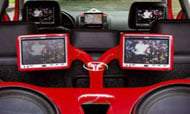
Bassgewaltiger Golf mit Rockford-Bestckϋng
Sunday Oct. 14, 2007
Car Audio Fanatics ... Here is a brand new story about the Rockford Fosgate VW Golf from Maik Petras. The article is from the latest Car & HiFi magazine here in Europe.

DUB Features Paul Wall's Hittin' Rockford Fosgate Ride
Sunday Oct. 07, 2007
Wall's ride features the following car audio gear: (2) Rockford Fosgate Power T2 subwoofers (2) Rockford Fosgate T162C Power component systems (1) Rockford Fosgate Power T8004 amplifier (1) Rockford Fosgate Power T20001bd amplifier (2) 3sixty.2 Digital Signal Processor
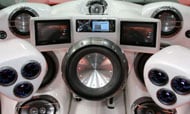
RF 'Smart Car' Unveiled at Car Show in Denmark
Sunday Sept. 23, 2007
The last week of April SEC attended the new "place-to-be" carshow in Fredericia Denmark with a cool RF booth. The show was a big success in generel and also for Rockford Fosgate in particular with big interest in the many cool RF demo cars.
Speed & Sound Features RF System in Nissan Sentra
Sunday Sept. 16, 2007
It's not often you find a Nissan Sentra or Sabre featured in a magazine, but Paul in Kempton Park consulted Quantum Sound to source some very specialized Rockford Fosgate equipment.
Castrol Extreme Show 2007 In Durban South Africa
Sunday Sept. 09, 2007
A report on the "Castrol Extreme 2007" show from AudioMotive Distributors, Rockford Fosgate's Authorized Distributor in South Africa. AudioMotive Distributors and South Africa's best dealers stand in front of the impressive "Wall of Bass" including 60 P2 subwoofers and (1) Power 15kW amplifier. Read attached PDF to read the complete RockfordPhiles report.
Speed and Sound Presents "Sound Quality Presentation"
Sunday Sept. 02, 2007
Can you convince car audio judges you have the best installation? Is it installed sately, properly and creatively? Speed & Sound Magazine shows you how to sell your installation to the judge, while showing off your hard work. Keep your presentation short and sweet and don't waste time talking about things that don't help your score. Read the attached article (PDF) and learn how to earn maximum points by polishing your presentation.

Topless '95 Cadillac Powered by Rockford Fosgate
Friday Aug. 31, 2007
Mobile Connections in Long Beach included a high-tech retractable amp rack that hosts the Rockford Fosgate POWER series amplifiers that power PUNCH 12-inch woofers. A customer 10-inch monitor was also incorporated into the factory dash.
Rockford Fosgate in BMW 325iS Night Crawler
Sunday Aug. 26, 2007
BMW Ice Overview:
Subaru Legacy, Real Genius on the Inside
Sunday Aug. 19, 2007
System ICE for Subaru Legacy:

RF Escalade Demo Vehicle Gets PIMP Status!
Sunday Aug. 12, 2007
Fifteen Thousand tremor-inducing watts draws upon a trio of Kinetic HC1800 batteries and an Ohio Generator 8300 alternator. The T15kw has power to spare, even after feeding all 24 speakers of the Rockford Fosgate system.

Rockford Fosgate's Proprietary T15kW Design Receives United States Patent
Sunday July 29, 2007
The Department of Commerce’s United States Patent and Trademark Office (USPTO) granted, July 3rd 2007, Rockford Corporation patent #7,239,206 for the Ultra Capacitor Audio Amplifier. The technology, inspired and invented by RF’s Anthony D’ Amore, is the heart-and-soul of the acclaimed flagship Rockford Fosgate T15kW power amplifier. Debuted in 2006, the limited edition amplifier is available through 2007 with a retail price of $24,999.99.
Rockford Fosgate Plays Audio Slave to Astra GTC
Sunday July 22, 2007
Being a Rockford Fosgate fan for many years, Rishen has always used RF products, be it in his Tazz, then his Polo, and now his GTC. His good buddy, Rael Greenspan of Image Audio in Durban gave him a few suggesting of what to do to make the GTC a banger. Rael's team immediately went to work and built a custom super wood and Perspex box that houses the three Rockford Fosgate P3 10" subwoofers. The award winning T-Series BD1000 ...
Rockford Fosgate Loads ICE in Peugeot 206
Sunday July 15, 2007
The enjoyment of the crew goes a lot further than just watching some Robbie Clay DVDs. That's why if you close the door for a fleeting second to read the only decal on the side of the car, you'll see it reads "Rockford Fosgate". That name is pretty much all you see when you open the 206's boot as well. That's right, this little French number is kitted out to the hilt with Rockford Fosgate goodies. ICE Clarion in-dash DVD ...
Rockford Fosgate Big Pimpin' in Jeep Wrangler
Sunday July 08, 2007
The folks at Auto Sound Engineering were the mad scientists responsible for all the aesthetics carried out in true on-off Maxer style. This Jeep Wrangler's power currently stands at 168kW with 320 titty-twisting Newton meters on tap. System Components JVC EXAD DVD source unit 2 x Rockford Fosgate P250.2 amplifiers Rockford Fosgate P3 10" subwoofer Rockford Fosgate 6-1/2" splits Rockford Fosgate 5-1/4" coaxials Read the attached PDF for entire article.
Rockford offering sub displays to authorized dealers.
Sunday July 01, 2007
Rockford offering sub displays to authorized dealers.

Euro MK3 VR6 Only Admits 1
Sunday June 17, 2007
Talk about exclusive! There's only room for one in this VR6, but stand a little closer if you like to get blown down the street.
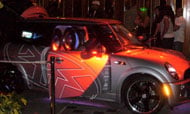
Rockford Fosgate At Euro Night 2007 Hawaii
Wednesday June 13, 2007
Rockford Fosgate In The House!
Rockford Fosgate Mustang Package Rocks StangNet.com's New GT500 Project
Monday June 11, 2007
Rockford Corporation (Nasdaq: ROFO) today announced it’s collaboration with StangNet.com and Classic Design Concepts (CDC) to bring a high performance audio package solution to StangNet’s latest flagship project car, a fully built and very bold new Shelby GT500 Mustang.

Vive la Rockford Fosgate in Renault Megane
Sunday June 10, 2007
Hot hatches. There's plenty to choose from. Keown Smith settled for the less common Renault Megane Sport. Clever Boy. From the front, this car looks like a dragon with fiery orange nostrils and shiny silver teeth hiding the intercooler. At the back, there's silver-grille treatment too and a big Rockford Fosgate vinyl tatooed on its arse to let you know that the amps behind the rear headrests are not just for show.
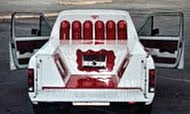
Fantasique Audio Turns VW Caddy Into Caddy-lac
Sunday June 03, 2007
When it comes to VW's, they are amazing cars to tweak. FantastiqueAudio customized this VW with 1,500 watts of Rockford Fosgate power and (3) Rockford Fosgate 15" subwoofers - more than enough to make this VW go "Grr".
Fantasique Audio Loads-Up a Funky Fiesta
Sunday May 27, 2007
Fantastique Audio in South Africa built this fibre glass and superwood custom install featuring a 1000 Watts of Rockford Fosgate power.
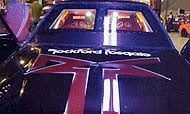
Image Audio Creates Time Span in Mazda Rustler
Sunday May 20, 2007
What do you get when you take an ex-car audio shop floor sweeper and make him open his own car audio shop? Well, you get one of the best aftermarket car audio fitment centers in the country.
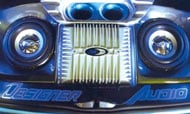
Real Sound in City Slicker Mini Cooper
Sunday May 13, 2007
This Mini Cooper, with its cool blue paint, imported plastic bodykit, custom sound install and engine conversion has onlookers green with envy!

Designer Audio Packs RF I.C.E. in Toyota Yaris
Sunday May 06, 2007
Everything was stripped from the boot. The two P2 Rockford Fosgate eight inch subwoofers were fitted into a vented enclosure that forms the basis of the installation!
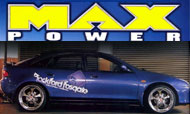
Rockford Fosgate Gets "Indecent" in Mazda Astina
Monday April 30, 2007
Leon Lamprecht, with his "RF" tatoo on his back, recons Rockford bits are awesome not only because they look good and deliver maximum sound quality, but also because the brand is just out of reach for the ordinary Bloemfonteiner.

Mitsubishi D:5 "Mobile Office" Features Rockford Fosgate
Thursday April 19, 2007
This Delica-special "D:5 Special with MOBILE OFFICE" is E's Corp's (Rockford Fosgate's authorized distributor in Japan) latest show concept. Download PDF to read Japanese magazine article.

D-Lightful 2006 Honda Civic Si Filled w/ Rockford Fosgate
Sunday Feb. 04, 2007
Rockford Fosgate equipment: (3) sets of component systems (1) 8" midbass (2) 12" subwoofers (1) 400 Watt amplifier (1) 800 Watt amplifier Assorted Wiring Download the PDF to read the entire article.
Rockford Fosgate Gets Re-LOADED
Sunday Jan. 21, 2007
Tempe, Ariz. - Rockford Fosgate, one of the most respected brands in the car audio market has created the ultimate Punch loaded enclosure. RF’s acclaimed woofer line now includes 8 pre-loaded enclosures. Rockford Fosgate will unveil the loaded enclosures featuring both 10” and 12” woofers in single or dual woofer configurations at the 2007 CES (booth #1809).

3 Trophies for RF Mini Cooper at Hot Import Nights.
Monday Jan. 01, 2007
Hot Import Nights HawaiiEvent: 12/9/2006Location: Blaisdell Exposition Center, Honolulu, Hawaii

Mercedes Van gets pimped with Rockford Fosgate
Monday Jan. 01, 2007
Stroke purchased this 2003 Mercedes Vito last issue. This van was dead stock! Well Konsky has gone all out to pimp this van, to make it look the sweetest ride possible! Konsky wasn’t lying when he said he wasn’t going to hold back. There has been so many changes made to this Vito, that we have had to break this story up into parts!

Opel Astra Features 6,000 Watts of Rockford Fosgate!
Sunday Dec. 24, 2006
Torque Magazine in South Africa features an Opel Astra filled with 6,000 watts of pure Rockford Fosgate POWER!Amplifiers(2) Rockford Fosgate Power T30001bdSpeakers(2 Pair) Rockford Fosgate component systemsSubwoofers(6) 12" Power Series T1 subwoofers
Rockford Fosgate Puts Real Sound in Ford Bantam
Sunday Dec. 17, 2006
Image Audio in South Africa upgrades this Ford Bantam with a two-tone silver and midnight black paint scheme inspired by the legendary Rockford Fosgate GMC Suburban demo vehicle.
1969 Suburban Goes From Tow Truck to Show Truck.
Sunday Dec. 10, 2006
1969 Suburban Goes From Tow Truck to Show Truck.
Rockford Fosgate Source, Amp & Subs in Toyota Prado
Sunday Dec. 03, 2006
This is an article that featured in one of our local South African magazine called Torque Magazine. Have you seen this vehicle before? It was used in an Entity new video "Touch And Go." Source UnitRockford Fosgate RAVDVD AmplifiersRockford Fosgate Punch 400.4 SubwoofersRockford Fosgate Power DVC 10" Subwoofers
REAL SOUND in South African Subaru Impreza WRX
Sunday Nov. 26, 2006
Please see attached yet another Subaru hitting the pages of South Africa's performance magazine Torque Magazine. Amplifiers Rockford Fosgate Punch 600.1 Rockford Fosgate Punch 400.4 Subwoofers (2) 12" Rockford Fosgate P212S4 Accessories Rockford Fosgate 1-Farad Capacitor

252KW Scooby Packed With Rockford Fosgate
Sunday Nov. 19, 2006
Auto Sound Engineering loaded this Subaru with Rockford Fosgate amplifiers and a Rockford Fosgate Connecting Punch storage capacitor. See attached PDF for full article.
Beef Up Your Cars Original Head Unit!
Sunday Nov. 12, 2006
Dale Imerman, a motoring journalist based in South Africa and founder of SAracing.tv, analyzes the Rockford Fosgate 3Sixty.
A complete step by step tutorial on a SQ installation
Thursday Nov. 02, 2006
Attached is an article which appeared in Speed & Sound magazine in South Africa. Amplifier - Rockford Fosgate P450.4 4-channel amplifier Subwoofer - Rockford Fosgate Punch P210D4 10" 4-ohm DVC Capacitor - Rockford Fosgate CPCD10-03 1-Farad Digital cap Wiring - Rockford Fosgate wires and connectors. Updated 11/27/2006 with Part 2 of magazine article.

RF to Announce New Products at 2007 CES
Tuesday Oct. 31, 2006
The International CES is where major mobile electronics companies converge to make deals and make history. Rockford Fosgate will be on hand to announce new products for the 2007 season: CES 2007 Jan. 8-11,2007 Las Vegas, NV @ LVCCRockford FosgateBooth #1809 North Hallwww.cesweb.org

South Africa Tweaks & Pimps Toyota Tazz
Tuesday Oct. 17, 2006
This Toyota's owner, Dini, is a firm FOSGATE fan and is unrelenting in his opinion that Rockford Fosgate is the best in the business (or at least in this country.) His system took both first and second prize in subsequent MAGP competitions with a highest reading of 144dB's and comprises of a Rockford Fosgate RFX9320R head unit, RF P600.1 Monoblock, RFP400 4-channel Amplifiers, RF Power Splits 6.5 inch in front with a RF T1 15 inch dual VC SUB complete ...

Rockford Fosgate 3Sixty Nominated for CarDomain People's Choice
Sunday Oct. 08, 2006
Rockford Fosgate's 3Sixty signal processor has been nominated for a CarDomain 2006 People's Choice Award in the Best Car Audio/Video upgrade category. This nomination is based on the recognition of Rockford Fosgate's achievements in the automotive aftermarket industry. The complete list of categories and nominees can be found at: • www.cardomain.com/peopleschoice The winner will be determined based on votes submitted online by members of the CarDomain.com community. The CarDomain community has become the largest audience of automotive enthusiasts with over ...

Team Ford Racing dominates 2006 ABSA at Sun City 400
Sunday Oct. 01, 2006
Team Ford Racing dominated round six of the 2006 ABSA Off Road Championship with three vehicles in the top six. Held in the Pilanesburg area the Sun City 400 was a happy hunting ground for production vehicle winners Neil Woolridge and Kenny Skjoldhammer.

Castrol Extreme Show - Durban South Africa.
Sunday Sept. 24, 2006
Designer Audio, Image Audio and Unique Auto Sound were the dealers present at the first 2006 Castrol Extreme Show for KwaZulu-Natal. The event was over 4 days (September 22-25,) attracting Durban’ car audio and modified car enthusiasts

Ultimate Drift Machine Sweepstakes
Sunday Sept. 10, 2006
SCO is giving away a customized drift car worth $20,000! Check the Sport Compact Only! website for details:www.sportcompactonly.com

Jerome Holman wins AND1 contract and RF system
Monday Aug. 28, 2006
By Tommy Beerfor HOOPSWORLD.comAug 27, 2006, 13:00

Rob ida's "LOWER 48" gets covered
Monday Aug. 28, 2006
Better than the real thing. If you can even find an original Tucker '48 sedan, prepare to part with much green to call yourself an owner, or just get in line for one of these inspired, twin-turbo, multimedia originals. See attached PDF for entire article.
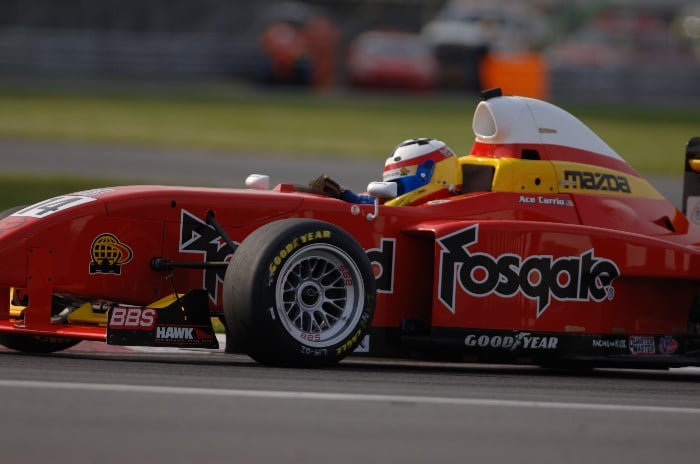
Carrio leading the driver and team championships
Sunday Aug. 13, 2006
Clicl PDF for the whole story
Motocross Action rides Rockford Fosgate team member Josh Grants CRF250
Monday July 24, 2006
Click on the file above for the whole story!

East Coast STi dominates the streets of Philly, fully boosted and fattened up
Thursday July 20, 2006
Click on file to get the whole story.
Rockford Corporation Expands Relationship With Nissan North America
Tuesday July 18, 2006
Rockford Corporation (NASDAQ: ROFO) today announced that it has expanded its relationship with Nissan North America to bring the deep bass and audio clarity of Rockford Fosgate’s premium mobile audio to the stylish, new 2007 Nissan Sentra sedan and new 2007 Versa hatchback. An 8-speaker, 340-watt Rockford Fosgate premium sound system will be an optional upgrade on the Sentra while a Rockford Fosgate 8” self-powered subwoofer will be an optional upgrade on the Versa.
Vaughn Gittin. Jr's Falken Tire Mustang levels D1 playing field
Monday July 17, 2006
Click on the above file for the whole story!

Adrian Carrio, and his Rockford Fosgate World Speed machine cross finish line first!
Thursday July 13, 2006
Mitsubishi Motors to Offer Rockford Corporation Sound Systems in Six Additional Future Models
Wednesday July 12, 2006
Rockford Corporation (Nasdaq: ROFO) today announced that Mitsubishi Motors will offer the high-output Punch(R) sound of Rockford Fosgate(R) and the high-definition and clarity of Rockford Acoustic Design(TM) audio systems as optional upgrades on six upcoming Mitsubishi vehicles.
Rockford Fosgate Blast 300bhp per Litre in the U.K.!
Monday July 10, 2006
The nutters at Bassmechanix of Newcastle upon Tyne in the United Kingdom have achieved a staggering result with Rockford Fosgate kit.

Malibu Boats Powers Up With Rockford Fosgate
Thursday July 06, 2006
Rockford Corporation (NASDAQ: ROFO) today announced a new, exclusive global relationship with Malibu Boats, Merced, Calif., to deliver its premium Rockford Fosgate audio brand to all Malibu Boats that are purchased with a stereo system option.
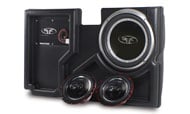
Rockford Corporation Partners with Predator Motorsports to Launch Audio Upgrade Solution.
Wednesday June 28, 2006
Rockford Corporation (NASDAQ: ROFO) today announced that it has partnered with Predator Motorsports to deliver a dealer option audio solution that adds the Rockford Fosgate® signature sound to factory installed audio systems for the Hummer H2 SUV and SUT.
Mega Ramp - The first ever Motocross Quarter Pipe jam
Thursday June 08, 2006
CLick to read the full article

Rockford Fosgate mixes it up on the AND1 Mix Tape Tour
Wednesday June 07, 2006
Click on the file above for more info!

Brand Study Ranks Rockford Fosgate Speakers Second in Consumer Brand Image, Preference and Value
Wednesday June 07, 2006
Rockford Corporation (Nasdaq: ROFO) announced that an independent branding study conducted for auto manufacturers ranks the Rockford Fosgate mobile audio speaker brand second out of 18 speaker brands in brand preference and brand image by people familiar with the brands. In addition, the company also ranked second in brand value based on how many car owners would pay more to have a Rockford Fosgate speaker system in their vehicle. The Planning Edge, a Birmingham, Michigan-based consulting and analysis firm, conducted ...

Street Trucks Magazine: Inside Job- From the wrecking yard to SEMA in six months
Monday May 22, 2006
Click to get the whole story!
Lowrider Magazine - you can boom without breaking the bank
Monday May 15, 2006
Lowriding can trace its origins back many generations and one thing has always remained the same: the force that drives it is not necessarily on the show floors across the country, but is really on the streets. As our zoot-suiting predecessors would've told you, having a nice car doesn't always mean having alot of money. With a little ingenuity, anything can be accomplished and the people on the streets will stop and stare to let you know that you've done ...
Street Trucks Magazine: Rockin' Tunes-Installs sights and sounds from RF
Wednesday May 03, 2006
Vocals are courtesy of Rockford Fosgate. To really get the party cranking in this crew cab we opted for two of Rockfords Punch P310D4 10-inch dual coice coil subwoofers, two pairs of Rockford Fosgate P162S component sets, a Rockford Fosgate Punch P8002 amplifier, a Rockford Fosgate P8004 amplifier and assorted RCA's and cabling.

Play the SoBe NO FEAR "The Drink With Drive Giveaway" for a chance to win RF speakers
Sunday April 30, 2006
Rockford Fosgate has teamed up with SoBe/No Fear Energy for the "SoBe NO FEAR The Drink With Drive Giveaway". With tons of great prizes available, and yes some of your favorite gear from Rockford Fosgate up for grabs. For more information on how to enter and win check out www.SoBeNoFear.com
Rockford Fosgate joins the 2006 Verizon Wireless Consumer Connector Tour
Monday April 17, 2006
2006 Verizon Wireless Consumer Connector Tour The Verizon Wireless Consumer Connectors Tour is bringing the latest and greatest Verizon Wireless services across the country, asking, are you a member? The Verizon Wireless team will be touring the United States for 50 weeks in eight Jeep Commanders. Wrapped in Verizon Wireless graphic wrap, sporting a custom Rockford Fosgate sound system, these Jeep Commanders will visit large-scale events throughout the United States. Using the vehicle and event site as a home base ...
Mitsubishi Motors Offers Authentic Rockford Fosgate® PUNCH® in U.S. Outlander.
Thursday April 13, 2006
Rockford Corporation (Nasdaq: ROFO) today announced that Mitsubishi Motors North America will offer the legendary Rockford Fosgate PUNCH in a premium, high-output audio system as an optional upgrade for both the LS and XLS models for U.S. customers of Mitsubishi's all-new 2007 Outlander. Mitsubishi introduced the Rockford Fosgate 650-watt sound system in the U.S. Outlander at the New York Auto Show, which begins today. The Rockford Fosgate 650-watt sound system was originally launched in the global Outlander model in Japan ...
The future of mobile audio as we know it. Rockford Fosgate’s HT Technology
Wednesday April 05, 2006
Embargo Date:Release Immediately Contact: Kevin Kuenzie 480.517.3051 [email protected] The future of mobile audio as we know it. Rockford Fosgate’s HT Technology Tempe, AZ – Rockford Fosgate’s HT technology (Patent Pending) debuts, with what could possibly be the future of mobile amplifier technology and performance as we know it. Being introduced at the 2006 Consumer Electronics show, in our latest creation, is the T15kW 15000 watt amplifier. Yes we said fifteen thousand watt amplifier! What is HT Technology? Well let us ...
Tailgate Party! Building the Ultimate Bass-Hitting Bed Kit .
Sunday March 26, 2006
Tailgate Party

Drift Alliance, "Bad as Hell" the Video Coming to a Store Near You
Tuesday March 14, 2006
BAD AS HELL (Motorsport Lifestyle – 2006) If it isn’t loud and fast it aint @#$%! By Zach Luke No hype and no skits…Drift Alliance, the original attitude spewing kings of drift, gives a sneak peek look into the high-speed lifestyle that embodies the drifting culture. The DVD video, “BAD AS HELL” is not for the faint at heart, no punches pulled…just a non-stop adrenaline rush of high-speed drifting footage set to a bone jarring soundtrack that keeps the blood ...
Pony Express - Rockford Fosgate Drift Mustang Featured In Performance Auto & Sound
Tuesday March 07, 2006
"Rockford Fosgate created another great rolling artwork to grace our pages." Performance & Auto Sound Magazine.

The New Punch P2 Dual Voice Coil Subwoofers are Ready and Waiting
Tuesday Feb. 14, 2006
Contact: Kevin Kuenzie 480.517.3051 Release Immediately [email protected] More Options of Punch Tempe, AZ - Brand new for 2006, the Rockford Fosgate Punch Stage 2 Dual Voice Coil woofers. Why add new woofers to Rockford Fosgate’s best selling line of performance subwoofers? Why Not! The P2 DVC woofers give the user more amplifier options for that perfect system. Features include Injection molded parabolic polypropylene cone, 2” aluminum voice coil formers, and a 60oz motor structure. They also have power capabilities of ...
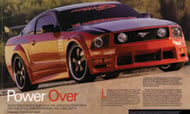
Rockford Fosgate's Drift Mustang Featured in 5.0 Mustangs & Super Fords.
Tuesday Feb. 07, 2006
Rockford Fosgate's Drift inspired Mustang GT, graces the pages of the March issue of 5.0 Mustangs & Super Fords.
DUB Magazine Hooks Up NASCAR Driver Tony Stewart's Hummer H2
Wednesday Jan. 25, 2006
At the 2005 SEMA show in Las Vegas, Nevada the staff from DUB Magazine unveiled a special surprise for the 2002 NASCAR Nextel Cup Champion, Tony Stewart. A 2006 Hummer H2 provided to the race ace by his long time sponsor Mr. Clean Quick Dry Car Wash. The H2 was outfitted with the best of everything, from the 22“ TIS wheels to the brain scrambling Rockford Fosgate system. Oh Yes, it has the goods, featuring the awesome and gigantic T15004 ...
Rockford Fosgate's 2005 Mustang GT Rready for the Lights of the 2005 SEMA Show
Wednesday Jan. 25, 2006
Rockford Fosgate the innovator of Mobile Electronics has done it again! Our latest and greatest street machine, a 2005 Mustang GT is ready and waiting to hit the floor of the 2005 SEMA Show in Las Vegas Nevada. Featuring a true drift style theme, this ride has all the bells and whistles. Including the super trick Tein Drift Spec Coil-Overs, Auto Power Roll Cage, 20” Zenetti 5 Wheels, Falken High Performance Tires, Flowmaster Exhaust, 3D Carbon Body Kit, Bear Brakes ...
Rockford Corporation Provides Premium Audio System for 2007 Mitsubishi Eclipse Spyder.
Sunday Jan. 08, 2006
Rockford Corporation (Nasdaq: ROFO) and Mitsubishi Motors North America announced today at the North American International Auto Show (NAIAS) that the all-new 2007 Mitsubishi Eclipse Spyder will include a factory installed Rockford Fosgate audio system. The Spyder is the second Mitsubishi vehicle to receive a Rockford Fosgate 650- watt sound system as a factory installed option. "The Rockford Fosgate system is the perfect complement to the Spyder's sporty, convertible model good looks and great handling," said Mr. Dan Vandenbergh, Managing ...
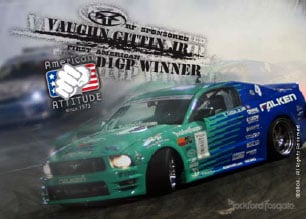
Team Rockford Fosgate Driver Vaughn Gittin JR Beats the Best D1 Drivers in the World
Tuesday Dec. 20, 2005
Drifting in the United States will never be the same, after Vaughn Gittin. Jr's victory at the D1 USA vs. Japan event at Irwindale Speedway. Never before had American driver or car made it past the semi finals in a D1 event, but this night there would be no denying the first American victory. As the rounds went down, so did the best drivers from Japan and the US.
The first best 16 round for Gittin had him up against ...

Tony Stewart Gets a Suprise
Thursday Nov. 10, 2005
At the 2005 SEMA show in Las Vegas, Nevada the staff from DUB Magazine unveiled a special surprise for the 2002 NASCAR Nextel Cup Champion, Tony Stewart. A 2006 Hummer H2 provided to the race ace by his long time sponsor Mr. Clean Quick Dry Car Wash. The H2 was outfitted with the best of everything, from the 22“ TIS wheels to the brain scrambling Rockford Fosgate system. Oh Yes, it has the goods, featuring the awesome and gigantic T15004 ...
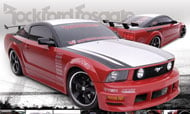
Rockford Fosgate's Latest Creation
Tuesday Oct. 25, 2005
Rockford Fosgate, the innovator of Mobile Electronics, has done it again! Our latest and greatest street machine, a 2005 Mustang GT is ready and waiting to hit the floor of the 2005 SEMA Show in Las Vegas, Nevada. Featuring a true drift style theme, this ride has all the bells and whistles. Including the super trick Tein Drift Spec Coil-Overs, Auto Power Roll Cage, 20” Zenetti 5 Wheels, Falken High Performance Tires, Flowmaster Exhaust, 3D Carbon Body Kit, Bear Brakes ...
Rockford Corporation Provides Premium Audio System for Mitsubishi Motors Corporation's New Outlander®
Monday Oct. 24, 2005
Rockford Corporation (Nasdaq: ROFO) and Mitsubishi Motors Corporation have teamed up to offer Mitsubishi customers a premium, high output audio system for the all-new 2006 Mitsubishi Outlander, which was launched at the 39th Annual Tokyo Motor Show. At the show, Mitsubishi demonstrated the Rockford Fosgate 650-watt sound system with the introduction of the Outlander, which will begin selling immediately in Japan. Last year's Tokyo Motor Show attracted almost 250,000 car enthusiasts. This year's show is open to the public October ...

Forsberg First at Formula D Finals
Tuesday Sept. 13, 2005
FIRST FOR FORSBERG AT FORMULA D FINALS Irwindale, CA - Drift Alliance & Team Rockford Fosgate driver Chris Forsberg finally took it to the wire in the Formula Drift at the famed house of drift, other wise known as Irwindale speedway. The final event of 2005 was by far the battle that everyone had been waiting for. As Chris Forsberg and 2005 Formula D Champion Rhys Millen knew the war was on. As the two cars left the line Millen’s ...
Team Rockford Fosgate with Double Deuce
Wednesday Aug. 31, 2005
AMSOIL CHAPARRAL ROCKFORD FOSGATE HONDA TEAM WORKS HARD IN BINGHAMTON

Rockford Fosgate Riders are Movin' and Shaken'
Wednesday Aug. 03, 2005
AMSOIL CHAPARRAL HONDA TEAM MEMBER PICKED TO RACE FOR TEAM USA IN THE MOTOCROSS DES NATIONS IN ERNEE, FRANCE! Prior to Sunday's showdown at the Thunder Valley Race Track in Lakewood, Colorado, Kevin Windham was picked to represent Team USA and race in the prestigious Motocross des Nations. KDUB will join Ricky Carmichael and Mike Brown as the US Representatives. With the Motocross des Nations team settled, Windham shifted his focus back to the US for round seven of the ...

Rockford Fosgate Puts the Audio in Adio
Tuesday July 26, 2005
Carlsbad, CA- ADIO footwear and Rockford Fosgate have joined forces, as part of their partnership, and put together a demo system and vehicle that will turn the action sports world upside down. ADIO wanted to do something to get attention at their events this summer. Something that crowds of shows, like Tony Hawk’s Boom Boom Huck Jam and X Games, could get excited about. As they say in showbiz, the rest is history…The ADIO Footwear Rockford Fosgate SCION XB was ...

Rockford Fosgate and Miracle Back on Top Again
Thursday July 14, 2005
Lakeville, CT --- Miracle Motorsports decisively returned to the podium's top spot by leading every lap in the P2 class of the New England Grand Prix on Independence Day, and in the process, also jumped to the front of the pack in championship points. "We came into this race thinking it was ours to lose, and the team performed nearly flawlessly from start to finish," said team owner John Macaluso. "We really feel like we should be 4-0 this season, ...
Rockford Fosgate Moves Big Air
Monday July 04, 2005
Tempe, AZ - Rockford Fosgate is ready to fly high on the Moutain Dew Action Sports Tour. With athletes from all over the world competing for the largest prizes ever awarded for extreme sports, the action is going to get hot this summer. Rockford Fosgate BMX pros Chad Kagy and Thomas Hancock are sure to battle it out for top honors with Hancock riding (Dirt & Park) and Kagy squaring off in (Park & Vert). The Dew Action Sports Tour ...
Performance Auto & Sound (Annual Electronics Directory)
Thursday June 23, 2005
TEST REPORT - PAS tests the Rockford Fosgate Power T3002 Amplifier.
Car Audio & Electronics - T210D4
Wednesday June 15, 2005
"Battle of the Heavyweights" (Testing the POWER Series T210D4 Subwoofer)
Import Racer Magazine - Drift Alliance
Tuesday June 14, 2005
Rockford Fosgate Sponsored Drift Alliance.
New “25 to LIFE.” Mini-Site Launched on the Web
Thursday April 21, 2005
Tempe, Ariz. – Rockford Fosgate. It's a full sentence. It means POWER! It means AMERICAN ATTITUDE! Since 1973, when Jim Fosgate put his name on the first real piece of high-performance car audio equipment, nothing has been the same. Rockford Fosgate celebrates 25 years of American Attitude by releasing a special mini website for its "25 to LIFE." limited edition power amplifiers: the Punch45, Punch75, Punch150 & Power1000. ”The mini-site is a knowledge repository for ‘25 to LIFE.’ product specs, ...
Rockford Fosgate and ADIO Footwear Partner as Official Sound and Footwear Companies
Tuesday April 05, 2005
Tempe, AZ,/ Carlsbad, CA (April 2005) – Rockford Fosgate®(RF), the manufacturer of high-performance car audio products and accessories, and Adio Footwear, a premier manufacturer of action sports/lifestyle footwear and accessories, have announced an official partnership to help promote each other with cross-promotional opportunities. Rockford Fosgate® will be the official car audio product for Adio Footwear, and Adio Footwear will be the official footwear for the Rockford Fosgate brand. The partnership will host a wide range of cross promotional opportunities for ...
Fox Racing Tour Bus Gets Loaded w/ Rockford Fosgate Attitude
Monday April 04, 2005
Tempe, AZ - It's no secret... when you want your audio system to hammer you use Rockford Fosgate. When you want to be straight-up-gangsta you use RF's POWER series. That's just what FOX Racing® threw down for their Fox Deluxe® tour bus! No doubt this 2,200 Watt monster will be a favorite chill spot for FOX® athletes all summer long. Two POWER series amplifiers (T10001bd and T8004) throw down the power to two POWER T1 15" subwoofers that pump out ...

Amsoil Chaparral Honda Team Continues To Dominate
Monday March 14, 2005
March 11, 2005 - The Daytona SX is one of the most anticipated and challenging races of the season. It is said that this race separates the boys from the men. The AMSOIL Chaparral Honda Team dominated the track, walking away with a podium finish in each class. Josh Grant takes home his first ever podium finish as a professional. Kevin Windham continued to expand on his point total for the 250cc THQ AMA Supercross Championship Title. Windham looked really ...
Rockford Fosgate Joins Amsoil Chaparral Honda as Official Audio Sponsor of the 2005 Supercross and Motorcross Seasons
Monday Feb. 07, 2005
Tempe, AZ- Rockford Fosgate entered into the Supercross (SX)/Motocross (MX) arena through a marketing partnership with the Amsoil Chaparral Honda Supercross and Motocross team. As its newest sponsor to the race team, Rockford Fosgate joins team sponsors Amsoil, Chaparral Motorsports, Honda, Napster and Factory Connection. "Like our existing successful partnerships in aggressive motor sports, such as Drifting, we see Supercross as yet another avenue where our consumer’s lifestyles cross. Rockford Fosgate and Amsoil Chaparral Honda Team riders, Mike LaRocco, Billy ...
Rockford Fosgate Gets Sideways!
Wednesday Jan. 05, 2005
This week Rockford Fosgate finalized an agreement with Slipstream Global Marketing to become the official audio supplier of the Formula Drift Series. As part of this sponsorship Rockford Fosgate will be exhibiting at all six of the series events in 2005: • April 16th - New Jersey • May 7th - Atlanta • June 11th - Houston • July 9th - Sonoma • August 6th - Chicago • August 28th – California

CES Retraction Notice for Punch Full Range
Wednesday Jan. 05, 2005
Retraction

Rockford Fosgate Artwork Contest Open to Amateurs and Professionals
Wednesday June 30, 2004
Tempe, AZ – Rockford Fosgate, high performance car audio brand is hosting an artwork contest to celebrate it’s 25 years of making the loudest, best sounding car audio ever known to penetrate the aural canal. 2005 will mark the 25th Anniversary of the legendary car audio designer Rockford Fosgate based in Tempe, AZ USA. The company sells car audio products all over the world. Rockford Fosgate is celebrating their birthday next year with an artwork contest that is open to ...

Rockford Fosgate Hummer H2 Set to Storm the Beach at 2004 Spring Break Nationals
Monday March 22, 2004
Daytona Beach, Fla. – Rockford Fosgate’s award-winning Hummer H2 demo vehicle is set to storm the beach at the annual Spring Break Nationals show in Daytona Beach, Fla. This American-made powerhouse blasts an ear-numbing 160db and that’s on a bad day! “We proved there was nothing louder and as bad ass than the H2 at the CES show in January and we have the noise violation tickets to prove it!” exclaims Jason Digos, the award-winning Rockford Technical Training Institute (RTTI ...
Rockford Fosgate Hummer Show Vehicle Rolls Over Competition at 2004 CES
Wednesday Jan. 07, 2004
Tempe, Ariz.
Rockford Corporation Appoints Ken Koga New Product Sourcing Specialist
Wednesday Dec. 10, 2003
Tempe , Ariz. – Rockford Corporation is proud to announce the appointment of Ken Koga as New Product Sourcing Specialist. In his new position, Koga will be working with Rockford Fosgate, Lightning Audio, NHT and SimpleDevices brand management teams to develop product platforms. “I’ve been in this industry for a long time and to come and work with the minds here at Rockford has to be the highlight of my career,” explains Koga, a 23-year industry veteran who claims 50 ...
Rockford Appoints Rob Wempe to National Sales Director - Specialty Retailers
Thursday Nov. 13, 2003
Tempe, Ariz. - Rockford is proud to announce that it has appointed Rob Wempe to National Sales Director – Specialty Retailers. In his new position, Wempe will report to Bill Jackson, Rockford vice president, mobile sales and will work with the Rockford’s regional sales managers on setting goals and priorities in their territories. In addition, he will work with the brand managers to implement strategic plans for the market. “Rob has worked as a Rockford regional sales manager for five ...
Team RF Sets Six World Records at 2003 DB Drag and IASCA Finals
Wednesday Oct. 29, 2003
Tempe, Ariz. – Team Rockford Fosgate has long touted that they are the best in the business. Well, once again, the trophies, championships and world records back up this claim. “For the past couple weeks, Team RF engaged in the battle for supremacy at the IASCA and DB Drag World Finals,” says Mark Fukuda, retired DB Drag AND IASCA champion and director of Rockford Technical Training Institute (RTTI). “Team RF competitors show ed no mercy at the competitions by capturing ...
Jim Fosgate Receives Emmy Award for Development of Surround Sound for TV
Sunday Oct. 26, 2003
New York, NY, October 27, 2003 – Audio industry pioneer Jim Fosgate received a special Emmy Award during the 2003 Technology and Engineering Emmy Awards black-tie dinner ceremony at the Plaza Hotel in New York City on October 23. Fosgate was a co-recipient of the Development of Surround Sound for Television award, presented by the National television Academy for his continuing efforts to develop and refine surround technologies for television broadcast. As the holder of more than 14 patents (plus ...
Rockford Fosgate Partners with Net Enforcers Inc. To Help Police Internet
Thursday Oct. 09, 2003
Tempe , Ariz. – Rockford Fosgate announces that it has partnered with Net Enforcers Inc. to help police eBay and Yahoo auction sites to track down and eliminate unauthorized on-line reselling of its industry acclaimed mobile audio products. “We’ve made a stand to stamp out trans-shipping and the unauthorized reselling of our products over the Internet for the sake of our strong independent dealer base and our customers,” explains Bill Jackson, Rockford Fosgate vice president/mobile sales. “In this respect, our ...
Rockford Corporation Appoints Brian Sherman Mobile Marketing Manager
Wednesday Aug. 27, 2003
Tempe, Ariz. – Rockford Corporation is proud to announce the appointment of Brian Sherman to the new position of mobile marketing manager. Sherman, who came to Rockford as part of the MB QUART acquisition in 2001, will concentrate on optimizing the relationships of Rockford’s consumers and dealers through a unique marketing perspective. Brian will bring a 100 percent focus on marketing initiatives affecting product collateral, the Internet, and sponsorship/partnership programs…all meant to grow the mobile business for retailers worldwide. He ...

E-Biz in Action - Exposing Knowledge and Service.
Tuesday Aug. 26, 2003
Rockford Corp. uses software from RightNow to divert many customer service e-mails into Web-based self-service. Rockford Corporation, self-described "fanatics about audio," is lucky to have customers who share the company's love for speakers, amplifiers, home theaters, components, and all things audio-related. But, a few years ago, there was something of a disconnect between the company and its customers over service inquiries. "We got into this bottleneck of not properly responding to customers in a timely manner," says Eric Russell, whose ...
Ron Trout Re-Joins Rockford Fosgate as Managing Director
Wednesday July 16, 2003
Tempe, Ariz. – Rockford Corporation is pleased to announce that Ron Trout has re-joined the company as the managing director for the Rockford Fosgate brand. As Rockford Fosgate managing director, Trout will be working with the brand’s marketing and sales departments to ensure that Rockford Fosgate remains the industry leader well into the future. ”I am very excited to return to where my heart has always been…Rockford Fosgate,” Trout says. “Rockford has been known as a worldwide industry leader for ...
Car Sound and Performance Magazine Features the Rockford Fosgate 350Z Demo Vehicle
Wednesday May 21, 2003
An exclusive look inside Rockford Fosgate's hot Nissan 350Z demo vehicle built by the fabrication wizards at Rockford Technical Training Institute. Car Sound and Performance - May 2003 issue.
Rockford Fosgate releases its new beast, The Fast and the Furious - VW Golf R32
Tuesday April 15, 2003
OBRIGHEIM, GERMANY – At the Car+Sound show in Sinsheim, Germany (11 – 13 April), Rockford Fosgate let its new beast out of its cage. Inspired by the movie The Fast and the Furious, the 2003 VW Golf R32, with 4,000 Watts of power and its 240 HP V6 engine, finally saw the light. After Rockford Corporation (NASDAQ:ROFO) signed a licensing agreement with Universal Studios Consumer Products Group last year that allows Rockford to use Universal trademarks relating to the hit ...
Team RF dominated at the CAR+SOUND show in Sinsheim, Germany!
Monday April 14, 2003
STREET A – Christoph Herzog, Switzerland He did the same score as the NEW WORLD RECORD 151,3dB Christoph competes with a SMART and uses 2 x bd 1501 and 2 x TRF 12” woofers. He did 151,3 dB 3 times but got beaten in the final round by Team BS. However the NEW WORLD RECORD is 151,3dB! EXTREME 1 – Vicious Team, Austria NEW WORLD RECORD!! 155,8dB Martin and his team uses 1 x TRF 15” and 4 x Type ...
Rockford Fosgate 350Z Sizzles at Seattle Hot Import Nights
Thursday April 03, 2003
Seattle – After a tremendously successful debut at the 2003 CES, Rockford Fosgate’s 2003 Nissan 350Z sports coupe stole the show at this year’s first Hot Import Nights by claiming First Place in the Two-Door Extreme Class. “Year after year we have built world-class demo vehicles that more often than not walk away from events with the ‘Best of Show’ title,” explains mark Fukuda, director of Rockford Technical Training Institute (RTTI). “In 2001 it was the Frontier. In 2002 it ...
Goodyear, Ariz. Community Action Vehicle Hits Hard With Rockford Fosgate Sound System
Tuesday April 01, 2003
Goodyear, Ariz. – Rockford Fosgate continues its dedication to helping local community action programs by donating amplifiers, woofers, speakers and accessories for the Goodyear (Arizona) Police Department’s T.O.P.S. (Teacher Officer Partnership in Schools) and G.R.E.A.T. (Gang Resistance Education and Training) vehicle, a 2002 Chevy Impala. The system, which is used for attracting community’s youths to the vehicle in order for the T.O.P.S. and G.R.E.A.T. officers to relate the program’s anti-drug, anti-violence, and pro-community message, consists of a Rockford Fosgate RFX9000 ...
Trophies and World Records Abound for Team RF at 2003 Spring Break Nationals
Tuesday March 25, 2003
Daytona Beach, Fla. – Team RF proved once again why Rockford Fosgate supports the Number One Competition Team in the industry by dominating the first major 2003 final event here in Daytona Beach. No other team came close to the amount of trophies and overall showing in both the SPL and SQ competitions at the 2003 Spring Break Nationals.
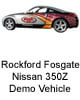
From X to Z, Rockford Fosgate's 2003 Demo Vehicle Set To Steal The Show...Again
Wednesday Jan. 08, 2003
Tempe, Ariz. – It’s becoming a trend. Year after year, Rockford Technical Training Institute (RTTI) has the burden thrust upon them to live up to the previous year’s award-winning demo vehicle install. Once again, they haven’t disappointed. Rockford Fosgate has turned a 2003 Nissan Z sports coupe into an audiophile’s dream and will unveil the latest masterpiece at CES 2003 (booth #828). “Over the past few years, Rockford Fosgate has built a tremendous relationship with Nissan and that has allowed ...

Rockford Fosgate Announces Licensing Agreements with Universal Studios Consumer Products Group
Wednesday Jan. 08, 2003
Tempe, Ariz. - Rockford Corporation (NASDAQ: ROFO) has announced that it has signed a licensing agreement with Universal Studios Consumer Products Group that will allow Rockford to use Universal trademarks relating to the hit movie, The Fast and the Furious, and Universal Pictures’ upcoming sequel The Fast and the Furious 2, in connection with selected Rockford Fosgate and Lightning Audio products. Rockford will be announcing specific products in the coming months. In addition, Rockford Fosgate and Lightning Audio products will ...
Rockford Fosgate Announces Voice Dealer Locator
Wednesday Jan. 08, 2003
Tempe, Ariz. – Rockford Fosgate is proud to announce its Voice Dealer Locator at the 2003 CES (booth #828). The Voice Dealer Locator allows customers to find nearby authorized Rockford Fosgate dealers by simply calling a Toll-Free number. Using Automated Speed Recognition technology from Nuance, the Voice Dealer Locator can recognize spoken words over a standard telephone or cell phone and convert them into database queries.

Next Generation TMS Direct Replacement Aftermarket Motorcycle Speakers by Rockford Fosgate®, Now Shipping
Friday July 25, 2025
Rockford Fosgate (www.rockfordfosgate.com), the leader in high-performance audio systems, is now shipping the next generation of TMS direct replacement motorcycle speakers. Available in 6.5-inch (TMS24-65 for 2024+ Models), (TMS14-65 for 2014-2023 Models) and 6x9-inch (TMS24-69 for 1998+ in our existing Rockford Fosgate saddlebag kits), these speakers are engineered to deliver the ultimate riding experience with a perfectly balanced sound profile, featuring enhanced mids, deep, powerful bass, and crystal-clear highs. Built from premium materials, the new TMS series sets a higher ...

Next Generation Stage-2, Stage-3 and Saddlebag Aftermarket Motorcycle Audio Kits by Rockford Fosgate®, Now Shipping
Friday July 25, 2025
Rockford Fosgate (www.rockfordfosgate.com), the industry leader in high-performance audio systems, proudly introduces the next generation of motorcycle audio kits—engineered specifically for select 2023.5 and newer Harley-Davidson® models equipped with the Skyline OS infotainment system. Designed from premium materials, these all-inclusive, easy-to-install kits set the benchmark for performance, durability, and reliability in the motorcycle audio space. Stage-2 Kit (HD24-STG2) includes: • Element Ready® TMS 6.5-inch front speakers with model-specific grilles (TMS24-65) • Motorcycle-specific TMA 1000-watt digital amplifier (TMA-10004Xi) • A complete ...
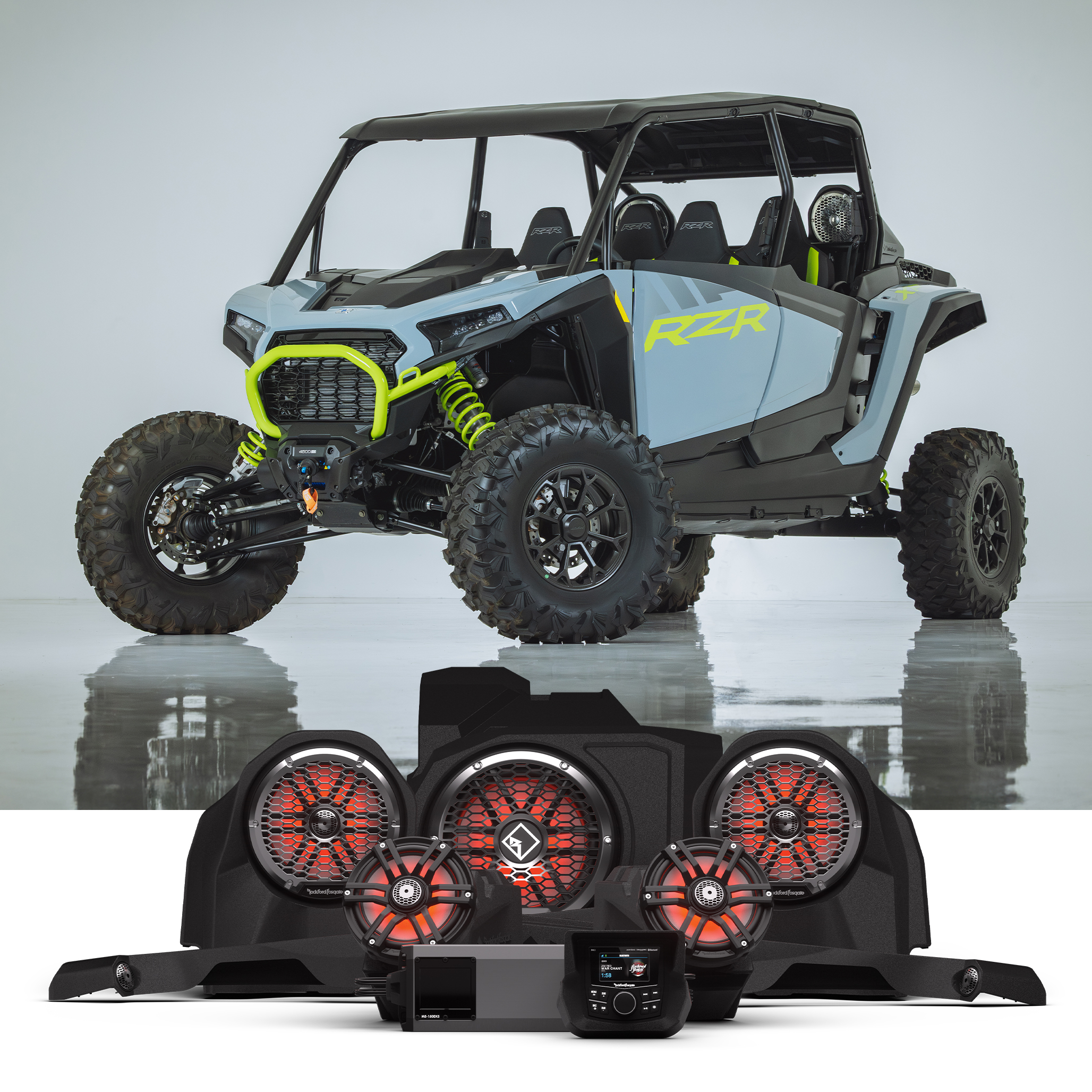
Next Generation Stage-6 Aftermarket RZR Audio Kit by Rockford Fosgate®, Now Shipping.
Monday July 21, 2025
Rockford Fosgate, the leader in high-performance audio systems, is now shipping the next-generation Stage-6 aftermarket RZR Audio Kit, engineered to deliver unparalleled performance in the toughest SXS environments. This all-in-one, plug-and-play system is designed for seamless integration with select 2024+ Polaris RZR XP vehicles. It features Rockford Fosgate’s signature sound quality, intuitive installation, reliable smartphone connectivity, and rugged performance built to conquer any terrain. The Stage-6 kit includes the 2.7-inch PMX-3 digital media receiver, M2 6.5" coaxial front speakers, and ...
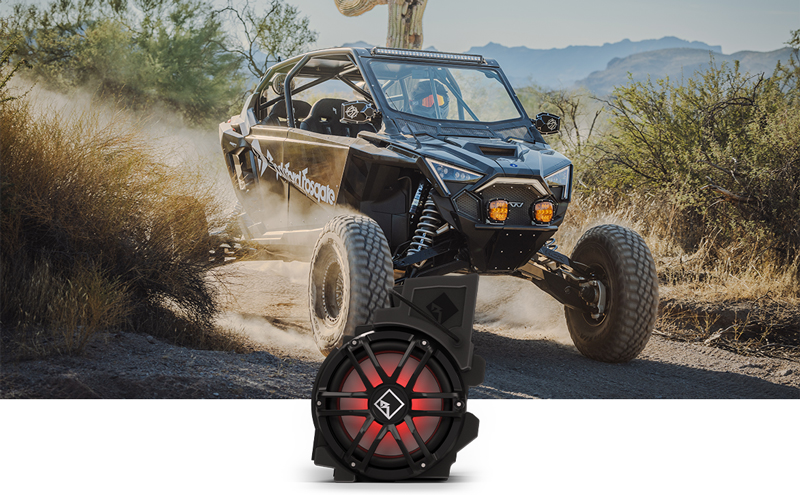
Rockford Fosgate Introduces the Ultimate Rear Subwoofer Kit for Polaris RZR vehicles
Sunday Feb. 23, 2025
Rockford Fosgate (www.rockfordfosgate.com), the industry leader in high-performance audio systems, is excited to announce the newest addition to its high-performance audio solutions: a rear subwoofer kit designed exclusively for Polaris RZR side-by-sides. Engineered for seamless integration with existing Rockford Fosgate RZR audio kits, this subwoofer delivers a dynamic bass upgrade—all while maintaining a sleek, stealthy design.
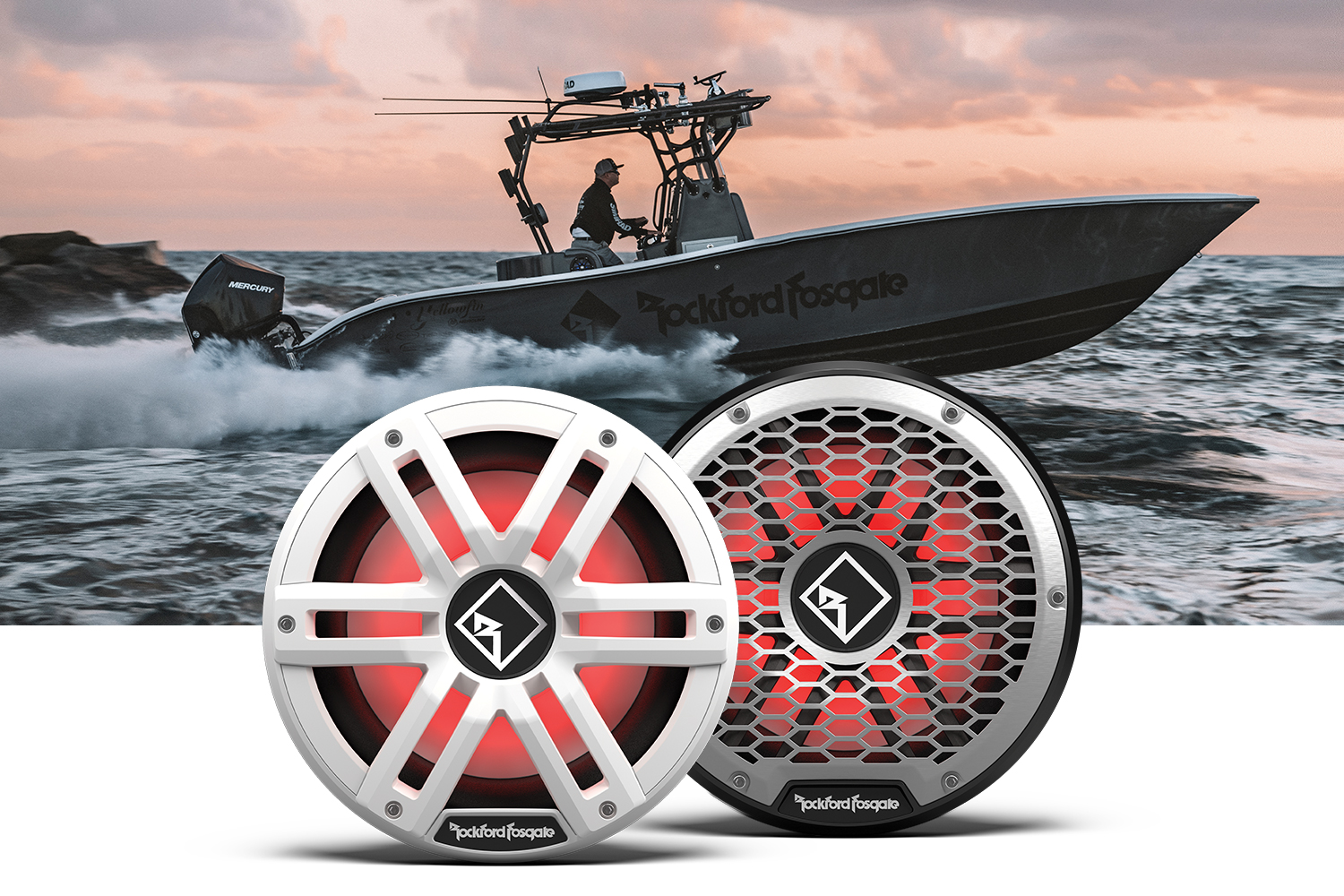
Introducing the new M2 Element Ready™ Subwoofers from Rockford Fosgate
Tuesday Feb. 04, 2025
Rockford Fosgate (www.rockfordfosgate.com), the industry leader in high-performance audio systems, is excited to announce the new M2 Element Ready™ Subwoofers. Bringing unmatched reliability and deep, powerful bass, with enhanced responsiveness and superior thermal management. Built to handle any adventure, they were engineered to endure the toughest conditions.
Next Generation of 10-inch T1 Slim Subwoofers by Rockford Fosgate®, Now Shipping
Tuesday Jan. 21, 2025
Rockford Fosgate, a leader in high-performance audio systems, is now shipping the next generation of T1 Slim Subwoofers. The new T1 series of slim subwoofers deliver next-level reliability and tactile bass performance, offering improved responsiveness and exceptional thermal management. Available in both sealed and ported options, the line of subwoofers is designed for the tightest installations, while still providing class-leading bass output.

Stage-3 Jeep® Audio Kits for Select 2024 and Newer Wrangler Models by Rockford Fosgate®, Now Shipping
Tuesday Jan. 21, 2025
Rockford Fosgate, a leader in high-performance audio systems, is thrilled to unveil its 1800-watt Stage-3 Jeep Audio Kit. Designed to enhance Jeep® 4×4 adventures, this kit provides powerful performance, a Jeep-specific audio tuning for an unparalleled listening experience, and an easy installation. Built to seamlessly integrate with Jeep interiors, the system is Element Ready™, ensuring durability and consistent performance on any terrain.
Introducing the Next Generation of 10-inch T1 Slim Subwoofers by Rockford Fosgate®
Monday Nov. 04, 2024
Tempe, AZ (November 5th, 2024) Rockford Fosgate, a leader in high-performance audio systems, is thrilled to unveil the next generation of T1 Slim Subwoofers. The new T1 series of slim subwoofers deliver next-level reliability and tactile bass performance, offering improved responsiveness and exceptional thermal management. Available in both sealed and ported options, the line of subwoofers is designed for the tightest installations, while still providing class-leading bass output. The 500-watt subwoofers have been re-engineered with more mass to fit in ...
Introducing Stage-3 Jeep® Audio Kits for Select 2024 and Newer Wrangler Models by Rockford Fosgate®
Monday Nov. 04, 2024
Tempe, AZ (November 5th, 2024) Rockford Fosgate.com , a leader in high-performance audio systems, is thrilled to unveil its 1800-watt Stage-3 Jeep Audio Kit. Designed to enhance Jeep® 4×4 adventures, this kit provides powerful performance, a Jeep-specific audio tuning for an unparalleled listening experience, and an easy installation. Built to seamlessly integrate with Jeep interiors, the system is Element Ready™, ensuring durability and consistent performance on any terrain. The Stage-3 kit includes a 12" subwoofer, 6.5" coaxial speakers, 1” tweeters ...
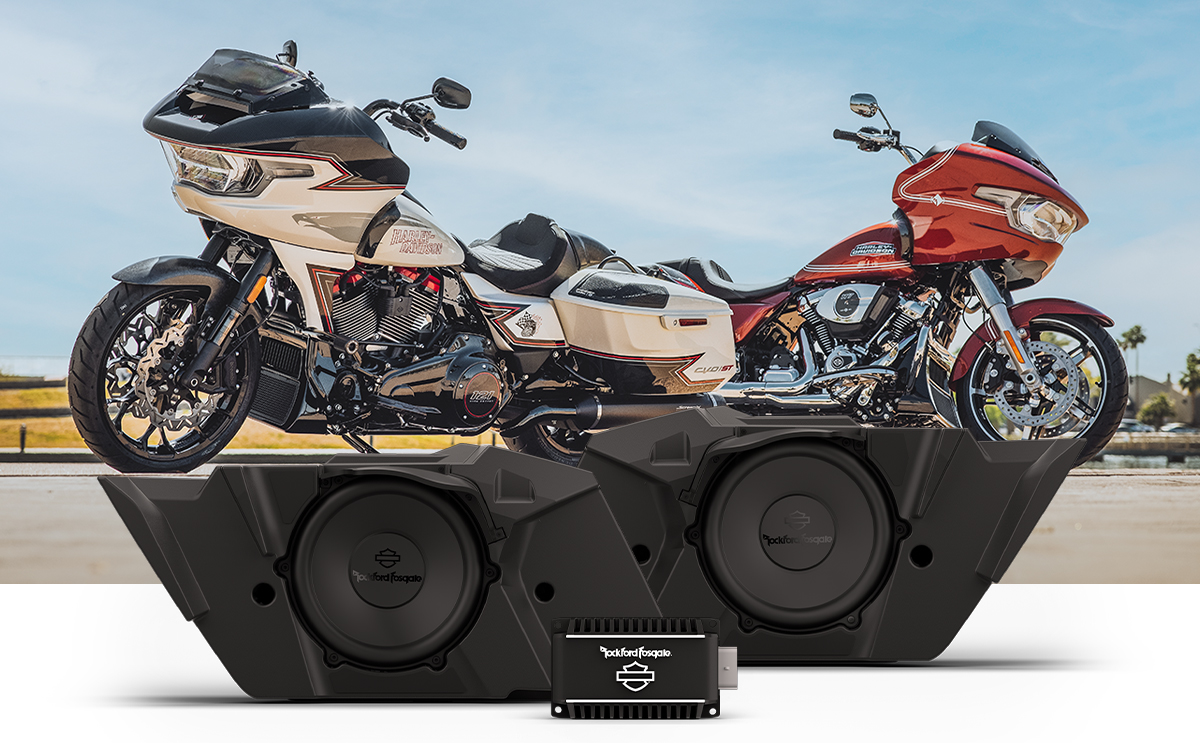
Introducing the New Harley-Davidson® Audio Powered by Rockford Fosgate® 2024 Subwoofer System
Wednesday July 10, 2024
Rockford Fosgate (www.rockfordfosgate.com), the industry leader in high-performance audio systems, is excited to introduce a 300-watt subwoofer system purpose-built to deliver true on-road bass performance. Building on the popularity of Harley-Davidson® Audio Powered by Rockford Fosgate sound systems, owners of 2023 and later Harley-Davidson® CVO touring bikes with the Skyline infotainment units can now add subwoofers built to the exact specifications of their saddlebags.

Rockford Fosgate Enhances Adventure With All-New Complete Audio Systems For Jeep Wrangler And Gladiator
Tuesday Oct. 31, 2023
Available for select 2018-2023 Jeep Wrangler, and 2020+ Jeep Gladiator models, the Rockford Fosgate sound systems deliver storied sound in a complete plug-and-play package
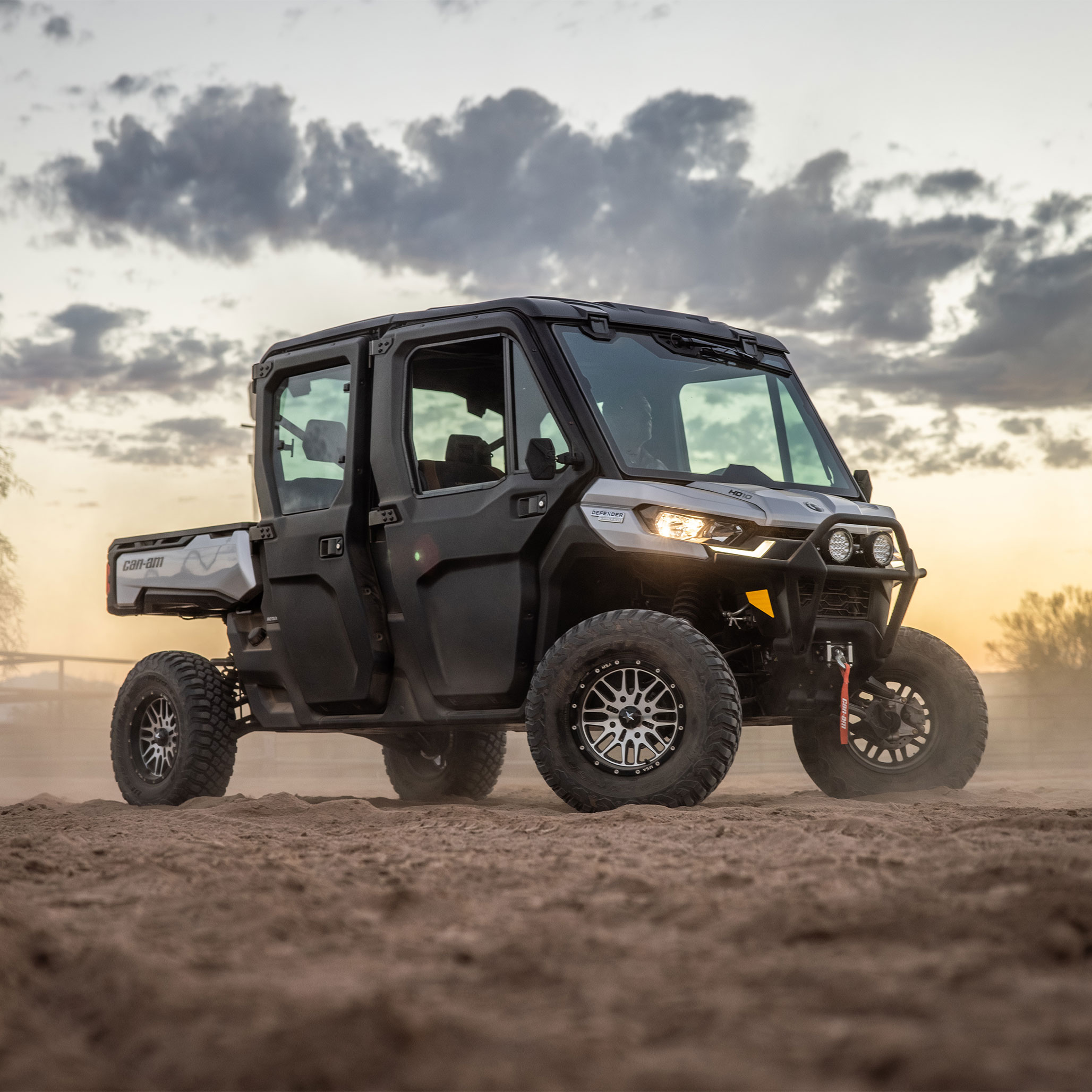
Rockford Fosgate Unveils All-In-One Overhead Audio System For Can-Am Defender Models
Thursday Sept. 14, 2023
Compatible with Two and Four door 2017 and newer Can-Am Defender Models, the Rockford Fosgate Can-Am Stage 1 System Delivers a Seamless audio solution. Rockford Fosgate, the industry leader in high-performance audio, released its latest all-in-one solution with its Can-Am Defender Stage-1 audio system. Purpose built for any environment, this plug-and-play system ensures a simple, easy to install, full audio experience. Featuring (2) 5.25-inch Element Ready coaxial speakers, controlled by a 2.3-inch source unit, with Bluetooth connectivity, the Stage-1 Can-Am ...
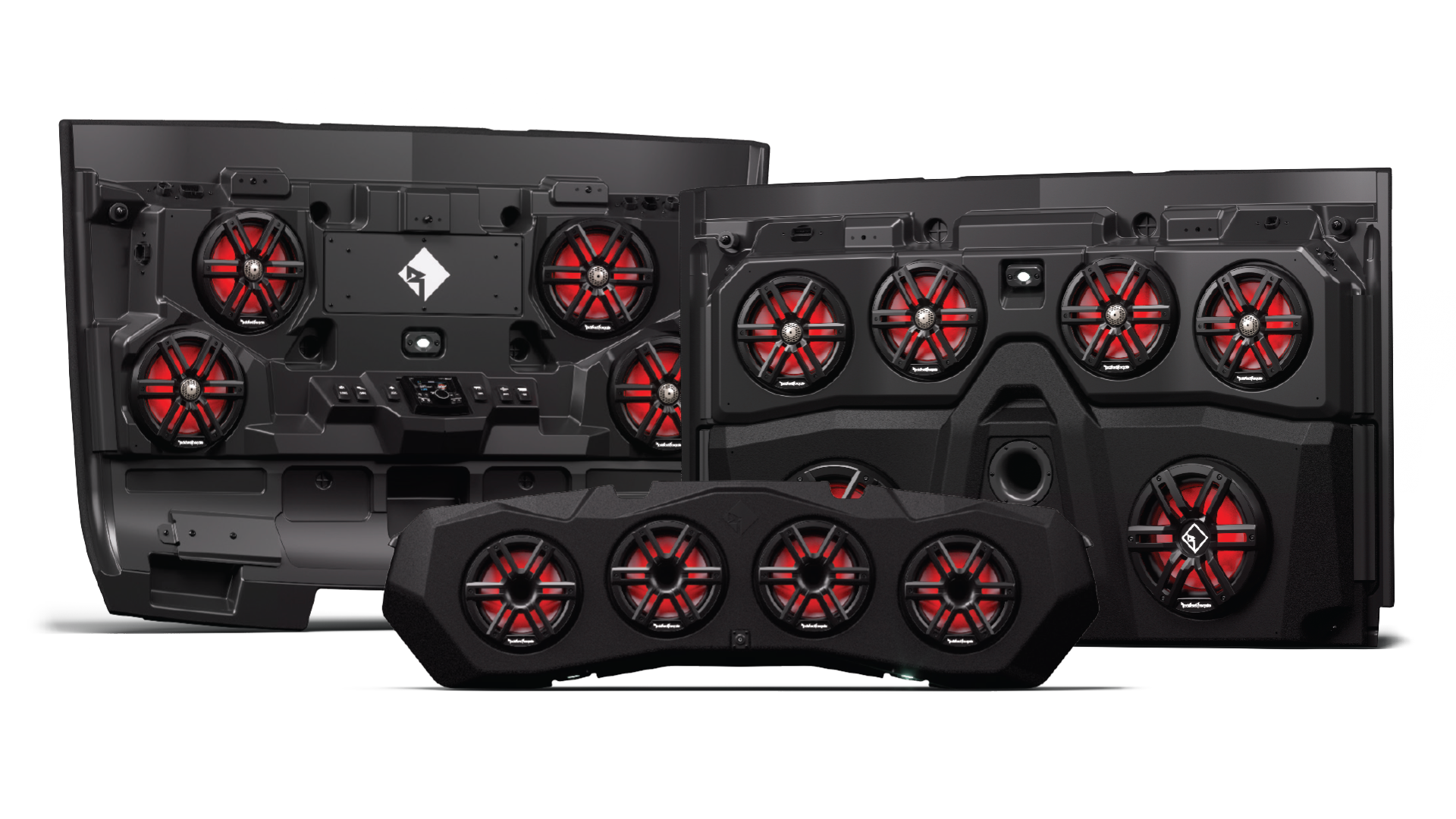
Rockford Fosgate Literally Elevates Audio For Polaris Ranger With The All-New, All-In-One Roof System
Tuesday Sept. 12, 2023
Available for Two- and Four-Seater 2018 and newer Polaris Ranger Models, the Rockford Fosgate Ranger Roof Audio System Delivers Epic Performance and Seamless Installation Rockford Fosgate, the industry leader in high-performance audio, announced the launch of its latest innovation, the Ranger Roof Audio System. Purpose built for the outdoor environment, this all-in-one audio system redefines the ultimate outdoor audio experiences, blending exceptional performance with seamless installation. Reaffirming its position as the leader in premium audio systems for Polaris Ranger off-road ...
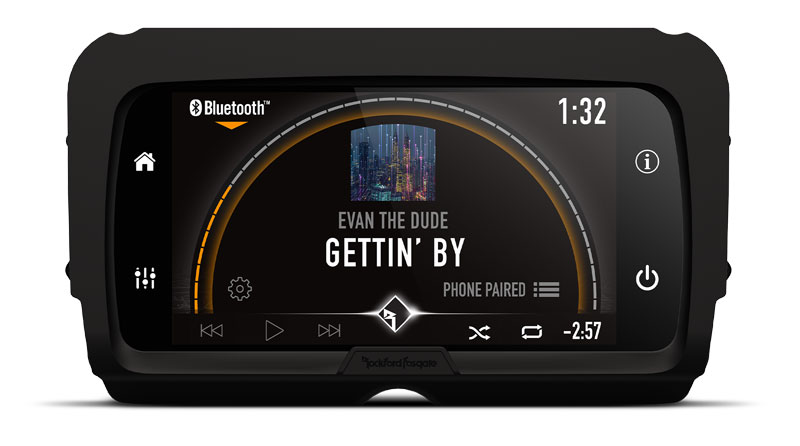
New Direct Fit Radio for 2014+ Harley-Davidson® Motorcycles by Rockford Fosgate®
Friday July 28, 2023
The PMX-HD14 radio is purpose built to deliver iconic features and performance. Rockford Fosgate (www.rockfordfosgate.com), the industry leader in high-performance audio systems, is excited to announce a new factory source unit replacement for 2014+ Harley-Davidson® touring motorcycles. The new direct fit unit is designed for 2014+ Harley-Davidson Electra Glide®, Street Glide®, and 2015+ Road Glide® models and allows riders to maintain factory thumb controls as well as CB and wireless headset connectivity with no additional parts. A full color, glove ...

Rockford Fosgate® Releases New 800-watt Audio Kits for Harley-Davidson® Motorcycles
Friday July 29, 2022
Rockford Fosgate, the industry leader in high-performance audio, confirms the launch of new audio kits for Harley-Davidson® motorcycles. The first release of these new 800-watt audio systems will be during the City of Sturgis Motorcycle Rally® where Rockford staff will be demonstrating the audio kits at their booth on Lazelle Street and their location at Black Hills Harley-Davidson in Rapid City. With options for Road Glide®, Street Glide®, Ultra®, and CVO® models, dating from 1998 through brand new bikes, the ...
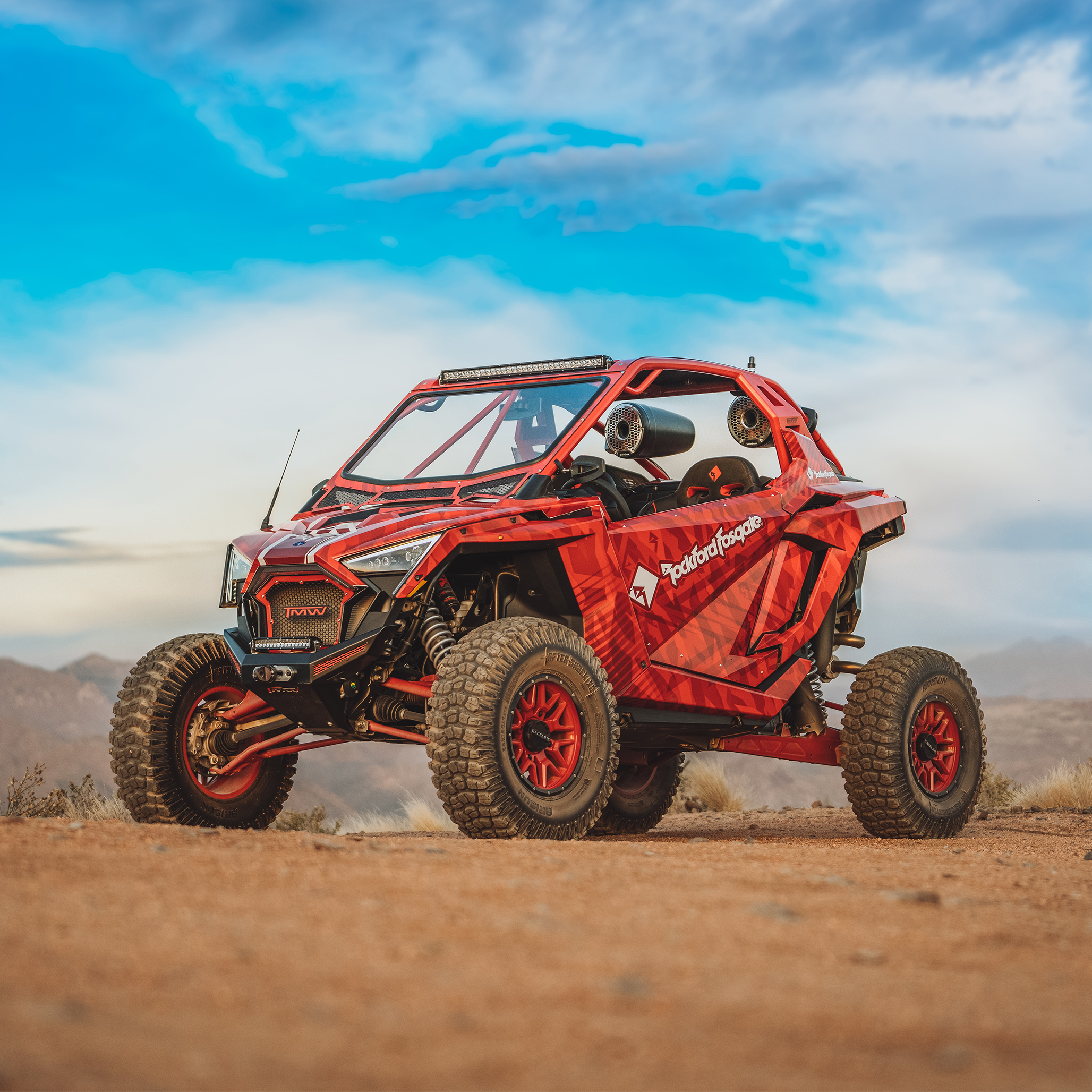
Rockford Fosgate® Rolls Out 1500-watt Audio Kits Purpose Built for 2019+ Polaris RZR Pro XP®
Monday July 18, 2022
Rockford Fosgate, the industry leader in high-performance audio, unveils new aftermarket audio solutions purpose built for 2019+ RZR Pro XP® 2 and 4-seat vehicles. Six aftermarket solutions are now shipping with the option of either a PMX source unit or a Ride Command™ interface, kitted as a Stage 4, 5, or 6 audio system. The Stage-4 kit includes an AM/FM/WB digital media receiver with 2.5-inch color screen, 6.5-inch front speaker pods, 6.5-inch rear speaker cans, 1500-watt 5-channel amplifier, and 10-inch ...
Rockford Fosgate® Livens Up the Water with Launch of 10-inch Full Range Horn Loaded Marine Speakers
Tuesday July 05, 2022
Rockford Fosgate, the industry leader in high-performance audio, launches the next level of on-water sound. The Element Ready™ M2 10-inch speakers create an unmatched audio experience, with class-leading output, complete Color Optix™ lighting control, and grille customization. Available now as a coaxial speaker and wake tower options, all models are crafted with a 1-inch horn tweeter paired with a 10-inch high-efficiency midrange. These 10-inch full-range horn-loaded drivers are engineered specifically to be BIG and LOUD! Uniquely tuned for "open-air" environments, ...

Rockford Fosgate® Introduces New Motorsports Audio Kits for Select Polaris Ranger® 2018 – newer Vehicles
Monday April 04, 2022
Kits are available with a standalone stereo or Ride Command™ integration Rockford Fosgate, the industry leader in high-performance audio systems, is excited to announce new audio solutions for select Polaris Ranger® XP1000 Full Size and Crew models are available through authorized Rockford Fosgate retail locations. Purpose built to integrate into 2018+ Ranger® vehicles, these audio kits begin at STG2 that include a stereo and speakers, then continue to build in performance, more features, and adds RGB LED lighting from STG3 ...
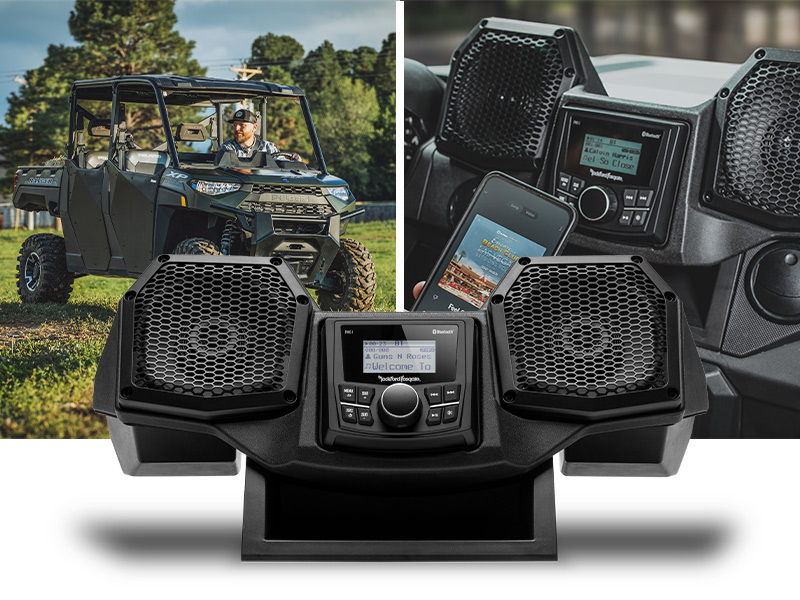
Rockford Fosgate® introduces new All-In-One Audio Solution for Select Polaris Ranger® 2018 – 2022 Vehicles
Friday Sept. 17, 2021
The Stage 1 system will be available through authorized Rockford Fosgate retail locations beginning in October. Rockford Fosgate, the industry leader in high-performance audio systems, is excited to announce the RNGR18-STG1 audio system, their latest audio innovation for Polaris Ranger® vehicles is available soon at a MSRP of $619.99. This new all-in-one audio solution is purpose built for the off-road environment featuring a single enclosure that houses a pair of 5.25-inch speakers and a Bluetooth® ready source unit. The audio ...
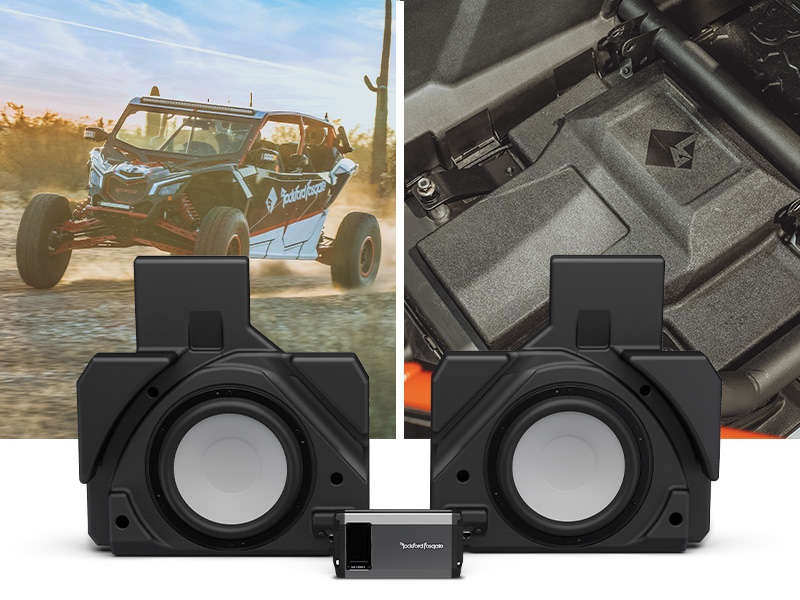
Rockford Fosgate® introduces new 1,000-Watt Rear Subwoofer Solution for Select Can-Am Maverick® X3 MAX Vehicles
Friday Sept. 17, 2021
The dual rear subwoofer kit will be available through authorized Rockford Fosgate retail locations beginning in October. Rockford Fosgate, the industry leader in high-performance audio systems, delivers maximum bass performance with its all-new 1,000-Watt dual 10-inch rear subwoofer solution for select Can-Am Maverick® X3 MAX 2017 and newer vehicles. Authorized Rockford Fosgate dealers will offer the X317MAX-RSS kit in October with a MSRP of $1869.99. Designed as an upgrade for aftermarket Rockford Fosgate Can-Am Stage-3/4/5/6 systems, the rear subwoofer solution ...
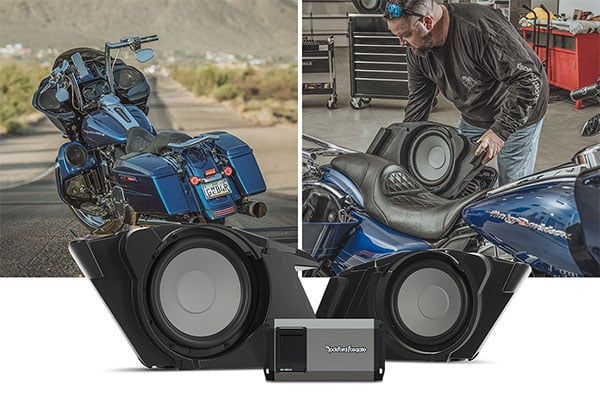
Rockford Fosgate® Reinvents the Ride with All-New Subwoofer Kit for 2014+ Harley-Davidson® Touring Motorcycles
Monday July 26, 2021
Real Bass that is Purpose-Built for the Motorcycle Environment Rockford Fosgate (www.rockfordfosgate.com), the industry leader in high-performance audio systems, is excited to unveil the first ever Element Ready™ 800-watt dual 10-inch subwoofer kit developed for aftermarket installation in 2014 and newer Harley-Davidson® touring motorcycles. Designed to work right out of the box to ensure less time in the garage and more time out riding. The HD14-SBSUB kit includes an 800-watt rugged IPX6 rated amplifier, two ten-inch high-output subwoofers mounted in ...
Rockford Fosgate® Announces New Motorsports Camera
Monday May 03, 2021
Camera and Vehicle Specific Installation Kits are designed for use with select Polaris® and Can-am® Vehicles. Rockford Fosgate the industry leader in high-performance audio systems, adds even more performance to their recently released STG5 and STG6 SXS audio systems with the launch of the new MX-CAM motorsports camera. Designed for the off-road, this high-resolution color camera is Element Ready™ to provide a crystal-clear picture for backing up or rock crawling. The MX-CAM is purpose built for the off-road environment using ...
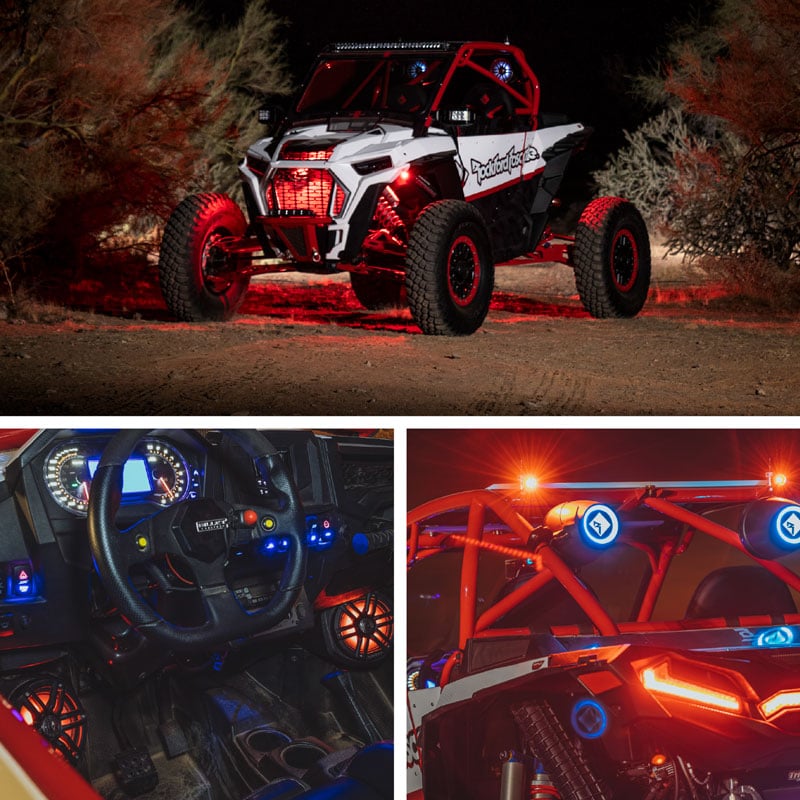
Rockford Fosgate® Ships All New Motorsports Audio Kits Featuring Color Optix™ RGB LED Lighting
Thursday April 29, 2021
Select Models for Polaris RZR® and Can-am Maverick X3® began shipping this week Rockford Fosgate the industry leader in high-performance audio systems, is excited to announce that select models of new motorsports audio kits designed for 2014+ Polaris RZR® and 2017+ Can-am Maverick® X3 vehicles began shipping this week. The complete line of kits, some of which feature RGB LED Color Optix™ lighting, is expected to ship by May 15th at MSRP ranging from $749.99 to $4389.99. Designed to stand ...
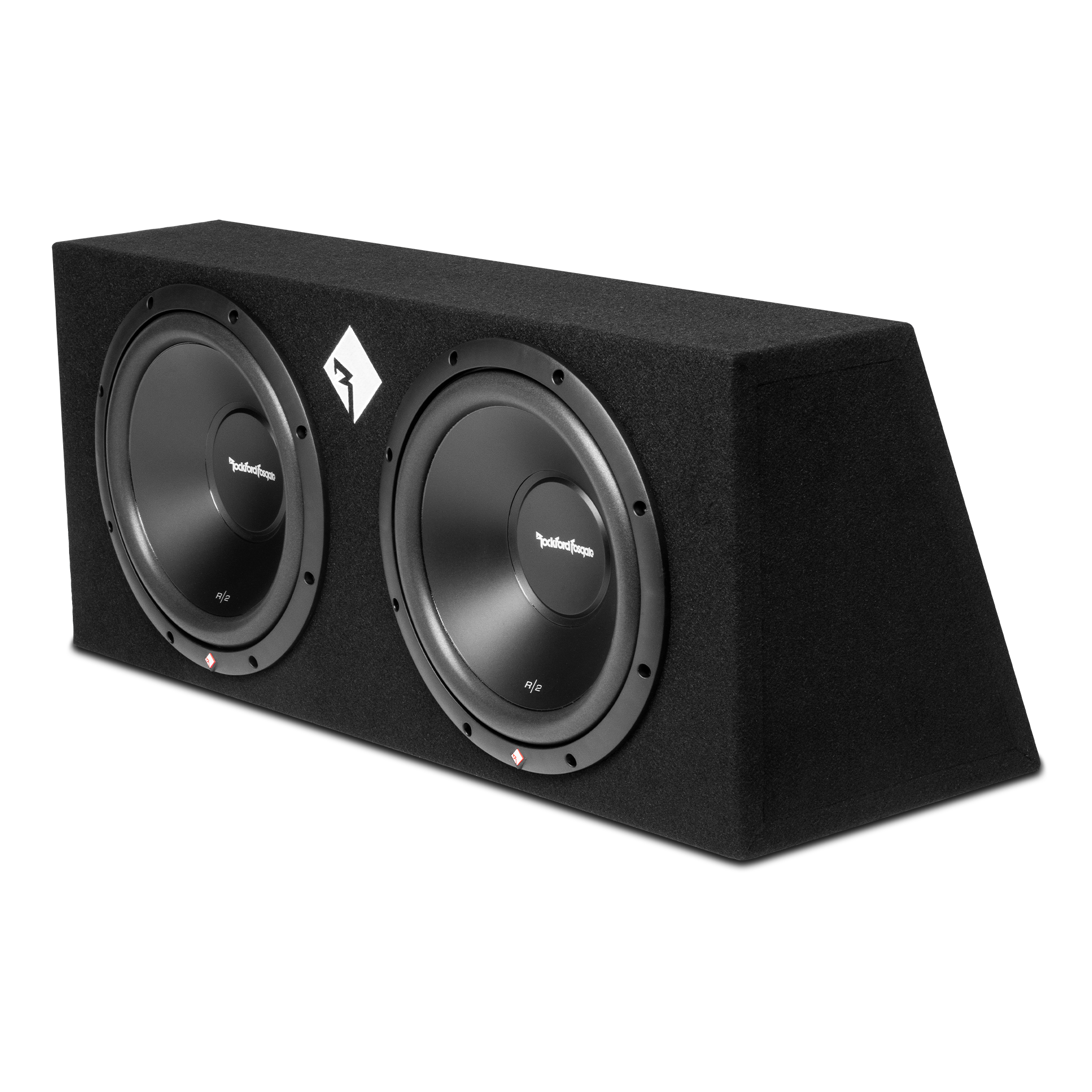
Rockford Fosgate® Releases New Prime R2 Loaded Enclosures
Tuesday March 16, 2021
Prime R2 Enclosures Offer Pre-built Bass Performance with Dual 12-inch and Dual 10-inch models Rockford Fosgate the industry leader in high-performance audio systems, is proud to announce the new Prime R2 Loaded Enclosures are now shipping. Offered in two models, customers can choose either a double 12-inch or double 10-inch version. Both models are pre-built and pre-wired for easy drop in installation; simply add an amplifier and enjoy epic bass performance. Loaded with dual voice coil subwoofers, both the 10-inch and ...
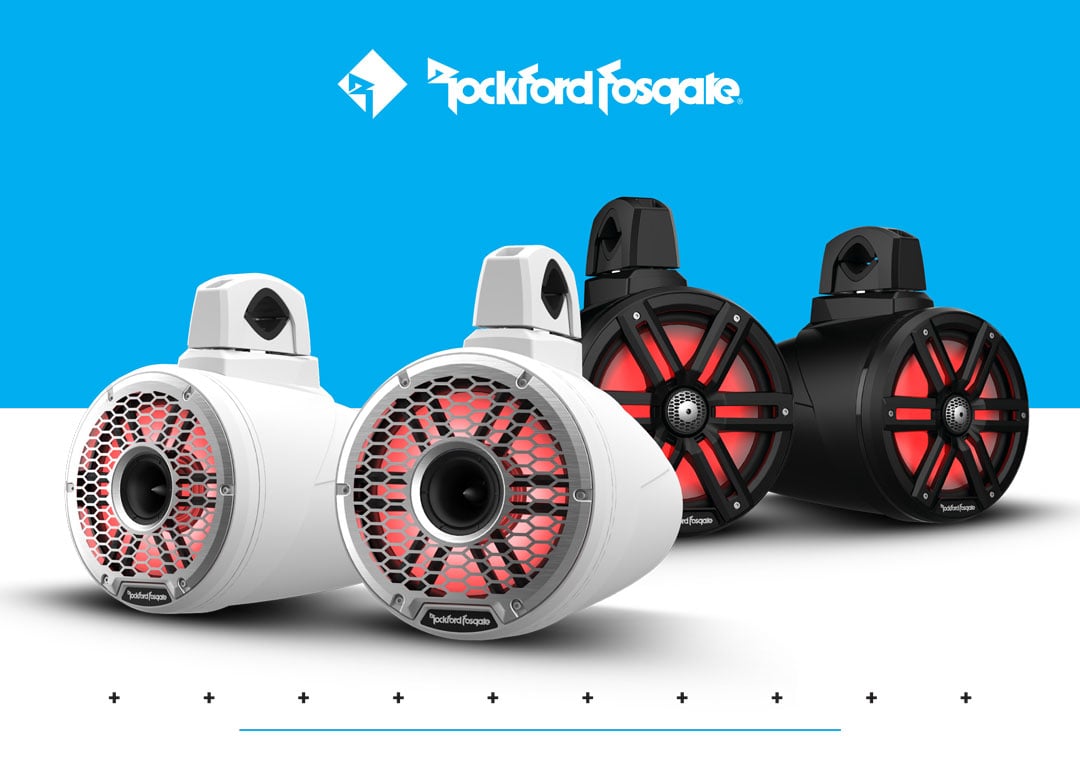
Rockford Fosgate® Adds Wake Tower Speakers to M2 Line of Color Optix™ RGB LED Marine Audio Products
Thursday Jan. 21, 2021
M2 Series Wake Tower Horn Loaded Speakers Deliver Exceptional Music Clarity even at a Distance Rockford Fosgate the industry leader in high-performance audio systems, is excited to announce the launch of the new M2 Series wake tower speakers. All products are expected to be available this month at an MSRP from $999.99 to $1199.99 per pair. These new Element Ready™ products are available in two configurations, either an 8-inch full range speaker or an 8-inch speaker with built-in horn. The ...
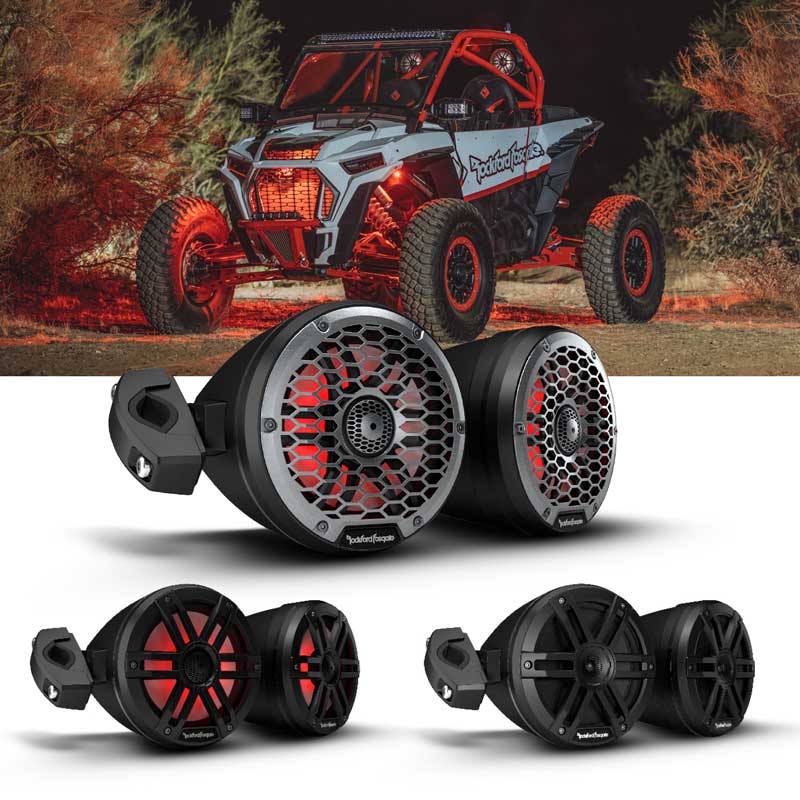
Rockford Fosgate® Introduces New Motorsports Can Speakers
Wednesday Jan. 06, 2021
M1 and M2 Series feature Color Optix™ RGB LED Lighting Rockford Fosgate the industry leader in high-performance audio systems, is excited to announce the launch of all new Motorsports Can Speakers. Designed rugged and rock solid, the new line-up of 6.5-inch Motorsports Cans is built for true outdoor audio performance. Higher output, rider customization, and an Element Ready™ design all create an off-road audio experience second to none. The new MotoCans are available in M0, M1, or M2 series options. ...
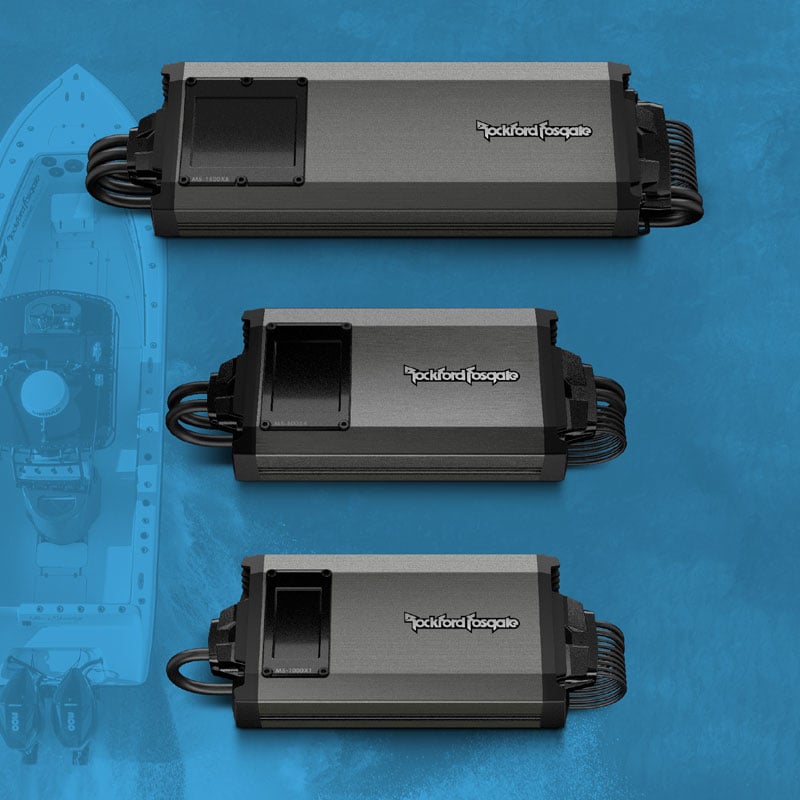
Rockford Fosgate® Announces New M5 Amplifiers
Tuesday Jan. 05, 2021
The powerful M5 Line is the next generation of Element Ready™ amplifiers and the first to carry a CEA-2006 Dynamic Output Power Rating Rockford Fosgate the industry leader in high-performance audio systems, is proud to announce the new line of M5 amplifiers created to withstand the outdoor environment for all types of marine, motorcycle, and motorsports installations. IPX6 rated, the M5 amplifiers are designed as rugged as the outdoors and are built to stand up to all the elements including water, ...
Rockford Fosgate® Introduces All New Motorsports Audio Kits Featuring Color Optix™ RGB LED Lighting
Monday Jan. 04, 2021
Audio Components Combine with Color Optix™ Controller and RF Connect App for Complete Control of Lighting Experience Rockford Fosgate the industry leader in high-performance audio systems, elevates off-road performance with the launch of sixteen new motorsports kits designed for 2014+ Polaris RZR® and 2017+ Can-am Maverick® X3 vehicles. This is Rockford's first offering of SXS kits designed for use with the Color Optix ™ Controller and RF Connect App providing lighting control on your vehicle. Kit options begin with Stage1 ...
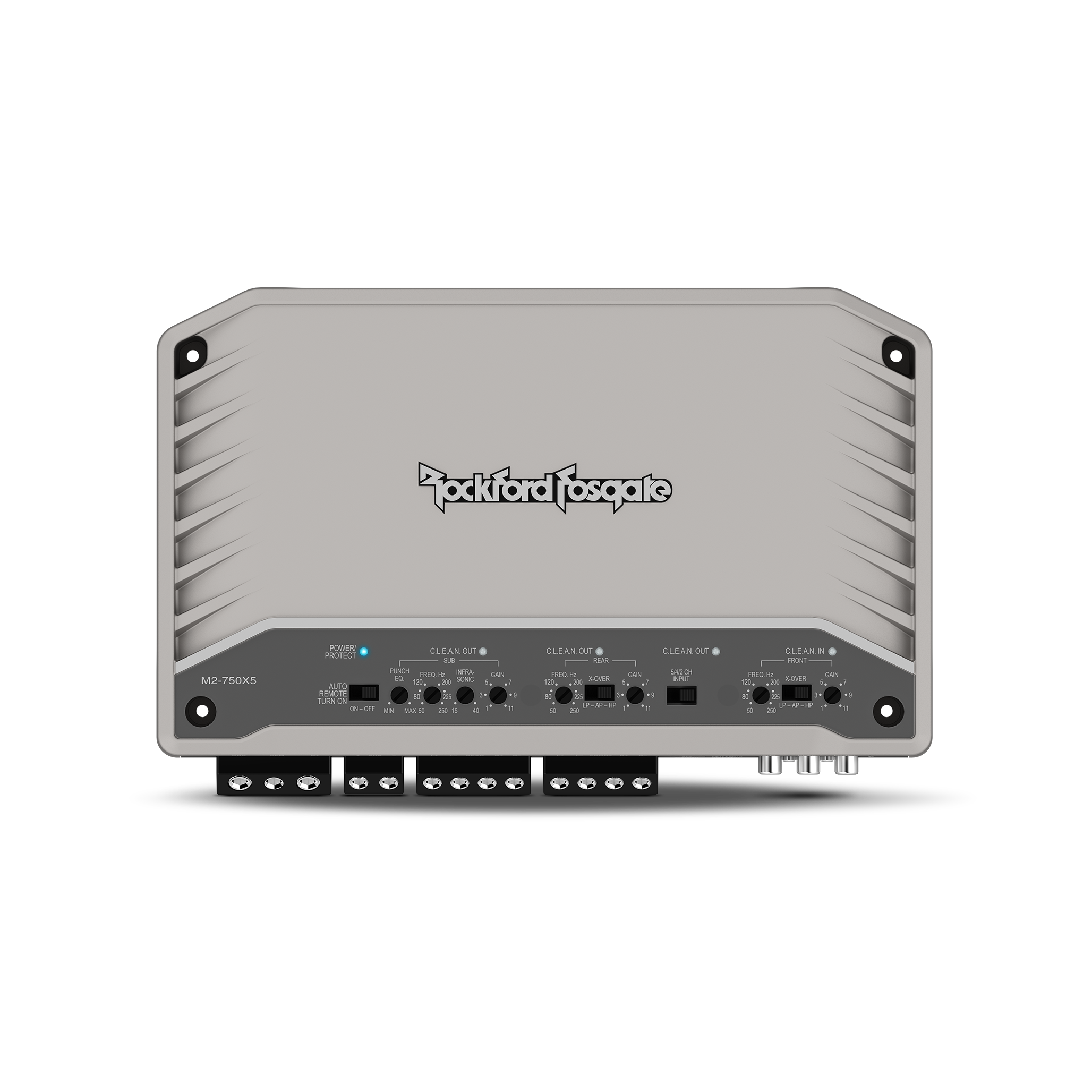
Rockford Fosgate® Introduces New Family of Marine Amplifiers
Wednesday June 24, 2020
Element Ready™ design protects against outdoor exposureRockford Fosgate the industry leader in high-performance audio systems, is proud to announce a new line of amplifiers designed specifically for the marine environment. The new models of M2 series amplifiers feature UV stable powder coated heatsinks, a conformal coated circuit board to protect against dust and water intrusion, as well as Zinc Nickel-plated Marine grade brass terminals for a corrosion free connection. With MSRP ranging from $199.99 to $399.99, the M2 amplifiers will ...
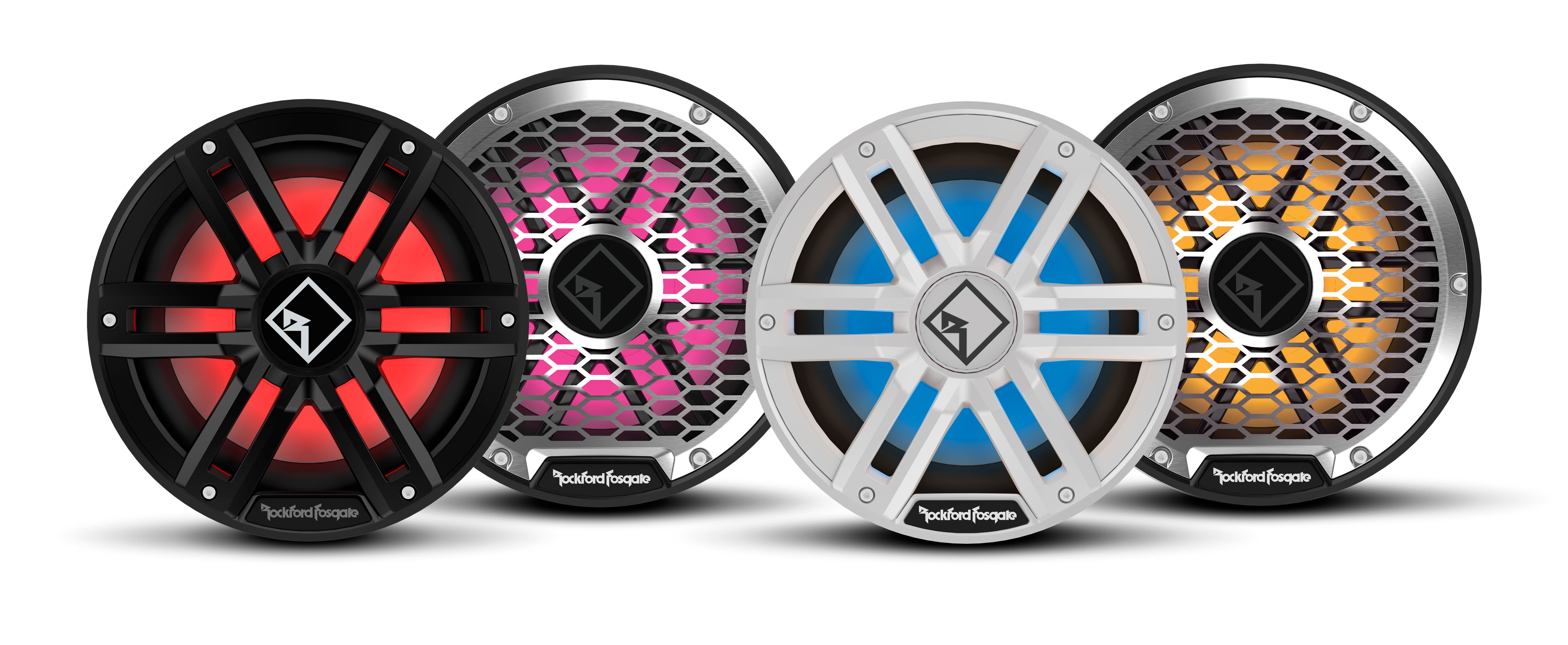
Rockford Fosgate® Color Optix™ Subwoofers Available Now
Sunday May 17, 2020
Additional models of M2 Series Subwoofers are Now ShippingRockford Fosgate the industry leader in high-performance audio systems, is happy to announce that they are now shipping the new 10-inch M2 Color Optix™ subwoofers designed for use in sealed box applications. The products will ship to customers just as the boating season kicks off in many parts of the country.These subwoofers are part of the Element Ready™ line-up that Rockford Fosgate introduced last November. They feature the IP67 certified rating as ...
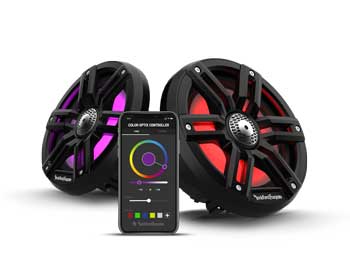
Rockford Fosgate® Color Optix™ Products Available Now
Friday Feb. 07, 2020
M2 Series Speakers and Subwoofers, M1 Series Speakers and Subwoofers, and LED RGB Controller are Now Shipping Rockford Fosgate the industry leader in high-performance audio systems, is pleased to announce the availability of new Element Ready™ products introduced last November. The M1 and M2 Series speakers and subwoofers as well as the Color Optix™ Controller and corresponding cables are now shipping to authorized retail locations. The RF CONNECT™ App which interfaces with the Color Optix™ Controller to allow the user ...
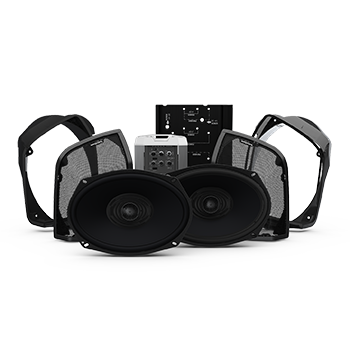
Rockford Fosgate® Introduces Audio Solutions for Harley-Davidson® Road King® Motorcycles
Thursday Feb. 06, 2020
New Plug and Play Audio Kits Let You Add Sound to Your Ride Harley-Davidson Road King® riders can now enjoy great sound out on the road. Rockford Fosgate the industry leader in high-performance audio systems, is excited to announce two new audio kits designed to fit most 1998 to current models of Harley-Davidson Road King® motorcycles that are equipped with hard bags are now available. With these new kits, Rockford expands its audio offering outside of the faring to deliver ...
Rockford Fosgate® New PRIME R2 Amplifiers Now Available
Monday Feb. 03, 2020
Rockford Fosgate the industry leader in high-performance audio systems, is happy to announce the new PRIME R2 amplifiers are now available. Amplifiers began shipping to Rockford authorized retail stores in late December and are now available for purchase. The R2 amplifiers are all extremely efficient because of their class D technology which reduces demand on the vehicles electrical system. They also incorporate the unique P.O.W.E.R supply which continues to generate more than rated power as the voltage increases and are ...
Rockford Fosgate® Unveils New Color Optix™ Controller
Tuesday Nov. 05, 2019
For Use in Marine and UTV Applications the New RGB LED Light Controller is Designed to Light The Way. The PMX-RGB Color Optix™ Controller gives infinite control over LED color options on RGB equipped marine speakers and subwoofers. Rockford Fosgate the industry leader in high-performance audio systems, has unveiled its new Element Ready™ IPX7 certified RGB LED Light Controller. With an MSRP of only $69.99, the PMX-RGB is expected to be shipping in Q1 2020. “When thinking through our new ...
Rockford Fosgate® Releases RF CONNECT™ App
Monday Nov. 04, 2019
The Proprietary Designed App Connects via Bluetooth to Give Control Over All RF CONNECT™ Supported Products Including the New Color Optix™ Controller and PMX-1. Rockford Fosgate the industry leader in high-performance audio systems, announces the creation of the new RF CONNECT™ App with control to tune and tweak, change lighting colors, adjust volume, skip tracks, or anything else your device does, through a simple connection with your smartphone. The App is now available on both the Apple® and Android® app ...
Rockford Fosgate® Introduces New Audio Kits For Harley-Davidson® Road King® Motorcycles
Monday Nov. 04, 2019
The complete Plug and Play Audio Systems Feature Smartphone Connectivity And All the Components for an Exceptional Sound Experience Road King riders can now experience great Rockford Fosgate audio out on the open road. Rockford Fosgate the industry leader in high-performance audio systems, is proud to announce its new line of audio kits purpose built for Harley-Davidson Road King motorcycles. With an MSRP of $1199.99, the Road King kits are expected to begin shipping by year end. “Both the 2014+ ...
Rockford Fosgate® Introduces New PRIME R2 Amplifiers
Monday Nov. 04, 2019
Designed with Smart Features for Easy Setup with Models Ranging from 250 to 1200 Watts Rockford Fosgate the industry leader in high-performance audio systems, is proud to announce the new PRIME R2 line of amplifiers that includes multiple models for system design flexibility. With MSRP ranging from $169.99 to $379.99, the R2 amplifiers will begin shipping in December 2019. “Many of the design innovations that we’ve developed over the years, from how to deal with heat to maximizing the efficiency ...
Rockford Fosgate® Introduces Next Generation of Marine Speakers And Subwoofers featuring Color Optix™ RGB LED Lighting
Monday Nov. 04, 2019
M1 and M2 Series Speakers and Subwoofers Combine with Color Optix™ Controller and RF Connect App for Complete Control of Lighting Experience Boaters rejoice! New Color Optix™ loudspeakers deliver loud, clear, accurate sound and light the way for your journey. Rockford Fosgate the industry leader in high-performance audio systems, is excited to announce the launch of the new M1 and M2 Series speakers and subwoofers. The full line of Element Ready™ products are designed to pair with the just introduced ...
Rockford Fosgate® Announces New M0 Line of Marine Speakers
Tuesday Oct. 01, 2019
M0 Full Range Speakers are Purpose Built to Play High Quality Sound in the Outdoors Rockford Fosgate (rockfordfosgate.com), the industry leader in high-performance audio systems, is proud to announce the debut of the M0 Element Ready® full range 6.5-inch speakers built to withstand water, salt, dust, and UV. The M0-65 (white) and M0-65B (black) speakers will begin shipping later this year at an MSRP of $119.99. The newly designed M0 speakers feature weatherproofing technology specific for use in marine watercraft ...
Rockford Fosgate® Expands Line of Digital Media Receivers
Tuesday Oct. 01, 2019
The Element Ready® PMX-1 is Equipped with Class Leading Features Including Superior Bluetooth® Audio Streaming and Multiple Input Sources. The new PMX-1 Digital Media Receiver is fully equipped for easy Bluetooth streaming from Android® or Apple® Mobile Devices and add-on control either via Rockford’s steering wheel control (PMX-BTUR) or through the RF Connect mobile App coming soon to Apple and Android App stores. Rockford Fosgate (rockfordfosgate.com), the industry leader in high-performance audio systems, is proud to announce the addition of ...
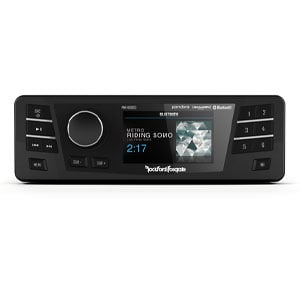
Rockford Fosgate® Announces New Radio for Harley-Davidson® Motorcycles
Sunday June 02, 2019
New radio replaces the factory unit on 1998 – 2013 models giving riders updated features, a high visibility display, and integration with their factory handlebar controls
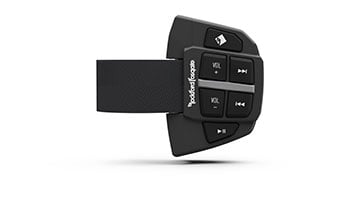
Rockford Fosgate® Introduces Bluetooth® Universal Remote
Monday Dec. 17, 2018
Now Shipping, the Affordable and Element Ready PMX-BTUR Remote Control Allows Users to Adjust Volume, Track, Play, and Pause on Android® or Apple® Mobile DevicesEnthusiasts who use a mobile device as their source are going to love this remote’s compatibility due to its Element Ready design, which is perfect for any weather or riding condition.Rockford Fosgate (www.rockfordfosgate.com), the industry leader in high-performance audio systems, is proud to announce the launch of the PMX-BTUR universal Bluetooth® remote control. It’s designed for use on automotive, marine, ...
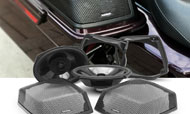
Rockford Fosgate Ships New Rear Audio Bag Lid Kits for Harley Davidson® Models 1998-2013
Thursday Sept. 21, 2017
Rockford Fosgate has the answer for those who have been thinking of adding rear speakers to Harley-Davidson® bags but didn’t want to buy a new set of bag lids.Rockford Fosgate (www.rockfordfosgate.com), the industry leader in high-performance audio solutions, is proud to announce that the new bag lid audio kits designed for Harley Davidson® motorcycles model years 1998 – 2013 (TMS69BL9813: $499.99) are now available.“Our new retrofit kit allows addition of rear speakers on your existing factory bag lids by utilizing ...

Rockford Fosgate DSR1 Digital Signal Processor Now Available
Tuesday Sept. 19, 2017
DSR1 Joins the 3Sixty Family of Digital Signal Processors; Includes iDataLink Maestro Technology for Integration of Factory Equipped Controls.
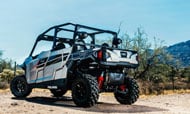
Rockford Fosgate® Announces New Polaris® General™ Audio Kits
Wednesday Aug. 16, 2017
Rockford Fosgate (www.rockfordfosgate.com), the industry leader in high-performance audio systems, is proud to announce a new line of motorsports audio solutions specific to Polaris® General™ side-by-sides. The five options (Stages 1-4 & Rear) will be shipping at the end of August.“Much like our Polaris Ranger® and RZR® kits, our new General kits are designed to provide high performance audio for the back country and twisted trails while out in the elements,” explained Jake Braaten, Rockford Vice President of New Product ...

New Rockford Fosgate® Premium Audio Kit Solutions for the Polaris® Ranger® Now Available
Tuesday Aug. 08, 2017
Rockford Fosgate (www.rockfordfosgate.com), the industry leader in high-performance audio systems, is proud to announce the availability of its new line of motorsports audio solutions specific to Polaris® Ranger® side-by-sides. Designed as plug and play solutions for Ranger models 2015 and newer, stages 1, 2, and 3 (RNGR-STAGE1, RNGR-STAGE2, and RNGR-STAGE3) are currently available, while Stage 4 and REAR (RNGR-STAGE4 and RNGR-REAR) will be available in September.“The outdoor environment can be unforgiving on audio gear as both terrain and weather can ...

Rockford Fosgate Debuts New Bag Lid Audio Kits at Sturgis® Motorcycle Rally™ 2017
Tuesday July 11, 2017
Rockford Fosgate (www.rockfordfosgate.com), the industry leader in high-performance audio solutions, is proud to announce for the fourth consecutive year that it will be the official motorcycle audio sponsor of the famed Sturgis® Motorcycle Rally™ 2017. Rockford Fosgate is proud to bring high performance motorcycle audio systems, including a new line of bag lid audio kits, to the crowds of enthusiasts on Lazelle Street in downtown Sturgis, S.D. during the 77th annual event from August 4-12.“As in prior years, Rockford Fosgate ...
Rockford Fosgate Features New Element-Ready Punch Series 8-Inch Full Range Marine Speaker at 2016 SEMA Show
Monday Oct. 31, 2016
Want to bring the famed Punch sound onto the lake? Rockford Fosgate (www.rockfordfosgate.com), the industry leader in high-performance audio systems, is proud to announce that it will feature the new 150/300 Watt (RMS/Max) Element-Ready PM282H Punch Marine 8-inch full range speaker system at the 2016 SEMA Show, which will be held in Las Vegas, Nev. from Nov. 1 – 4 at the Las Vegas Convention Center, booth N11839. The PM282H is now shipping with an MSRP of $649.99 (per pair). ...
Rockford Fosgate Announces DSR1 Digital Signal Processor at 2016 SEMA Show
Monday Oct. 31, 2016
LAS VEGAS, Nev. – Nov. 1, 2016 – Rockford Fosgate (www.rockfordfosgate.com), the industry leader in high-performance audio systems, is proud to announce it will launch the new DSR1 Digital Signal Processor at the 2016 SEMA Show, which will be held in Las Vegas, Nev. from Nov. 1 – 4 at the Las Vegas Convention Center, booth N11839.
Co-developed with ADS using their iDatalink Maestro interface technology, the DSR1 combines a full-featured 3Sixty digital signal processor with a flashable iDatalink Maestro ...
Rockford Fosgate Showcases PMX-3 Marine/Motorsports Compact Digital Media Receiver at 2016 SEMA Show
Monday Oct. 31, 2016
For those fanatics who take hitting sand and surf seriously and need an audio system command center with extreme flexibility, Rockford Fosgate (www.rockfordfosgate.com), the industry leader in high-performance audio systems, is proud to announce it will showcase the new PMX-3 compact digital media receiver at the 2016 SEMA Show, which will be held in Las Vegas, Nev. from Nov. 1 – 4 at the Las Vegas Convention Center, booth N11839. Designed for marine and motorsports applications, the PMX-3 will be ...
Rockford Fosgate Announces New Yamaha YXZ Audio Solutions
Wednesday Sept. 14, 2016
Rockford Fosgate (www.rockfordfosgate.com), the industry leader in high-performance audio systems, is proud to announce the launch of a new line of motorsports audio solutions specific to select 2016-2017 Yamaha YXZ side-by-side models. All audio solution lines for 2016-2017 Yamaha YXZ1000R & 2017 YXZ1000R SS are scheduled to ship in Q1 2017.

Rockford Fosgate® Announces New Stage 5 Premium Audio Kit Solution for the Polaris® RZR® Now Shipping
Monday Sept. 12, 2016
The outdoor environment can be unforgiving on audio gear as both terrain and weather can wreak havoc on these components. With that in mind, Rockford Fosgate (www.rockfordfosgate.com), the industry leader in high-performance audio systems, is proud to announce that the new Stage 5 Audio Kit Solution (RZR-STAGE5) is now shipping. Utilizing Rockford Fosgate’s premium Power Series components, the top-of-the-line RZR-STAGE5 has an MSRP of $3,599.99. “With the overall success of the existing stage 1-4 solutions, Rockford created the ultimate off-road ...
Rockford Fosgate Element-Ready Power TM1000X5ad Compact 5-Channel Amplifier Now Available
Sunday Sept. 11, 2016
Rockford Fosgate (www.rockfordfosgate.com), the industry leader in high-performance audio systems, is proud to announce that the new Element-Ready Power Series TM1000X5ad 5-Channel amplifier is now available with an MSRP of $1,049.99. Designed to withstand the outdoor elements, whether on sand, surf, or the open road, this marine-grade, high-efficient amplifier combined with a compact chassis makes it perfect for hybrid, electric, small cars, trucks, watercraft, motorcycles, and side-by-side UTVs.
Rockford Fosgate Power T1000X5ad Compact 5-Channel Amplifier Now Available
Sunday Sept. 11, 2016
Rockford Fosgate (www.rockfordfosgate.com), the industry leader in high-performance audio systems, is proud to announce that the new Power Series T1000X5ad 5-Channel amplifier is now available with an MSRP of $999.99. This high-efficient amplifier, combined with a compact chassis, makes it perfect for hybrid, electric, small cars, trucks, motorcycles, and side-by-side UTVs.
Rockford Fosgate PMX-8BB Hideaway Digital Media Receiver and PMX-8DH Wired Display Head Now Available
Sunday Aug. 21, 2016
For those fanatics who take hitting sand and surf seriously and need an audio system command center with extreme flexibility, Rockford Fosgate (www.rockfordfosgate.com), the industry leader in high-performance audio systems, is proud to announce that the new PMX-8BB hideaway digital media receiver (MSRP: $399.99 USD) and companion PMX-8DH full function wired display (MSRP: $299.99 USD) head are now available. The PMX-8BB can also fully integrate with the FLIR Systems’ Raymarine MFD via the Rockford Fosgate PMX-CAN. “The PMX-8BB is a ...
Rockford Fosgate Mini Punch 100-Watt Full Range Element-Ready Mono Amplifier Now Available
Wednesday Aug. 10, 2016
Rockford Fosgate (www.rockfordfosgate.com), the industry leader in high-performance audio systems, is proud to announce that the new “No Power Wire Required” PM100X1K Punch Element-Ready 100-Watt full range mono amplifier is now available. Designed for mobile, motorsport and marine applications, the PM100X1K has an MSRP of $399.99 per pair (left/right). “The Element-Ready PM100X1K is a high dynamic power amplifier that utilizes our patent pending BTL-powered ‘Freeload’ technology and a conformal coated pc board for multiple applications in a small, stealth-like package ...
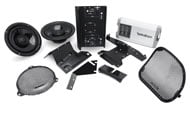
Rockford Fosgate Launches New High Performance, Direct Fitment Audio Kits for Motorcycles
Sunday July 31, 2016
Rockford Fosgate (www.rockfordfosgate.com), the industry leader in high-performance audio systems, is proud to announce the launch of new Power Series audio kits specific to Harley-Davidson motorcycles model years 1998-current. The audio kits include speakers, amplifiers, and installation accessories. The full line is shipping now with retail prices ranging up to $999.99 MSRP for a complete vehicle specific audio kit. “Rarely is anyone completely satisfied with motorcycle stock audio equipment, especially when riding on the open road,” said Jake Braaten, Rockford’s ...
ADS announces the iDataStart HC3 remote start system with FLEX RF technology, offered exclusively through the Rockford Fosgate US retail channel
Thursday July 21, 2016
Automotive Data Solutions Inc. (ADS) is proud to announce the launch of the all-new iDataStart® HC3 remote start system with FLEX® RF technology. HC3 is exclusively available through Rockford’s US-based network of representatives.With iDataStart HC3, mobile electronics retailers are offered the versatility of stocking a single remote start system, equipped with two 2-way LED remote controls, configurable in one of three configurations at the time of sale:FLEX 1W (1-Way, half-mile), FLEX 2W (2-Way, half-mile) or premium FLEX 2WX (2-way, 1-Mile) ...

Rockford Fosgate Launches autolink Smart Control App for Remote Start Systems
Thursday July 21, 2016
Rockford Fosgate (www.rockfordfosgate.com), the industry leader in high-performance audio systems, is proud to announce the launch of the autolink smart control app for remote start systems. Sold exclusively through Rockford Fosgate dealers, autolink is offered to consumers for only $99.99 USD (excluding installation), which includes the first year of service at no additional charge. After year one, consumers have the option to renew for just $29 a year. TwoClear and three-year renewal options are also available. “Consumers have made it ...

Rockford Fosgate's New Add-On Tweeter System For 2016 Punch Marine Speakers Now Shipping
Wednesday Feb. 17, 2016
Rockford Fosgate (www.rockfordfosgate.com), the industry leader in high-performance audio systems, is proud to announce that its new add-on tweeter system for 2016 Punch element-ready speakers is now shipping. With an MSRP of $199.99, the 1-inch, 100/200 Watt (RMS/Peak), 4-ohm PM2T-S is an excellent option for those who want even more high end on sand or surf. “If you’re looking to add a little more high frequency output to your audio system, then look no further than the PM2T-S element-ready add-on ...
New Rockford Fosgate DEADSKIN Sound Damping Kits Now Shipping
Thursday Feb. 11, 2016
Rockford Fosgate (www.rockfordfosgate.com), the industry leader in high-performance audio systems, is proud to announce that its new lineup of DEADSKIN sound damping products is now shipping. “The DEADSKIN line was announced with great success at our recent Annual Product Showcase to rave reviews,” said Jake Braaten, Rockford’s V.P. of Product Development & Engineering. “In the world of audio, noise is one of the biggest enemies we face. The Rockford product team designed the DEADSKIN line in partnership with the experts ...
Primed And Ready To Off-Road; 2016 Prime Series Mini Tower Speaker Can Featured During Rockford Fosgate's 2016 Annual Product Showcase
Tuesday Jan. 05, 2016
Rockford Fosgate (www.rockfordfosgate.com), the industry leader in high-performance audio systems, announced it will add to its line of Element-Ready mini tower cans for motorsports applications during its annual Product Showcase, held at The Hard Rock Hotel & Casino (Artist Ballroom) in Las Vegas, Nev. from Jan. 6-8, 2016. With 359 degree rotation and scheduled to ship in Q1 2016 with an MSRP of $499.99, the loaded 75/150 Watt (RMS/Peak), 4-ohm RM1652W-MB is available in stylish black with luxury grille is ...
Rockford Fosgate Features New PMX-CAN Interface For PMX-8BB Hideaway Digital Media Receiver During 2016 Annual Product Showcase
Tuesday Jan. 05, 2016
Rockford Fosgate (www.rockfordfosgate.com), the industry leader in high-performance audio systems, will feature the new PMX-CAN multi-function display interface module for the Element-Ready moto-marine PMX-8BB hideaway digital media receiver during its Annual Product Showcase, held at The Hard Rock Hotel & Casino (Artist Ballroom) in Las Vegas, Nev. from Jan. 6-8, 2016. The PMX-CAN is scheduled to ship Q1with an MSRP of $199.99 “Larger marine entertainment systems are often centered around a multi-function display (MFD) unit using software configured using the ...
Rockford Fosgate Launches Ultra-Compact PMX-0 Element-Ready Moto-Marine Source Unit During 2016 Annual Product Showcase
Tuesday Jan. 05, 2016
Rockford Fosgate (www.rockfordfosgate.com), the industry leader in high-performance audio systems, is proud to announce that it will launch a new addition to its element ready lineup of digital media receivers, the ultra-compact PMX-0, during its annual Product Showcase, held at The Hard Rock Hotel & Casino (Artist Ballroom) in Las Vegas, Nev. from Jan. 6-8, 2016. Scheduled to ship in Q1 2016 with an MSRP of $149.99, the PMX-0 is an ideal moto-marine source unit for those fanatics who enjoy ...

Rockford Fosgate Adds 2016 Punch Marine Coax Speakers To Renowned Line During 2016 Annual Product Showcase
Tuesday Jan. 05, 2016
Rockford Fosgate (www.rockfordfosgate.com), the industry leader in high-performance audio systems, is proud to announce that it will debut the 2016 Punch 6.5-inch element-ready coax speaker line during its annual Product Showcase, held at The Hard Rock Hotel & Casino (Artist Ballroom) in Las Vegas, Nev. from Jan. 6-8, 2016.Updating an already successful line and scheduled to ship in Q1 2016 with an MSRP of $299.99, the 85/170 Watt (RMS/Peak), 4-ohm PM2652 is available in both white and black with an ...

Rockford Fosgate Showcases New Polaris® RZR® Audio Solution Line During 2016 Annual Poduct Showcase
Tuesday Jan. 05, 2016
The outdoor environment can be unforgiving on audio gear as both terrain and weather can wreak havoc on these components. With that in mind, Rockford Fosgate (www.rockfordfosgate.com), the industry leader in high-performance audio systems, is proud to announce that it will launch a new line of motorsports audio solutions specific to select 2014-2016 Polaris® RZR® models during its annual Product Showcase, held at The Hard Rock Hotel & Casino (Artist Ballroom) in Las Vegas, Nev. from Jan. 6-8, 2016. “With ...
Rockford Fosgate Announces Development Of New DEADSKIN Sound Damping Kits During 2016 Annual Product Showcase
Tuesday Jan. 05, 2016
Rockford Fosgate (www.rockfordfosgate.com), the industry leader in high-performance audio systems, is proud to announce the development of its new lineup of DEADSKIN sound damping products that will be featured during its annual Product Showcase, held at The Hard Rock Hotel & Casino (Artist Ballroom) in Las Vegas, Nev. from Jan. 6-8, 2016. In the world of audio, noise is one of the biggest enemies we face. The Rockford product team designed the DEADSKIN line in partnership with the experts at ...

Mini Can = BIG SOUND; Rockford Fosgate Features New Mini Wake Tower Cans At 2016 Annual Product Showcase
Tuesday Jan. 05, 2016
Who says a mini enclosure has to mean lesser audio quality and output? Rockford Fosgate (www.rockfordfosgate.com), the industry leader in high-performance audio systems, plans to drive that point home during its annual Product Showcase, held at The Hard Rock Hotel & Casino (Artist Ballroom) in Las Vegas, Nev. from Jan. 6-8, 2016. At just 7.1 in. deep and scheduled to ship in Q1 2016 with an MSRP of $599.99, the PM2652W-MB will be on deck in Las Vegas, proving short ...
Ready For Pavement Or Surf Rockford Launches Mobile and Element-Ready 1000 Watt Ultra-Compact Power Class BD Amps During 2016 Annual Product Showcase
Tuesday Jan. 05, 2016
Want a high power amp for both your car and boat…or anything in between, but it needs to stand up to the elements, too? Rockford Fosgate has the answer with the new T1000X5ad (mobile) and TM1000X5ad (marine) 1000 watt, multi-channel, Class ad amplifiers. Rockford Fosgate (www.rockfordfosgate.com), the industry leader in high-performance audio systems, will feature these new Power Series amps during its annual Product Showcase, held at The Hard Rock Hotel & Casino (Artist Ballroom) in Las Vegas, Nev. from ...
Rockford Fosgate Features New Add-On Tweeter System For 2016 Punch Marine Speakers During 2016 Annual Product Showcase
Tuesday Jan. 05, 2016
Rockford Fosgate (www.rockfordfosgate.com), the industry leader in high-performance audio systems, is proud to announce that it will feature a new add-on tweeter system for 2016 Punch element-ready speakers during its annual Product Showcase, held at The Hard Rock Hotel & Casino (Artist Ballroom) in Las Vegas, Nev. from Jan. 6-8, 2016. Scheduled to ship in Q1 2016 with an MSRP of $199.99, the 1-inch, 100/200 Watt (RMS/Peak), 4-ohm PM2T-S is an excellent option for those who want even more high ...

New Punch Wake Tower Cans To Make A Splash During Rockford Fosgate's 2016 Annual Product Showcase
Tuesday Jan. 05, 2016
Rockford Fosgate (www.rockfordfosgate.com), the industry leader in high-performance audio systems, plans to make a splash during its during its annual Product Showcase, held at The Hard Rock Hotel & Casino (Artist Ballroom) in Las Vegas, Nev. from Jan. 6-8, 2016 by featuring new Punch marine wake tower cans. With 359 degree rotation and scheduled to ship in Q1 2016 with an MSRP of $599.99, the loaded 85/170 Watt (RMS/Peak), 4-ohm PM2652W is available in both white and black (PM2652W-B). Rocking ...
Rockford Fosgate Features New PMX-8BB Hideaway Digital Media Receiver and PMX-8DH Wired Display Head At 2016 Annual Product Showcase
Tuesday Jan. 05, 2016
Rockford Fosgate (www.rockfordfosgate.com), the industry leader in high-performance audio systems, will add to its line of Element-Ready moto-marine source units during its annual Product Showcase, held at The Hard Rock Hotel & Casino (Artist Ballroom) in Las Vegas, Nev. from Jan. 6-8, 2016. For those fanatics who take hitting sand and surf seriously and need an audio system command center with extreme flexibility, Rockford Fosgate’s PMX-8BB hideaway digital media receiver and companion PMX-8DH full function wired display head are the ...
Rockford Fosgate Launches Mobile & Element-Ready Moto-Marine Versions Of New Ultra-Compact Power Class BD Amp During 2016 Annual Product Showcase
Tuesday Jan. 05, 2016
Whether on the road, on the trail, on the beach, or on the water, Rockford Fosgate (www.rockfordfosgate.com), the industry leader in high-performance audio systems, has the power you need. During its annual Product Showcase, held at The Hard Rock Hotel & Casino (Artist Ballroom) in Las Vegas, Nev. from Jan. 6-8, 2016, Rockford Fosgate will unveil two versions of its new Power Series ultra-compact 750 Watt mono amplifier…the T750X1bd (MSRP: $799.99) for mobile applications, and the TM750X1bd (MSRP: $849.99) for ...
Rockford Fosgate PMX-2 & PMX-5 Element-Ready Moto-Marine Source Units Now Shipping
Thursday Oct. 29, 2015
Rockford Fosgate (www.rockfordfosgate.com), the industry leader in high-performance audio systems, is proud to announce that the PMX-2 and PMX-5 Element-Ready moto-marine source units are now shipping. “We designed both the PMX-5 and compact PMX-2 digital media receivers to be the ideal choices when selecting a source unit for just about any marine or motorsports application,” said Jake Braaten, Rockford’s V.P. of Product Development & Engineering. “Each unit features a 2.7-inch full color TFT display for optimum viewing - even in ...
Rockford Fosgate Announces 2015 BMW® 8-Inch Direct Fit Subwoofer
Sunday July 26, 2015
Rockford Fosgate (www.rockfordfosgate.com), the industry leader in high-performance audio systems, is proud to announce the launch of the new 2015 BMW® Direct Fit Slim Subwoofer for select BMW models (2004-current). The 8-inch, 150/300 Watt (RMS/Max) Power T3-BMW-SUB has an MSRP of $299.99 and is scheduled to be available in August through select Rockford Fosgate Power Certified dealers. “Made in Germany to precise specifications, the T3-BMW-SUB is a direct fit slim subwoofer intended to replace or upgrade factory models installed in ...
Rockford Fosgate Power Series T1 Slim Loaded Subwoofer Enclosures Now Available
Wednesday July 22, 2015
Rockford Fosgate (www.rockfordfosgate.com), the industry leader in high-performance audio systems, is proud to announce the launch of the new Power Series T1 Slim Loaded Subwoofer Enclosure line. The 10-inch T1S-1X10 (MSRP: $549.99) and 12-inch T1S-1X12 (MSRP: $599.99) sealed, and the 10-inch T1S-1X10P (MSRP: $549.99) vented are scheduled to be available in August. “Our new 10- and 12-inch sealed and vented loaded slim subwoofer enclosures have been engineered to produce deep bass while the space saving slim-line wedge design fits just ...

Rockford Fosgate 2015 Punch Series PMX Moto-Marine Speakers & Subwoofers Now Available
Sunday June 21, 2015
Rockford Fosgate (www.rockfordfosgate.com), the industry leader in high-performance audio systems, is proud to announce that new 2015 Punch Series Moto-Marine speakers and subwoofers with luxury grilles are now available. In all, the available PMX Series “Element-Ready” class consists of 10-inch (250/500 Watt RMS/Max) and 12-inch (300/600 Watt RMS/Max) 4-ohm subs, and 6-inch 75/150-watt (RMS/Max) and 8-inch 100/200-watt (RMS/Max) 2-way full-range speakers. “Rockford Fosgate’s Punch Series element-ready standard takes into account the devastating effects of the outdoor environment and takes extreme ...

Rockford Fosgate 2015 Punch Series Moto-Marine 8-Inch Horn-Loaded Wake Tower Speakers Now Available
Sunday June 07, 2015
Rockford Fosgate (www.rockfordfosgate.com), the industry leader in high-performance audio systems, is proud to announce that the new 2015 Punch Series Moto-Marine 8-inch wakeboard tower speakers and mounting clamps are now available. Highlighting the “Element-Ready” product line is the PM282HW, which features a high output horn tweeter that is available in either a black or white enclosure. Other options include the PM282W 2-way speaker (also available in either a black or white enclosure).In addition, the black or white PM-CL1 Diecast Wakeboard ...
Rockford Fosgate RFBTRCA Universal Bluetooth Adapter Now Available
Wednesday June 03, 2015
Rockford Fosgate (www.rockfordfosgate.com), the industry leader in high-performance audio systems, is proud to announce that the RFBTRCA Universal Bluetooth™ to RCA adapter (MSRP: $49.99) is now available. “The RFBTRCA Universal Bluetooth™ to RCA adapter is a must for those who love music, and want to be able to listen to the music on their audio system via a hand held device,” said Jake Braaten, Rockford’s V.P. of Product Development & Engineering. “Compatible with most Bluetooth devices, including smartphones, tablets, and ...
Rockford Fosgate Compact All-In-One Power Bank Now Available
Monday June 01, 2015
Rockford Fosgate (www.rockfordfosgate.com), the industry leader in high-performance audio systems, is proud to announce that the new RFC-350 compact All-In-One Power Bank is now available. For use in mobile, motorcycle, motorsports, and marine applications, the RFC-350 has an MSRP of $159.99. “Never get stuck with a dead car battery or mobile device battery ever again,” said Jake Braaten, Rockford’s V.P. of Product Development & Engineering. “The 9,000 mAh capacity RFC-350 is a compact power bank with a USB outlet for ...

Rockford Fosgate Announces Harley-Davidson® Amplifier Installation Kit Now Available
Thursday May 21, 2015
Rockford Fosgate (www.rockfordfosgate.com), the industry leader in high-performance audio systems, is proud to announce that the new RFKHD9813 amplifier installation kit for Harley Davidson motorcycles (model years 1998-2013) is now available. “The RFKHD9813 contains a mounting plate, heat sink, and wiring kit for installing our compact Punch and Power series amplifiers on Harleys,” explained Theresa Anthony, Rockford vice president of sales and marketing. “The heavy duty cables provide the necessary current and voltage requirements for the amplifier and do not ...

Rockford Fosgate 2015 Prime Series Moto-Marine Speakers & Subwoofers Now Available
Wednesday May 13, 2015
Rockford Fosgate (www.rockfordfosgate.com), the industry leader in high-performance audio systems, is proud to announce that new 2015 Prime Series Moto-Marine speakers and subwoofers are now available. In all, the available RM Series “Element-Ready” class consists of 10- and 12-inch 2- and 4-ohm subs, and 6.5-inch 50/100-watt (RMS/Max) and 75/150-watt (RMS/Max) full-range speakers. “Rockford Fosgate’s Prime Series RM marine grade standard takes into account the devastating effects of the outdoor environment and takes extreme measures to ensure optimum performance,” said Jake ...
Rockford Fosgate 2015 Punch Series Moto-Marine Amplifiers Now Available
Sunday May 10, 2015
Rockford Fosgate (www.rockfordfosgate.com), the industry leader in high-performance audio systems, is proud to announce that nine new 2015 PUNCH Series amplifiers for marine and off-road sound systems are now available. “Our high-performance moto-marine amplifiers made a big splash during our 2015 New Product Showcase,” said Jake Braaten, Rockford’s V.P. of Product Development & Engineering. “Based on Rockford’s award-winning PUNCH Series amplifier technologies, the nine new PUNCH Class AB and Class BD models in the element-ready series now bring our acclaimed ...
Rockford Fosgate 2015 Punch Pro Neo Tweeters Now Available
Thursday May 07, 2015
Rockford Fosgate (www.rockfordfosgate.com), the industry leader in high-performance audio systems, is proud to announce that the two new 2015 PUNCH Pro Neo tweeters are now available. The PP4-NT and PP8-NT have a US MSRP of $149.99 (per single unit). “The Pro PP4-NT (4 Ohm) and PP8-NT (8 Ohm) are 1-inch, high-efficiency horn tweeters engineered specifically for high SPL (Sound Pressure Level) systems,” said Jake Braaten, Rockford’s V.P. of Product Development & Engineering. “They feature 50 watt RMS power handing, neodymium ...

Rockford Fosgate Once Again Rattles The Industry... 19-Inch Power Series T3 "Superwoofer" Now Available
Sunday May 03, 2015
Rockford Fosgate (www.rockfordfosgate.com), the industry leader in high-performance audio systems, is proud to announce that its long-awaited 19-inch Power Series T3 “Superwoofer” is now available. The 75lb., 6,000 Watt Max (3000 Watt RMS) sub is available in 1-ohm (T3S1-19) and 2-Ohm (T3S2-19) configurations with an MSRP of $2,499.99. “Go big or go home, right?” said Jake Braaten, Rockford’s V.P. of product development & engineering. “The largest and most powerful subwoofer Rockford has ever built, the 19-inch T3 superwoofer is awesome ...
Upgraded Rockford Fosgate Punch Full Range Speaker Models Now Available
Sunday April 12, 2015
Rockford Fosgate (www.rockfordfosgate.com), the industry leader in high-performance audio systems, is proud to announce that the 2015 PUNCH full-range speaker family is now available. The upgraded coax and component systems include the P1650 (MSRP $99.99), P165-SE (MSRP $199.99), and P165-SI (MSRP $249.99). “Our 2015 PUNCH coax and component speakers are a true 6.5-inch driver featuring our new FlexFit 2 mounting system,” explained Jake Braaten, Rockford’s V.P. of product development & engineering. “This new revolutionary holes and slots mounting pattern was ...
Rockford Fosgate New Power Full Range Speaker Models For 2015 Now Available
Sunday April 12, 2015
Rockford Fosgate (www.rockfordfosgate.com), the industry leader in high-performance audio systems, is proud to announce that the Power 6.5-inch full-range speaker family for 2015 is now available, including the 75-Watt (RMS) T1650 Coax System (MSRP $149.99) and the 80-Watt (RMS) T1650-S Component System (MSRP $349.99). “Designed for both power and sound quality, the Power T1650 coax speaker now features a bridge mounted tweeter versus the pole mounted design as it was before,” explained Jake Braaten, Rockford’s V.P. of product development & ...
Rockford Fosgate T1 Slim-Fit and T2 Power Series Subwoofers Now Available
Tuesday April 07, 2015
Rockford Fosgate (www.rockfordfosgate.com), the industry leader in high-performance audio systems, is proud to announce that new Power Series subwoofer lines are now available, including T1 Slim-Fit (MSRPs: T1S1-10 & T1S2-10, $499.99; T1S1-12 & T1S2-12 $549.99) and T2 (MSRPs: T2S1-13 & T2S2-13, $1,299.99; T2S1-16 & T2S2-16, $1,499.99) models. “For years, our Power Series subwoofers have garnered accolades from both our dealers and customers alike, and so we are excited to ship our updated Power Series subs for 2015,” said Jake Braaten, ...
PASMAG Reviews Rockford Fosgate Power T400X4ad
Thursday March 26, 2015
Download PDF to read entire article as tested by master of amplifiers, Mr. Garry Springgay as seen in the "Tuning Essentials / 2014 Mobile Electronics Guide" issue of Performance Auto & Sound. Whether you’re in your car, UTV, boat or riding your motorcycle, any audio enthusiast appreciates a powerful amplifier. As cars get smaller and we install stereos into a wider array of vehicle types, one thing remains constant: smaller amplifiers will become more prevalent moving forward. This fact hasn’t ...
Rockford Fosgate Launches Updated Power Series Subwoofers At 2015 Product Showcase
Monday Jan. 05, 2015
Rockford Fosgate (www.rockfordfosgate.com), the industry leader in high-performance audio systems, is proud to announce that it will launch the new Power Series subwoofer lines during its annual Product Showcase, held at The Hard Rock Hotel & Casino (Artist Ballroom) in Las Vegas, Nev. from Jan. 6-8, 2015. “For years, our Power Series subwoofers have garnered accolades from both our dealers and customers alike, and so we are excited to debut our updated Power Series subs for 2015,” said Jake Braaten, ...
Rockford Fosgate Features New Punch Low-Profile Subwoofer Enclosure At 2015 Product Showcase
Monday Jan. 05, 2015
Rockford Fosgate (www.rockfordfosgate.com), the industry leader in high-performance audio systems, is proud to announce that it will feature the new PUNCH low-profile powered subwoofer enclosure during its annual Product Showcase, held at The Hard Rock Hotel & Casino (Artist Ballroom) in Las Vegas, Nev. from Jan. 6-8, 2015. The PS-8 (MSRP $299.00) is scheduled to ship Q1. “The PS-8 packs a lot of Punch into a low-profile enclosure,” explained said Jake Braaten, Rockford’s V.P. of product development & engineering. “Fitting ...
Rockford Fosgate Features New Punch Pro Neo Tweeters At 2015 Product Showcase
Monday Jan. 05, 2015
Rockford Fosgate (www.rockfordfosgate.com), the industry leader in high-performance audio systems, is proud to announce that they will feature two new 2015 PUNCH Pro Neo tweeters during its annual Product Showcase, held at The Hard Rock Hotel & Casino (Artist Ballroom) in Las Vegas, Nev. from Jan. 6-8, 2015. The PP4-NT and PP8-NT have an MSRP of $149.99 (per single unit) and are scheduled to ship Q1. “The Pro PP4-NT (4 Ohm) and PP8-NT (8 Ohm) are 1-inch, high-efficiency horn tweeters ...

Rockford Fosgate Unveils New "Moto-Marine" Entertainment Products At 2015 Product Showcase
Monday Jan. 05, 2015
Rockford Fosgate (www.rockfordfosgate.com/marine), the industry leader in high-performance audio systems, is proud to announce that it has significantly added to its acclaimed Moto-Marine audio solution lines for 2015. Numerous “Element-Ready” products that will be showcased at The Hard Rock Hotel & Casino (Artist Ballroom) in Las Vegas, Nev. from Jan. 6-8, 2015 include high-performance marine amplifiers and small chassis amplifiers, source units, remotes and accessories, subwoofers, speakers, and wake tower cans. “Rockford’s 2015 product Showcase is the ideal venue to ...
Rockford Fosgate Features New Power Full Range Speaker Models At 2015 Product Showcase
Monday Jan. 05, 2015
Rockford Fosgate (www.rockfordfosgate.com), the industry leader in high-performance audio systems, is proud to announce that it has upgraded its Power full-range speaker family for 2015. Rockford will feature the new 6.5-inch coax and component systems during its annual Product Showcase, held at The Hard Rock Hotel & Casino (Artist Ballroom) in Las Vegas, Nev. from Jan. 6-8, 2015. The 75-Watt (RMS) T1650 Coax System (MSRP $149.99) and the 80-Watt (RMS) T1650-S Component System (MSRP $349.99) are scheduled to ship Q1/Q2, ...
Rockford Fosgate Debuts Small Chassis Power Series Moto-Marine Amplifiers At 2015 Product Showcase
Monday Jan. 05, 2015
Rockford Fosgate (www.rockfordfosgate.com), the industry leader in high-performance audio systems, is proud to announce that they will launch three new small chassis Power Series “Moto-Marine” amplifiers during its annual Product Showcase, held at The Hard Rock Hotel & Casino (Artist Ballroom) in Las Vegas, Nev. from Jan. 6-8, 2015. “Element-ready chassis and protected circuitry will allow anyone to bring Rockford’s famed high-performance Power Series amplifiers onto the water or extreme motorsport applications,” said Jake Braaten, Rockford’s V.P. of Product Development ...
Rockford Fosgate Launches New 2015 Punch Series Moto-Marine Amplifiers At 2015 Product Showcase
Monday Jan. 05, 2015
Rockford Fosgate (www.rockfordfosgate.com), the industry leader in high-performance audio systems, is proud to announce that they will launch nine new PUNCH Series amplifiers for marine and off-road sound systems during its annual Product Showcase, held at The Hard Rock Hotel & Casino (Artist Ballroom) in Las Vegas, Nev. from Jan. 6-8, 2015. “Our high-performance moto-marine amplifiers will turn heads during our product showcase in 2015,” said Jake Braaten, Rockford’s V.P. of Product Development & Engineering. “Based on Rockford’s award-winning PUNCH ...
Rockford Fosgate Launches Upgraded Punch Full Range Speaker Models At 2015 Product Showcase
Monday Jan. 05, 2015
Rockford Fosgate (www.rockfordfosgate.com), the industry leader in high-performance audio systems, is proud to announce that it has upgraded its acclaimed PUNCH full-range speaker family for 2015. Rockford will unveil the new coax and component systems during its annual Product Showcase, held at The Hard Rock Hotel & Casino (Artist Ballroom) in Las Vegas, Nev. from Jan. 6-8, 2015. The P1650 (MSRP $99.99), P165-SE (MSRP $199.99), and P165-SI (MSRP $249.99) are scheduled to ship Q1. “Our 2015 PUNCH coax and component ...
Rockford Fosgate 2014 Power Series Amplifiers Now Shipping
Tuesday April 29, 2014
Rockford Fosgate, the industry leader in high-performance car audio systems, is proud to announce that the 2014 Power Series amplifier lineup is now shipping. The three latest additions include the T400X2AD (MAP $499.99), T400X4AD (MAP $499.99), and T500X1BR (MAP $549.99). “The New Power line-up of ultra-compact stereo and mono amplifiers are built on high efficiency Class-AD and Class-BR technology,” said David Baker, Rockford Corp.’s director of electrical engineering. “The Class-AD models feature multi-impedance Constant Power, and all models come equipped ...
Rockford Fosgate 2014 BMW Direct Fitment Speakers Now Shipping
Tuesday April 29, 2014
Rockford Fosgate, the industry leader in high-performance car audio systems, announced that the new 2014 Direct Fitment Speakers for BMW for model years 2004 and up are now shipping via select Rockford Fosgate retail partners. Rockford Fosgate has also recently launched a new “vehicle fit guide” at www.rockfordfosgate.com/products/vehiclefitguide which shows BMW owners which speakers fit their specific vehicle. “Made in Germany to precise specifications, the Power BMW direct fit speakers are designed to replace or upgrade factory models installed in ...
Rockford Fosgate 2014 Prime Series R1 Subwoofers Now Shipping
Wednesday March 19, 2014
Rockford Fosgate, the industry leader in high-performance car audio systems, announced that the updated six-model Prime Series R1 subwoofer line for 2014, including 10- and 12-inch subs and four sealed enclosure options, are now shipping. “Rockford Fosgate Prime subwoofers provide high performance bass at an unbelievable value,” said Jake Braaten, Rockford Corp’s senior director of product development. “Our 2014 R1 models are a step up from its predecessors. They now work great in sealed and vented enclosures, have an integrated ...
Austin O'Krinsky's Lifted 2013 Dodge Ram Mega Cab
Sunday March 02, 2014
Download the attached PDF to read the entire article from DUB magazine's newest publication "LFTD & LVLD" featuring Austin O'Krinsky's 2013 Dodge Ram Mega Cab. Installation performed by authorized Rockford Fosgate dealer Extreme Offroad & Performance in Katy, Texas.
Latest Edition To Rockford Fosgate Power Series Component Speaker Line Now Shipping
Wednesday Feb. 26, 2014
Rockford Fosgate, the industry leader in high-performance car audio systems, is proud to announce that the recently launched latest addition to its acclaimed Power Series Component Speaker line for 2014 is now shipping. The T4652-S has an MSRP of $999.99. "The highly efficient, 150 Watt (RMS) 2-Way Power Series T4 6.5-inch component system mimics the performance of our flagship model, but includes a crossover that’s effortless to install," said Jake Braaten, Rockford Corp director of product development. "Want Rockford Fosgate ...
Rockford Fosgate's Expanded 2014 Marine Audio Solution Line Now Shipping
Sunday Feb. 02, 2014
Rockford Fosgate, the industry leader in high-performance car audio systems, announced that its expanded 2014 marine audio solution line is now shipping. Showcased at The Hard Rock Hotel & Casino in Las Vegas, Nev. last month during Rockford’s annual Product Showcase, the 600 Watt (RMS), 5-channel, marine-grade M600-5 Prime Series amplifier has an MSRP of $499.99 USD. “Launched to rave reviews, the latest highly efficient addition to our marine grade amplifier line packs plenty of power in a compact package,” ...

Rockford Fosgate's New Universal Bluetooth Plug & Play Mobile Adapter Now Shipping
Monday Jan. 20, 2014
Rockford Fosgate, the industry leader in high-performance car audio systems, is proud to announce that the new RFBTAUX Universal Bluetooth Plug & Play Mobile Adapter is now shipping. The RFBTAUX has an MSRP of $49.99 and will be available at Authorized Rockford Fosgate Dealers. “The RFBTAUX had a tremendously successful launch at our recent Annual Product Showcase in Las Vegas,” explained Jake Braaten, Rockford Corp director of product development. “This Universal Bluetooth Plug & Play Mobile Adapter gives you an ...
Rockford Fosgate Announces 2014 Universal Punch EQ
Monday Jan. 06, 2014
Rockford Fosgate, the industry leader in high-performance car audio systems, is proud to announce the launch of the RFPEQU universal Punch EQ. Showcased at The Hard Rock Hotel & Casino in Las Vegas, Nev. from Jan. 7-9, 2014, the RFPEQU has an MSRP of $74.99, and is scheduled ship in the second quarter of 2014. "The RFPEQU universal Punch EQ is compatible with any branded aftermarket audio system, adding Rockford Fosgate’s patented Punch EQ bass and treble boost," explained Jake ...
Rockford Fosgate Launches 2014 Prime Series Motorcycle Audio Systems
Monday Jan. 06, 2014
Rockford Fosgate, the industry leader in high-performance car audio systems, announced the launch of the new 2014 Prime Series Motorcycle Audio Systems. Showcased at The Hard Rock Hotel & Casino in Las Vegas, Nev. from Jan. 7-9, 2014, the new two-series line is scheduled to be available through select Rockford Fosgate retail partners in Q2 2014. "The new Rockford Fosgate Prime motorcycle audio systems are available in a complete, 2-channel or 4-channel system designed for Harley-Davidson® motorcycles model years 1998 ...

Rockford Fosgate Announces 2014 BMW Direct Fitment Speakers
Monday Jan. 06, 2014
Rockford Fosgate, the industry leader in high-performance car audio systems, announced the launch of the new 2014 Direct Fitment Speakers for BMW for model years 2004 and up. Showcased at The Hard Rock Hotel & Casino in Las Vegas, Nev. from Jan. 7-9, 2014, the new line is scheduled to be available through select Rockford Fosgate retail partners in Q2 2014. "Made in Germany to precise specifications, the Power BMW direct fit speakers are designed to replace or upgrade factory ...
Rockford Fosgate Updates Prime R1 Subwoofers For 2014
Monday Jan. 06, 2014
Rockford Fosgate, the industry leader in high-performance car audio systems, announced that they updated the entire six model Prime Series R1 subwoofer line for 2014. The 10- and 12-inch subwoofers and four sealed enclosure options will be showcased at The Hard Rock Hotel & Casino in Las Vegas, Nev. from Jan. 7-9, 2014, and are scheduled ship Q1 2014. "Rockford Fosgate Prime subwoofers provide high performance bass at an unbelievable value," said Jake Braaten, Rockford Corp’s director of product development. ...
Rockford Fosgate Expands Marine Audio Solution Line For 2014
Monday Jan. 06, 2014
Rockford Fosgate, the industry leader in high-performance car audio systems, announced that it has added to its acclaimed marine audio solution line for 2014. Showcased at The Hard Rock Hotel & Casino in Las Vegas, Nev. from Jan. 7-9, 2014, the 1,200 Watt (RMS), 5-channel, marine-grade M600-5 Prime Series amplifier is scheduled to ship in Q1 2014. "The latest highly efficient addition to our marine grade amplifier line packs plenty of power in a compact package," explained Jake Braaten, Rockford's ...
Rockford Fosgate Launches 2014 Power Series Amplifiers
Monday Jan. 06, 2014
Rockford Fosgate, the industry leader in high-performance car audio systems, is proud to announce the launch of the 2014 Power Series amplifier lineup. The three latest additions will be showcased at The Hard Rock Hotel & Casino in Las Vegas, Nev. from Jan. 7-9, 2014. The T400X2AD (MAP $499.99), T400X4AD (MAP $499.99), and T500X1BR (MAP $549.99) are scheduled ship in Q1 2014. "The New Power line-up of ultra-compact stereo and mono amplifiers are built on high efficiency Class-AD and Class-BR ...
Rockford Fosgate Debuts Latest Edition To Power Series Component Speaker Line for 2014
Monday Jan. 06, 2014
Rockford Fosgate, the industry leader in high-performance car audio systems, is proud to announce the debut of the latest addition to its acclaimed Power Series Component Speaker line for 2014. Showcased at The Hard Rock Hotel & Casino in Las Vegas, Nev. from Jan. 7-9, 2014, the T4652-S has an MSRP of $999.99, and is scheduled ship in Q1 2014. "The highly efficient, 150 Watt (RMS) 2-Way Power Series T4 6.5-inch component system mimics the performance of our flagship model, ...

Rockford Fosgate Debuts Universal Bluetooth Plug & Play Mobile Adapter
Monday Jan. 06, 2014
Rockford Fosgate, the industry leader in high-performance car audio systems, is proud to announce the launch of the RFBTAUX Universal Bluetooth Plug & Play Mobile Adapter. Showcased at The Hard Rock Hotel & Casino in Las Vegas, Nev. from Jan. 7-9, 2014, the RFBTAUX has a US MSRP of $49.99, and is available to ship now. "The RFBTAUX gives you an easy way to stream media content from your smart phone, tablet, or laptop directly to an AUX input jack," ...

Best Stuff Reviews Rockford Fosgate Punch PBR500X1 Amplifier
Wednesday Oct. 09, 2013
It’s literally the size of your hand, and it can drive up to 500 watts RMS into a 1-ohm load, letting you power multiple subs to get more bass. It has proprietary Boosted Rail (BR) amp technology, which uses capacitors and high-speed circuitry to boost the amp’s power supply voltage when needed. This way, it can handle massive musical peaks. With Rockford Fosgate’s PEQ wired remote, you can control the subwoofer impact from your front seat. The amp also features ...
Rockford Fosgate 2013 Prime Series Amps Now Shipping
Tuesday Feb. 26, 2013
Rockford Fosgate, the industry leader in high-performance car audio systems, announced that the updated and expanded 2013 Prime Series amplifier line is now shipping. "Our goal with the 2013 Prime amplifier line was to make them more installer friendly, better performing, and to make every model have a consistent cosmetic look." explained Theresa Hephner, Rockford's senior director of product development and marketing. "After a tremendously successful launch at our recent 2013 Product Showcase, the feedback was that our dealers were ...

Rockford Fosgate's 2013 Prime Series Full Range Speaker Systems Now Shipping
Tuesday Feb. 26, 2013
Rockford Fosgate, the industry leader in high-performance car audio systems, announced that its upgraded 2013 Prime full range speakers are now shipping. "The next generation of Rockford Fosgate Prime coax speakers provides both performance and an ultra-efficient design for our customers," said Theresa Hephner, Rockford senior director of product development and marketing. "Prime loudspeakers are a perfect factory replacement for any vehicle, offering Rockford Fosgate sound quality at a fantastic value. Coupled with our Punch and Power series, we can ...
Rockford Fosgate Now Offers Complete Pro Series Speaker Systems
Monday Jan. 07, 2013
Rockford Fosgate, the industry leader in high-performance car audio systems, announced that it has added new models to its new Pro Series speaker systems, allowing for a complete system offering. Rockford will feature the complete line at The Palms Casino Resort in Las Vegas, Nev. from Jan. 8-10, 2013, in The Palms Ballroom. Additions to the line include two 10-inch midrange speakers (4- and 8-Ohm) and two crossovers (4- and 8-Ohm), that are now shipping. “Rockford Fosgate’s Klippel-verified Punch Pro ...
Rockford Fosgate Launches 2013 Prime Series Amplifiers
Monday Jan. 07, 2013
Rockford Fosgate, the industry leader in high-performance car audio systems, announced it will launch its updated and expanded 2013 Prime Series amplifier line during its 2013 Product Showcase at The Palms Casino Resort in Las Vegas, Nev. from Jan. 8- 10, 2013, in The Palms Ballroom. Six new models will round out the line, and are scheduled to ship in Q1, 2013. “Our goal with the 2013 Prime amplifier line was to make them more installer friendly, better performing, and ...
Rockford Fosgate Upgrades Prime Full Range Speaker Systems for 2013
Monday Jan. 07, 2013
Rockford Fosgate, the industry leader in high-performance car audio systems, announced that it has upgraded its Prime full range speakers for 2013, and will feature the line during its product showcase at The Palms Casino Resort in Las Vegas, Nev. from Jan. 8-10, 2013, in The Palms Ballroom. The 2013 Prime full range speaker line is scheduled to ship in Q1. “The next generation of Rockford Fosgate Prime coax speakers provides both performance and an ultra-efficient design for our customers,” ...

Rockford Fosgate Launches 2013 Punch™ Series Amplifiers
Monday Jan. 07, 2013
Rockford Fosgate, the industry leader in high-performance car audio systems, announced it will launch and showcase its updated 11-model 2013 Punch Series amplifier line during its 2013 Product Showcase at The Palms Casino Resort in Las Vegas, Nev. from Jan. 8-10, 2013, in The Palms Ballroom. The 2013 Punch series is schedule to ship in Q1, 2013. "Punch amplifiers continue to reign as the standard for the car audio amplifier industry," said Theresa Hephner, Rockford senior director, products and marketing. ...
Rockford Fosgate Adds 2-Ohm SVC P1 Subwoofers To Acclaimed Punch Family
Monday Dec. 31, 2012
Rockford Fosgate, the industry leader in high-performance car audio systems, announced that it will introduce the latest additions to its acclaimed Punch P1 subwoofer line at The Palms Casino Resort in Las Vegas, Nev. from Jan. 8-10, 2013, in The Palms Ballroom. The all new P1S2-8 8-inch, P1S2-10 10-inch, P1S2-12 12-inch, and P1S2-15 15-inch 2- Ohm SVC models round out the P1 subwoofer series, and are scheduled to ship in late January 2013. “The highly efficient design of our all ...
Speed & Sound Magazine Reviews Rockford Fosgate 3Sixty.3
Thursday Sept. 20, 2012
When Rockford Fosgate announced the launch of their latest processor, the 3Sixty.3, it created a lot of excitement in the industry. For those who don't know, the RF 3Sixty.3 is a digital signal processor that functions either as an OEM integration unit or as a complete surround sound DSP.

In-CarTech (Dealerscope) Features 3Sixty.3
Monday Sept. 03, 2012
Processor Servers Back in the day, OEM Integration usually did not make sense when it came to factory head units. Especially when it headed toward Bose or Ford/JBL systems with odd setups. It was usually cheaper to steer the customer to swap decks than to try to jury rig the speaker-level outputs of the head unit, grafting them onto a set of RCA Plugs. The problem was those older amplifiers usually could not accept the speaker-level outputs, even at the ...
Performance Auto & Sound P1000X5D Review
Sunday July 01, 2012
Performance Auto and Sound reviews the Rockford Fosgate Punch P1000X5D 5-channel amplifier. “On my test bench, the [P1000X5D] amp measures well with most of my measured numbers coming in significantly better than the published specifications.” Write-up and measurements performed by Garry Springgay of Cogent Audio Labs. You can also see this review at Performance Auto & Sound Magazine
The Rockford Fosgate 3Sixty.3 Surround Sound / OEM Integration Digital Signal Processor Now Available In Stores
Wednesday June 27, 2012
Rockford Fosgate, the industry leader in high-performance car audio systems, announced that its 3Sixty.3 digital signal processor is now available in stores. Functioning as either an OEM integration “black box” or as a complete surround sound DSP, the 8-channel interactive DSP can handle the most complex system design for only $699.95 U.S. MSRP. “The new 3Sixty.3 interactive signal processor is the perfect solution for those customers who want to add aftermarket equipment to their factory source unit, integrate their mobile ...
Rockford Fosgate Enclosed Marine Wakeboard Tower Speaker Systems Now Shipping
Thursday June 07, 2012
Rockford Fosgate, the industry leader in high-performance car audio systems, announced that its new enclosed marine wakeboard tower speaker systems are now shipping. The 6.5-inch, 4-Ohm, 75-Watt (RMS) and 8-Inch, 4-Ohm 100-Watt (RMS) full-range systems include a purpose-designed marine grade resin enclosure and wakeboard tower clamp, with MSRPs of $599.99 and $699.99 per pair, respectively.
Rockford Fosgate Announced Punch P3S Shallow Loaded Subwoofer Enclosures Now Shipping
Monday May 14, 2012
Rockford Fosgate, the industry leader in high-performance car audio systems, announced that its Punch P3S Shallow Loaded Subwoofer Sealed Enclosure line is now shipping. The all new 150-Watt (RMS) P3S-1X8 8-inch, 300-Watt (RMS) P3S-1X10 10-inch, and 400-Watt (RMS) P3S-1X12 12-inch models are perfect for cramped quarters where big Rockford Fosgate sound is desired.
Rockford Fosgate Announces Punch Powered Loaded Subwoofer Enclosures Now Shipping
Wednesday May 02, 2012
Rockford Fosgate, the industry leader in high-performance car audio systems, announced that its Punch Powered Loaded Subwoofer Enclosures are now shipping. The all new P300-10 10-inch and P300-12 12-inch, 300-Watt (RMS) models are the perfect all-in-one solutions that integrate the famed Rockford Fosgate sonic signature and power.
Rockford Fosgate's New Marine Amplifiers Now Shipping
Thursday April 26, 2012
Rockford Fosgate, the industry leader in high-performance car audio systems, announced that its new M400-4D, M600-4D, M750-1D, and M12001D marine-grade amplifiers are now shipping.
“Based on Rockford Fosgate’s Full Range Class D amplifier platform, the highly efficient Marine Series Class D amplifiers have been designed and built to withstand the rigors of harsh nautical climates and conditions,” explained Jake Braaten, Rockford director of product development. “There are no worries when taking Rockford’s acclaimed power out on the water as these ...
ROCKFORD FOSGATE 2012 PRIME SERIES MONO BLOCK CLASS-D AMPLIFIERS NOW SHIPPING
Sunday Feb. 26, 2012
Rockford Fosgate, the industry leader in high-performance car audio systems, announced that its new Prime Series R250-1D and R500-1D mono block Class-D amplifiers are now shipping.
“We’re pleased to be able to offer better efficiency in our Prime mono-block amps through the implementation of Class-D circuitry,” explained Theresa Hephner, Rockford senior director, products and marketing. “The new R250-1D and R500-1D mono block amps provide the same high power as their predecessors with greater thermal longevity, built into a smaller chassis ...
Rockford Fosgate Adds Two New Amplifiers to Punch BRT Line
Saturday Jan. 07, 2012
Rockford Fosgate, the industry leader in high-performance car audio systems, announced that it will introduce its two latest additions to its Punch BRT amplifier line, the 300-Watt PBR300X2 2-channel and the 500-Watt PBR500X1 mono block, at The Palms Casino Resort in Las Vegas, Nev. from Jan. 10-12, 2012, in The Palms Ballroom. “The PBR300X2 and the PBR500X1 Punch amplifiers have been designed for systems that require little space,” explained Theresa Hephner, Rockford senior director, products and marketing. “Our patented BRT ...
ROCKFORD FOSGATE DEBUTS ENCLOSED MARINE WAKEBOARD TOWER SPEAKER SYSTEMS
Friday Jan. 06, 2012
Rockford Fosgate, the industry leader in high-performance car audio systems, announced that it will debut the latest addition to its marine line at The Palms Casino Resort in Las Vegas, Nev. from Jan. 10-12, 2012, in The Palms Ballroom. The new 6.5-inch, 4-Ohm, 75-Watt (RMS) and 8-Inch, 4-Ohm 100-Watt (RMS) full-range systems include a purpose-designed marine grade resin enclosure and wakeboard tower clamp, and are expected to ship Q2 2012 with an MSRP of $599.99 and $699.99 per pair, respectively.
ROCKFORD FOSGATE ADDS TO PRIME AMPLIFIER LINE FOR 2012
Friday Jan. 06, 2012
Rockford Fosgate, the industry leader in high-performance car audio systems, announced that it will introduce four new Prime Series amplifiers at The Palms Casino Resort in Las Vegas, Nev. from Jan. 10-12, 2012, in The Palms Ballroom. The new R250-1D and R500-1D mono block amps and the new R125-2 2-channel and R250-4 4-channel Class A/B amplifiers are scheduled to ship in Q1 2012.
“We’re pleased to be able to offer better efficiency in our Prime mono-block amps through the implementation ...
ROCKFORD FOSGATE LAUNCHES 8-INCH PUNCH P3S SHALLOW WOOFER
Friday Jan. 06, 2012
Rockford Fosgate, the industry leader in high-performance car audio systems, announced that it will introduce the latest addition to its acclaimed Punch P3 Shallow subwoofer line at The Palms Casino Resort in Las Vegas, Nev. from Jan. 10-12, 2012, in The Palms Ballroom. The all new P3SD4-8 8-inch, 150-Watt RMS, 2-Ohm and dual 4-Ohm models will round out the P3 subwoofer series, which includes 10- and 12-inch subs. The Punch P3SD4-8 is expected to ship Q2 with an MAP of ...
ROCKFORD FOSGATE EXPANDS PRIME, PUNCH, & POWER FULL RANGE SPEAKER SYSTEMS
Friday Jan. 06, 2012
Rockford Fosgate, the industry leader in high-performance car audio systems, announced that it has expanded its Prime, Punch, and Power Series full range coax speaker lines, and that it will feature these nine new models at The Palms Casino Resort in Las Vegas, Nev. from Jan. 10-12, 2012, in The Palms Ballroom. Now shipping, the expanded lines include true 6-inch, 6.5-inch, and 6.75-inch sizes. “Rockford Fosgate now has our most comprehensive full range speaker line ever,” said Jake Braaten, Rockford ...
ROCKFORD FOSGATE LAUNCHES NEW MARINE AMPLIFIERS
Friday Jan. 06, 2012
Rockford Fosgate, the industry leader in high-performance car audio systems, announced that it will launch four new marine-grade amplifiers at The Palms Casino Resort in Las Vegas, Nev. from Jan. 10-12, 2012, in The Palms Ballroom. The M400-4D, M600-4D, M750-1D, and M12001D are scheduled to ship in Q2 2012.
“Based on Rockford Fosgate’s Full Range Class D amplifier platform, the highly efficient Marine Series Class D amplifiers have been designed and built to withstand the rigors of harsh nautical climates ...
ROCKFORD FOSGATE FEATURES NEW PRO SERIES SPEAKER SYSTEMS
Friday Jan. 06, 2012
Rockford Fosgate, the industry leader in high-performance car audio systems, announced that it will feature its new Pro Series speaker systems at The Palms Casino Resort in Las Vegas, Nev. from Jan. 10-12, 2012, in The Palms Ballroom. Now shipping, the highly efficient 100-Watt (RMS), 6-inch PPS4-6 (MAP $89.99) and 125-Watt (RMS), 8-inch PPS4-8 (MAP: $99.99) midwoofers have been designed to provide high dB levels with little to no distortion.
Rockford Fosgate's New Line Of Class D Punch Amplifiers Begin Hitting Retailers Nationwide
Sunday Oct. 16, 2011
Rockford Fosgate, the industry leader in high-performance car audio systems, announced that its new line of Punch Full Range Class D and Mono Class D amplifiers are starting to hit retailers nationwide. The new line of Punch Amplifiers will be available in 1,000 watt mono (P1000X1D), 500 or 1,000 watt 4 channel (P500X4D or P1000X4D) and 1,000 watt multi channel (P1000X5D) configurations. The amplifiers will carry an MSRP beginning at $579.99 to $799.99, depending on product features.
Rockford Fosgate Packs 300 Watts Into Compact Amplifiers For Power Sports Enthusiasts
Sunday Oct. 09, 2011
Rockford Fosgate the industry leader in mobile audio systems, has introduced a pair of high performance amplifiers that give owners of motorcycles and off-road vehicles the opportunity to enjoy powerful music on the go. With unmatched performance in a ‘travel” size package, the new compact 300 watt Punch line boosted rail includes a 4 channel and a mono channel amplifier that are ideal for power sports enthusiasts. “Everyone deserves to enjoy music on the go,” said Bill Jackson, president of ...
Rockford Fosgate New Prime Class D Amps Now Available
Sunday Aug. 28, 2011
Media Contact: Scott Black | 214.520.3430 ext. 303 | [email protected]
Performance Auto & Sound Features PBR300X1
Wednesday Aug. 03, 2011
Just when it seemed like everyone had a handle on the various types of amplifiers available for our rides the engineering gurus at Rockford Fosgate have thrown us a curve. For the last 30 years or so, the vast majority of amplifiers used in car audio have been basically one of two or three common topologies. Back in the 90s, almost all amplifiers were typical Class A/B designs, albeit with variations on the theme. Then along came Class D, which ...
Performance Auto & Sound Features T1D412
Wednesday Aug. 03, 2011
In the high performance car audio world, the Rockford Fosgate brand has certainly made a name for itself as the originator of such legendary products as the Punch 45, Power 650, Symmetry, and the industry's first dual voice coil woofers back in 1989, and they continue to be a leader in product innovation and technology. While most of us tend to think about electronics when those terms are used, the company also pushes the technological envelope when it comes to ...
Rockford Fosgate Announces the Release of New Prime Shallow Subwoofers
Monday June 27, 2011
Rockford Fosgate, the industry leader in high-performance car audio systems, is now shipping a new shallow line of subwoofers in its Prime R2 series. Prime R2 shallow series includes a 10” or 12” subwoofer offered in dual 2 or 4 ohm configuration. They feature a mounting depth of only 3.4 inches on the 10” sub and 3.6 inches on the 12.”“These shallow subwoofers will make a big impression on the market,” said Bill Jackson, president of Rockford Corporation. “We’ve established ...
Rockford Fosgate Turns Up The Volume With Its New Prime Amplifiers At The Palms Casino Resort In Las Vegas
Wednesday Jan. 05, 2011
Rockford Fosgate, the industry leader in high-performance car audio systems, will debut four additions to its line of Prime amplifiers from Jan. 6-8, in the Palms Ballroom at the Palms Casino Resort in Las Vegas. The four Class D amplifiers that will be introduced include the R400-4D, R600-4D, R750-1D and R1200-1D.
Rockford Fosgate Unveils New Punch Subwoofer Family At Palms Casino Resort In Las Vegas
Wednesday Jan. 05, 2011
Rockford Fosgate, the industry leader in high-performance car audio systems, will unveil its new series of PUNCH subwoofers, which includes 11 models ranging from 8” to 15” at the Palms Casino Resort in Las Vegas from Jan. 6-8, 2011, in the 13,000-square-foot Palms Ballroom. The new P1, P2 and P3 series subwoofers have been engineered to produce more watts than the current generation P1, P2 and P3 PUNCH subwoofers that were launched in early 2007.
Rockford Fosgate Packs A Powerful Sound In Its New Line Of Amplifiers
Wednesday Jan. 05, 2011
Rockford Fosgate, the industry leader in high-performance car audio systems, announced it will offer two new AD amplifier models in its Power series, which is best known for its commanding sound in a smaller chassis design. The two new models will be unveiled in the Palms Ballroom at the Palms Casino Resort in Las Vegas, from Jan. 6-8, 2011. The new full range Class AD amplifier models include the T600-4AD and T1000-4AD.
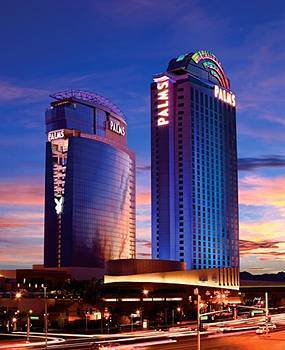
Rockford Fosgate Shakes Up The Car Audio Industry With Unveiling Of Next Generation OEM Systems
Wednesday Jan. 05, 2011
Rockford Fosgate, the industry leader in high-performance car audio systems, will unveil two systems for original equipment manufacturers that will chart the future of pre-title car audio. Rockford Fosgate will use two Nissan-built vehicles to showcase the latest, cutting-edge designs, dubbed “Next Generation.” The unveiling will take place in the Palms Ballroom at the Las Vegas Palms Casino Resort., from Jan. 6-8, for representatives from American, European and Asian car manufacturers. “Offering premium car audio systems can be a significant ...
Rockford Fosgate Delivers Intense Bass With New T3 and T5 Power Components
Wednesday Jan. 05, 2011
Rockford Fosgate, the industry leader in high-performance car audio systems, is satisfying market demand for more powerful component systems with the addition of the T3 and T5 series to the Power speakers family. The two new models will be displayed for the first time from Jan. 6-8, 2011, in the Palms Ballroom at the Palms Casino Resort in Las Vegas.
Rockford Fosgate Makes Some Noise In Las Vegas With Its New Punch Boosted Rail Amplifier
Wednesday Jan. 05, 2011
Rockford Fosgate, the industry leader of high-performance car audio systems, will showcase its new Punch car audio boosted rail amplifier from Jan. 6-8, 2011, in the Palms Ballroom at the Palms Casino Resort in Las Vegas. The new Punch boosted rail amplifier line includes two products: the PBR300X4, a 300 watt 4 channel boosted rail amplifier and the PBR300X1, a 300 watt mono channel boosted rail amplifier.
Rockford Fosgate Introduces New Family Of Subwoofers To The Prime Series
Wednesday Jan. 05, 2011
Rockford Fosgate, the industry leader in high-performance car audio systems, will introduce a new family of subwoofers in their Prime series at the Palms Casino Resort in Las Vegas from Jan. 6-8, 2011, in the Palms Ballroom. The new R2 family will be part of the company’s entry-level Prime subwoofer series and includes the 10” and 12” dual 2 or 4 ohm subwoofers and 10” or 12” dual 2 or 4 ohm shallow subwoofers.
Rockford Fosgate Brings A New Level Of Premium Sound To Factory Stereos With Upgraded 3Sixty.3
Wednesday Jan. 05, 2011
Rockford Fosgate Unveils Four New Punch Amplifier Models At Palms Casino In Las Vegas
Wednesday Jan. 05, 2011
Rockford Fosgate, the industry leader of high-performance car audio systems, will unveil new amplifier models that will be included in its mid-level Punch series from Jan. 6-8, in the Palms Ballroom at the Palms Casino Resort in Las Vegas. The unveiling will feature two full range and two mono channel Class D amplifiers that include the P500X4D, P1000X4D, P1000X5D and P1000X1D.
Rockford Fosgate To Rock Las Vegas Show With New Line Of Power T0 Subwoofers
Wednesday Jan. 05, 2011
Rockford Fosgate, the industry leader of world-class high-performance car audio systems, will feature its latest developments in subwoofer design with its new line of Power T0 subwoofers from Jan. 6-8, in the Palms Ballroom, at the Palms Casino Resort in Las Vegas. The Power T0 subwoofers that will be showcased during the four-day exhibit include the 10”, 12” and 15” models of the T0D2 and T0D4 series.
The Rockford Fosgate Mobile SoundLab Cranks Up The Volume In The City Of Lights
Wednesday Jan. 05, 2011
Rockford Fosgate, the industry leader in high-performance car audio, will turn up the excitement in Las Vegas with its latest Rockford Fosgate SoundLab, an audio demonstration vehicle based on a long–wheelbase Mercedes-Benz sprinter. The Rockford Fosgate SoundLab will be displayed from Jan. 6-8, in the Palms Ballroom at the Las Vegas Palms Casino Resort. The mobile SoundLab is a demonstration of the potential audio experience that consumers can add to their own vehicle using Rockford Fosgate’s line of superb car ...

Car & HiFi Reviews Power T2D212 12" Woofer
Monday Oct. 11, 2010
Car & HiFi magazine (Germany) tested the Rockford Fosgate Power T2 woofer and rates it (Absolute Spitzenklasse) "Best Woofer Ever Tested". Hardly a mark ever reached for such a cult-like Rockford Fosgate factor. Especially when it comes to bass fans, not just Americans. Right now, we present the top rated Power Series subwoofer, and we ensure the very best Woofer under our test. [Article available in Deutsch only, but graphs and rating charts are universal]

Gadgetmac Reviews Punch Plugs for iPhone/iPod
Thursday July 15, 2010
The Punch Plugs deliver outstanding bass performance that will make you not want to stop listening to your music.
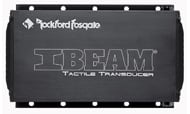
PC Format Magazine Reviews IBeam
Wednesday July 14, 2010
"Should you not own a subwoofer, the iBeam will function as one by producing the vibration qualities of a woofer - without making a sound." Download PDF to read entire article.
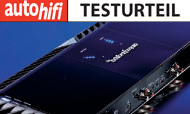
AutoHiFi Magazine Tests Rockford Fosgate T2500-1bd
Tuesday June 01, 2010
Article available in Deutsch only. However, pictures and graphs are universal!

Car Audio & Electronics Magazine Reviews PunchPlugs
Wednesday May 12, 2010
This review has been removed since the closure of CA&E

Rockford Fosgate Gets Personal with PUNCH PLUGS In-Ear Monitors
Thursday Feb. 11, 2010
Rockford Fosgate introduces PUNCH PLUGS In-Ear Monitors that takes legendary Rockford Fosgate PUNCH sonic signature and puts it right in your ears.
XL-Aufrüstung in Rockfords Power-Serie T1000-4 In Deutsch
Sunday Sept. 20, 2009
This is a translation from Car & HiFi, a Deutsch publication. According to Car & HiFi magazine the Power Series T1000-4 amplifier is rated the "Best 4-Channel Tested In Years" "Since 12 years I have tested hundreds of amplifiers, most of them I have already forgotten, The Power T1000-4, will for sure, stay in my memory for a long time. With her clearness and unbelievable power, it will be hard for the future competition to beat this beauty". Sorry, currently ...
Rockford Fosgate Launches Overload All-In-One Powered Subwoofer
Monday Aug. 17, 2009
Rockford Fosgate releases entirely new powered subwoofer series accurately named, Overload. This isn't some low power "cone in a tube," the Rockford Fosgate Overload comes to the party with a true 300 watts (RMS) of power and a 12" woofer enough to overload even the most bass hungry enthusiast."Code named 'the cooler,' Overload absolutely hammers! We took a no compromise approach to this exciting new product; it plays deep, loud and will add the necessary PUNCH to any factory or ...

Rockford Fosgate Achieves True Audiophile Performance With All New POWER Loudspeakers
Tuesday June 30, 2009
Rockford Fosgate releases entirely redesigned POWER loudspeakers focused on the highest possible audiophile performance.
AutoSound Review of T212D2 From Finland
Sunday June 28, 2009
This is a Finnish translation of monster subwoofer test for 10" and 12" woofers. The idea of test was find out if the promised power handling number was even close to real life. The magazine asked speakers tested to be in enclosure and limitation was only speaker per cabinet and size no bigger than 12”. Speakers were first listened inside of a car with a Rockford Fosgate Power T2000-1bd amplifier. It produces 2,500 Watts into a 2-ohm load. Second phase ...
Rockford Fosgate Launches 3Sixty Integration for iPod®
Tuesday March 03, 2009
Rockford Fosgate launched an entire new line of integration solutions designed to connect the iPod seamlessly to a factory installed car audio system. 3Sixty iPod integration provides CD quality audio, integrated control through the factory radio inputs and the ability to view song title, album and artist directly on the radio display. Also included is an aux input to connect any external audio device such as satellite radio, cd/dvd players, etc while still having the convenience of charging your iPod ...
Rockford Fosgate Delivers More Power with New Power Amplifiers
Thursday Jan. 29, 2009
Rockford Fosgate unveiled today Power T1000-4, T2500-1bd & T1000-1bd Power Series amplifiers. These new additions were engineered to bring class leading, up to 2500 watts (RMS), power to Rockford Fosgate’s highest performance series. Rockford Fosgate’s legendary high power, low-distortion and PUNCH sonic signature is perpetuated by class leading technology and superior engineering. The POWER T1000-4, T2500-1bd & T1000-1bd all feature proprietary DTM (Dynamic Thermal Management), MOSFET POWER (Power Output Without Excessive Regulation) supply & output sections, on-board PEQ (Punch Equalization) ...
Rockford Fosgate Introduces New PUNCH Loaded Enclosures
Wednesday Jan. 28, 2009
Rockford Fosgate releases entirely redesigned PUNCH Loaded enclosures, jam packed with new features and entirely new look. New from the ground up and consistent with Rockford Fosgate’s 2009 “Solutions” product initiative, the perfectly matched woofer and enclosure break new ground in construction, technology and sound.A giant LEAP forward, LEAP (Loudspeaker Enclosure Analysis Program) was utilized to determine the optimum port tuning for each enclosure design. The high-flow, low-noise port design maximizes tight, clean bass minimizing unwanted noise and distortion. Using ...
Rockford Fosgate Announces New PUNCH Loudspeakers
Tuesday Jan. 27, 2009
Rockford Fosgate releases entirely new PUNCH loudspeakers designed from the ground up to knock out the competition. Rockford Fosgate’s new loudspeaker engineering team, headed by Director of Loudspeaker Design, Drew Kallen started with a clean sheet of paper and a vision to redesign the PUNCH series of loudspeakers to the pinnacle of technology, sound and value. Loaded with class leading technology borrowed from the new redesigned Power Series loudspeakers including VAST (Vertical Attach Surround Technique) and Flex Fit technologies, PUNCH ...
Rockford Fosgate Defines Performance and Value with new Prime family
Thursday Jan. 15, 2009
For Release: January 16th, 2009 Contact: Jake Braaten • 480.517.3150 • email Jake Braaten Rockford Fosgate introduced today the Prime family of amplifiers, loudspeakers and enclosures. This new generation of performance product is geared to insure maximum performance, compatibility and value consistent with Rockford Fosgate’s 2009 “Solutions” product initiative. Ready to take any system to the next level, Rockford Fosgate’s Prime incorporates Rockford’s DNA into each of the product categories. Prime amplifiers offer legendary Rockford class A/B amplification in mono, ...
Shaken, Not Stirred, Rockford Fosgate's Bass Solution
Tuesday Jan. 13, 2009
Rockford Fosgate launches an innovative, self-contained bass solution unique for the mobile audio enthusiast. Ultra compact (H 2”x W 7” x L 4.25”), the new Rockford Fosgate IBeam, IB-200, is your secret agent in the pursuit of the ultimate bass experience. Declassified as a tactile transducer, the Ibeam is designed to stimulate your sense of touch with a heart pounding power handling of 250watts RMS. “Short on space but want killer bass in your Aston DB5 or maybe you’re designing ...
Rockford Fosgate P3 Shallow Mount Subwoofer Enclosures Provide Compact Solution
Wednesday Aug. 27, 2008
Recognizing that not every automotive interior environment is optimized for huge car audio systems, Rockford Fosgate has designed, and offers, 2 NEW solutions. Rockford Fosgate’s PUNCH loaded, shallow mount, subwoofer enclosures. These enclosures feature the critically acclaimed 10 inch and/or 12 inch PUNCH P3 shallow mount subwoofer in an optimized, small footprint, enclosure...with 5.25 inches being the “deepest” point of the box these enclosures are perfect for trucks and other space deprived applications. “Our new shallow enclosures fill an important ...

Rockford Fosgate Introduces NEW M2 Marine Grade Subwoofers
Thursday July 31, 2008
Rockford Fosgate introduces an entirely NEW line of marine grade speakers featuring high performance subwoofers. Available in 10" and 12" configurations. The M2 line was engineered to surpass industry standards and deliver dominant acoustical characteristics coupled with marine grade compliant UV stable Centrex®.
Rockford Fosgate Introduces NEW M2 Marine Grade Coaxially Mounted Component Speakers
Thursday July 31, 2008
Rockford Fosgate introduces an entirely NEW line of marine grade speakers featuring coaxially mounted component speakers. Available in 6.5” and 8” configurations. The M2 line was engineered to surpass industry standards and deliver dominant acoustical characteristics coupled with marine grade compliant UV stable Centrex®. "Hands down, these are some of the best sounding speakers Rockford Fosgate has ever made! These original designs, from the ground up, are best in class, specifically designed for the marine environment. Rockford Fosgate customers aren’t ...
Car Audio and Electronics Magazine Reviews P3D212
Tuesday May 13, 2008
"One of the best $200 subwoofers ever made.""fit and finish is absolutely excellent""ultra clean look-very distinctive""very impressive in its ability to reproduce note shifts and tonality of each instrument""note shifts were fantastic""what more could you possibly ask for?" Subjective Score ChartOverall Sound Quality = 42 out of 50Tonal Balance = 08 out of 10Low Frequency Extension = 08 out of 10Clarity at Low Volume = 08 out of 10Clarity at High Volume = 09 out of 10Impact = 08 out ...
Car Audio and Electronics Reviews Punch P400-2
Sunday Nov. 18, 2007
The new Punch amplifiers have been in the store for a little while now. Dressed in black with a cool blue power light, they have a dark, mysterious look. It makes me think of Darth Vader. Morality aside, you have to admit he was one powerful dude. So is this amp. • More on the Rockford Fosgate Punch 400-2 IMPORTANT NOTE ABOUT THIS REVIEW The reviewer notes in this article: "The frequency response didn't fare as well and was compromised ...
Car HiFi Germany Reviews Power T400-2
Sunday Nov. 11, 2007
Read the attached review from Car HiFi Europe on the Rockford Fosgate POWER T400-2 2-channel amplifier. [available in Deutch only] Car HiFi Germany• www.autohifi-magazin.de Questions about this review? Contact Car Systems Europe, Rockford Fosgate's authorized Rockford Fosgate distributor in Europe.
Car Audio and Electronics Reviews Power T600-2
Sunday Aug. 05, 2007
The Rockford Fosgate T600-2 is really a new animal from a company that has recently showed a lot of fresh thinking and a willingness to break from tradition when necessary, while still retaining the performance-centered traditions that made them their name.
Rockford Performance Insured by AWG Compliant Wire.
Sunday June 24, 2007
Rockford Performance Insured by AWG Compliant Wire.

Rockford Fosgate P2D412 Test Report
Sunday April 22, 2007
There's an old adage that a lot of companies seem to follow, that "if it ain’t broke, don’t fix it." While last year's offering definitely wasn't broken, it would appear that the people at Rockford aren't going to sit around and rest on their laurels.
Rockford Fosgate's 2007 PUNCH Series Amplifiers Deliver An Undefendable Knockout
Tuesday March 13, 2007
Rockford Fosgate, designer and manufacturer of high performance car audio has engineered and delivered, under covert conditions, the most comprehensive, and exciting line of PUNCH amplifiers ever. Rockford Fosgate will unveil the NEW amplifier series at the 2007 MERA Knowledgefest (booth #101).

Rockford Fosgate's 2007 PUNCH Series Subwoofers Surpass Expectations
Sunday Jan. 14, 2007
Tempe, Ariz. - Rockford Fosgate introduces an entirely NEW Punch subwoofer line at the 2007 CES (booth #1809). The most aggressive Punch subwoofers in the company’s history, the four lines (P1, P2, P3, and P3S) will dominate in their classes as the best sounding, hardest hitting and highest power handling subwoofers available.
Rockford Fosgate’s 2007 POWER Series Amplifiers To Set An Industry Standard
Sunday Jan. 07, 2007
Tempe, Ariz. - Rockford Fosgate, designer and manufacturer of high performance car audio has engineered and delivered the most comprehensive, and exciting line of car audio amplifiers ever. Rockford Fosgate will unveil the NEW amplifier series at the 2007 CES (booth #1809).

Power 15Kw scores the best cube ever on AudioGraph
Thursday Sept. 21, 2006
Developed and tested with the PowerCube from AudioGraph, the design is now ready for the market in record time. “The amplifier uses a patent pending technology we call hybrid technology”, says Rockford Lead Engineer Anthony D'Amore. “Using the PowerCube from AudioGraph, we have managed to design, test and manufacture this all-new amplifier with its ground-breaking technology.” • Read entire article. • Discuss in Rockford Fosgate forum.
Car Audio & Electroincs - Rockford Fosgate T15kW, The great hybrid hype is real
Thursday April 20, 2006
"Rockford Fosgate has developed a new concept in amplifier design, which they unveiled at the 2006 Consumer Electronics Show in the form of the attention-getting T15kW. The gist of this amplifier is to store ungodly amounts of energy, enabling it to produce 15,000 watts at greater than 100 percent efficiency. In other words - achieving the impossible. With our curisity piqued, we went directly to the source, the Rockford Fosgate engineer responsible for the T15k@, Anthony D'Amore, for a little ...
Test Report- Car Audio & Electronics checks out the Punch P212S4 12" Woofer
Sunday March 19, 2006
.
Car Audio & Electronics Chooses 3Sixty as One of the 10 Best New Products from the 2006 Consumer Electronics Show.
Monday March 13, 2006
.
Performance Auto & Sound - Reviews the Punch P312D4 Sub-Woofer
Sunday Feb. 19, 2006
Consumers seem to love the Punch woofers new styling, which features a massive cast aluminium 'bucket' chassis and gorgeous looking PP cones.
Rockford Fosgate Presents the 3SIXTY° Interactive Signal Processor.
Thursday Jan. 26, 2006
From the minds that developed and delivered such legendary cutting edge products as Rockford Fosgate Symmetry and class BD amplifier technology comes a product that all car audio enthusiasts, from hobbyist to audiophile, have been anticipating. The Rockford Fosgate 3SIXTY° Interactive Signal Processor. 3SIXTY° delivers unprecedented control and flexibility to aftermarket and OEM sound systems with up to 153 bands of equalization and signal manipulation. The 3SIXTY° Interactive Signal Processor also allows for aftermarket car audio equipment to be integrated ...
Car Sound & Performance - In Review - Rockford Fosgate T212D4
Sunday July 10, 2005
Hey, Kiddies, Can you Say "BIG"? Rockford Fosgate Delivers A Subwoofer Designed To Decimate.
Limited Edition Punch Amplifiers
Wednesday Jan. 05, 2005
Tempe, AZ - Rockford Fosgate announces a special edition line of amplifiers… The Punch and Power Series, the most famous amplifiers in car audio will be available every three months starting in February. Rockford Fosgate has begun shipping the Punch 45, the amplifier that “…started the car audio craze” back in the 1980’s according to Ron Trout, Brand Manager for Rockford Fosgate and self appointed warden of those serving a 25 to LIFE. sentence. The Punch 45 Special Edition, available ...
Rockford Fosgate is… More POWER!
Wednesday Jan. 05, 2005
Las Vegas, NV @ CES – The Rockford Fosgate amplifier line, Power Series, has grown by two new models for 2005. Power Series amplifiers have been the most successful amplifiers in the competition lanes of IASCA, USAC, EMMA, and dBDrag Racing. Power Series continues to deliver unmatched sound quality through technology and unequalled power through the famous Rockford Fosgate, made in the USA attitude!
Punch into Full Range!
Wednesday Jan. 05, 2005
Las Vegas, NV - CES –

Rock the Waves with Rockford Fosgate Marine
Sunday April 18, 2004
Tempe, Ariz. – OK, so you already know your watercraft is the best looking and fastest on the lake or the harbor, right? But it’s missing something ... great sound for when you’re skimming the waves or parked in the marina. Well, fear not. Now you can put some PUNCH in your marine sound system with Rockford Fosgate. “You don’t have to leave great sound in your car anymore, because Rockford Fosgate now allows you to duplicate the PUNCH on ...
Rockford Fosgate's 2004 Power Series Amps Untouchable
Wednesday Jan. 07, 2004
Tempe, Ariz. – Rockford Fosgate, manufacturer of high performance car audio, may be the only company in the industry able to back up its claim that its new Power series amplifiers are the most powerful and best sounding amplifiers ever. Rockford will unveil this seemingly untouchable amplifier series, winner of a 2004 Design and Engineering Showcase award, at the 2004 CES (booth #814).
Rockford Fosgate New Punch Series Distribution System Launched at CES 2004
Wednesday Jan. 07, 2004
Tempe, Ariz. – Rockford Fosgate, manufacturer of high performance car audio accessories, announces the launch of the 2004 Punch Series Distribution System at the 2004 CES (booth #814). “Built with coolness and lower operating costs in mind, the 2004 Rockford Fosgate Punch Series Distribution Block won’t break the bank when you need a fuse,” says Mark Lieber, Rockford Fosgate accessory product manager. “This is not some side-by-side black plastic utilitarian back shop supply, but a cool high tech transparent form ...
Rockford Fosgate's Unique 2004 Power Battery Clamps Debut at CES
Wednesday Jan. 07, 2004
Tempe, Ariz. – Rockford Fosgate, manufacturer of high-performance car audio accessories, announces the launch of the 2004 Power Battery Clamps at the 2004 CES (booth #814). The 2004 line consists of the first battery clamp that can be “twisted” on for the ultimate in connectivity. “Thread it on and go,” explains Mark Lieber, Rockford Fosgate accessory product manager. “The battery clamp’s threads dig into the lead post creating a connection with twice the surface area that standard battery clamps provide, ...
Rockford Fosgate Gets Locked and LOADED in 2004
Wednesday Jan. 07, 2004
Tempe, Ariz. – Rockford Fosgate and Q-Logic, two of the most respected brands in the mobile audio marketplace, have teamed up to create the ultimate loaded enclosure. Rockford Fosgate is proud to announce that it’s acclaimed Punch woofer line now includes 12 pre loaded enclosures tuned by Q-Logic and will launch the new line at the 2004 CES (booth #814).
Rockford Fosgate's 2004 Power Woofers Surpass Expectations: Competition Nervous
Wednesday Jan. 07, 2004
Tempe, Ariz. – As Rockford Fosgate prepares to launch its 2004 Power woofer line at the 2004 CES (booth #814), the latest reports from Las Vegas indicate that the competition is getting quite nervous. Handed the task of creating woofers that can handle the extreme power capabilities of the new Power Series amplifiers, Gary Church, RF’s chief speaker engineer, and his engineering team have exceeded expectations.
Rockford Fosgate's Next Generation Power Coax Speakers Featured at 2004 CES
Wednesday Jan. 07, 2004
Tempe, Ariz. – Rockford Fosgate, manufacturer of high performance car audio, will feature its next generation 2004 Power Series coaxial speakers at the 2004 CES (booth #814). The new 2004 Power coax speakers, scheduled to ship in January 2004, feature a precision injection molded composite cone and a 19 mm (3/4-Inch) hard-anodized aluminum tweeter for superior sound quality.
Rockford Fosgate's 2004 Power Component Speakers Launched at 2004 CES
Wednesday Jan. 07, 2004
Tempe, Ariz.
Rockford Fosgate Re-Launches Famed ''American Born/American Made'' Punch Amps for 2004
Wednesday Jan. 07, 2004
Tempe, Ariz.
Rockford Fosgate Debuts Punch Twin Drive Components at 2004 CES
Wednesday Jan. 07, 2004
Tempe, Ariz. – Rockford Fosgate, manufacturer of high performance car audio, announces the launch of the Punch Twin Drive Component Series at the 2004 CES (booth #814). The new 2004 Punch Components, scheduled to ship in February 2004, offer incredible flexibility by giving the consumer the choice of configuring the speakers for a sound quality or SPL application.
The Punch is Back: Vegas Warned to Brace for Earth Trembling Bass
Wednesday Jan. 07, 2004
Rockford Fosgate Rocks Visual and Audio Senses at 2004 CES with Launch of Award-Winning DVD Source Units
Wednesday Jan. 07, 2004
Tempe, Ariz. – Rockford Fosgate, manufacturer of high performance car audio, announces the launch of its Innovations 2004 Design and Engineering Showcase award-winning DVD source units at the 2004 CES (booth #814). This is not the first time Rockford Fosgate has won this prestigious award for its source units, and the 2004 line that includes the award-winning RAV DVD2 video unit sets the new industry benchmark in design, cosmetics, affordability, and performance. Rockford Fosgate’s 2004 source unit line consists of ...
Rockford Fosgate Now Shipping 25-and 40-Farad Super Carbon Capacitors
Monday May 19, 2003
Tempe, Ariz. – Rockford Fosgate is leading the charge in low ESR, large capacitance, carbon style capacitors. Now shipping, Rockford Fosgate is proud to continue this tradition with its 25- and 40-Farad Super Carbon Capacitors. “The industry looks towards Rockford Fosgate for new and innovative technologies, and we have delivered once again,” explains Mark Lieber, Rockford Fosgate product specialist. “The new Rockford Fosgate Super Carbon Capacitors’ design allows them to charge and discharge more than 100 times faster than a ...
Rockford Fosgate Type RF Competition Series Distribution Blocks Now Shipping
Tuesday April 29, 2003
Tempe, Ariz. – Rockford Fosgate and its Team RF competitors have won countless awards in the consumer audio competition circuits during its long history…most recently bringing home 25 trophies from the Spring Break Nationals Show in Daytona Beach, Fla. Now, Rockford Fosgate is bringing to the consumer market a taste of why its success is second-to-none. Rockford Fosgate announces that its Type RF Competition Series Distribution Blocks and Battery Clamps are now shipping. “This is a new era for Rockford ...
Rockford Fosgate Boosts 2003 Enclosure Lines with Punch HE and HE2 Woofers
Wednesday Jan. 08, 2003
Tempe, Ariz.
Rockford Fosgate Shows "New Look" Punch HE and HE2 Woofer Lines at CES 2003
Wednesday Jan. 08, 2003
Tempe, Ariz. – Rockford Fosgate, manufacturer of high performance car audio, announces that it will feature its “new look” Punch HE and HE2 woofer lines at CES 2003 (booth #828). Scheduled to ship in January 2003, these industry acclaimed woofer lines have received cosmetic facelifts as well as performance upgrades.
Rockford Fosgate Launches Next Generation of Source Units for 2003
Wednesday Jan. 08, 2003
Tempe, Ariz. – Rockford Fosgate (CES booth # 828), manufacturer of high performance car audio, announces that it has made its award-winning and immensely popular source unit line even better for 2003. This year’s predecessors are Innovations Design and Engineering Awards winners two years running. Rockford Fosgate’s 2003 source units are single DIN AM/FM/CD/ in-dash mobile audio source units with built-in amplification (excluding the 9420) with three pairs of RCA outputs, and are scheduled for availability in January 2003. Four ...
Rockford Fosgate's Connecting Punch Dead Skin Damping Aerosol and Liquid Featured at 2003 CES
Wednesday Jan. 08, 2003
Tempe, Ariz. – Rockford Fosgate announces that it will feature its new Connecting Punch Dead Skin™ Damping Aerosol and Liquid at the 2003 CES (booth #828). For use on door panels, trunk and rear deck, Dead Skin™ is the answer for those who want to eliminate vibrations, road noise and interior rattles from their mobile audio system. “Connecting Punch is the leader in high performance accessories, and Dead Skin™ Aerosol and Liquid is just the latest tool we offer so ...
Rockford Fosgate's Famed Punch Z Woofers Relaunched with Increased Power and Cosmetics
Wednesday Jan. 08, 2003
Tempe, Ariz.
Rockford Fosgate Features the Ultra High-Performance Type RF Amplifier Line at 2003 CES
Wednesday Jan. 08, 2003
empe, Ariz. – Rockford Fosgate, manufacturer of high performance car audio, will feature its award-winning Type RF amplifier line at the 2003 CES (booth #828). Type RF, the finest amplifier in Rockford Fosgate’s 25 year history, has seven models to choose from and provides total integration of sound quality, power, cosmetics, customization, and controllability, making it a must for any serious audio system. Shipping in March, the 2003 models will include a chrome chassis with DSP control from the top ...
Rockford Fosgate Increases Power and Efficiency for Famed Punch and Power Amplifier Series in 2003
Wednesday Jan. 08, 2003
Tempe, Ariz.
Rockford Fosgate's Connecting Punch Dead Skin Damping Mat Featured at 2003 CES
Wednesday Jan. 08, 2003
Tempe, Ariz. – Rockford Fosgate announces that it will feature its new Connecting Punch Dead Skin™ Damping Mat at the 2003 CES (booth #828). For use on door panels, trunk and rear deck, Dead Skin™ is the answer for those who want to eliminate vibrations, road noise and interior rattles from their mobile audio system. “Connecting Punch is the leader in high performance accessories, and Dead Skin™ Mat is just the latest tool we offer so your install is the ...
Rockford Fosgate's Connecting Punch Type RF Competition Series Carbon Capacitors Featured at 2003 CES
Wednesday Jan. 08, 2003
Tempe, Ariz. – Connecting Punch is leading the charge in low ESR, large capacitance, carbon style capacitors. At the 2003 CES (booth #828), Rockford Fosgate will show the industry why by featuring 50- and 100-Farad Competition Series Carbon Capacitors. “The new generation in capacitor technology is here,” explains Mark Lieber, Rockford accessory product specialist. “The new Connecting Punch series capacitors have substantially more capacitance than any other capacitor on the market. Unlike most competitive capacitors, the Carbon Cap delivers its ...
Rockford Fosgate Features New Connecting Punch MAXI-Fused Battery Clamp at CES 2003
Wednesday Jan. 08, 2003
Tempe, Ariz. – Rockford Fosgate will feature its new MAXI-Fused battery clamp (CPBCMAX1) at CES 2003 (booth #828). Now shipping, the latest Connecting Punch accessory eliminates the need for an external fuse holder while providing fewer connections between the battery and the amplifier. “Connecting Punch accessories are all about performance, ease-of-use, style and leading-edge technology,” explains Mark Lieber, Rockford Fosgate accessory product specialist. “Our new MAXIFused battery clamp allows for few er connections, which, in turn, means less resistance and ...
Rockford Fosgate Debuts Type RF Competition Series Distribution Blocks and Battery Clamps at 2003 CES
Wednesday Jan. 08, 2003
Tempe, Ariz. – Rockford Fosgate and its Team RF competitors have won countless awards in the consumer audio competition circuits during its long history. Now, Rockford Fosgate is bringing to the consumer market a taste of why its success is second-to-none. At the 2003 CES (Booth #828), Rockford Fosgate will unveil Type RF Competition Series Distribution Blocks and Battery Clamps. “This is a new era for Rockford accessories…large gauge distribution,” explains Mark Lieber, Rockford Fosgate accessory product specialist. “Built with ...
Omnifi Wireless Digital Media Transfer System Debuts at CES 2003
Wednesday Jan. 08, 2003
Tempe, Ariz. – Imagine downloading your favorite music, radio programs, or sports directly from the Internet onto your computer’s hard drive. Now imagine transferring and listening to these downloads in your car or home stereo/theater system. These things shouldn’t be hard to imagine because millions of people are already doing it every day. Now imagine being able to do all of this on a preprogrammed schedule and digitally transferring these downloads directly from your PC to your car and/or home ...